LED illuminated bathroom mirrors: choosing the right features
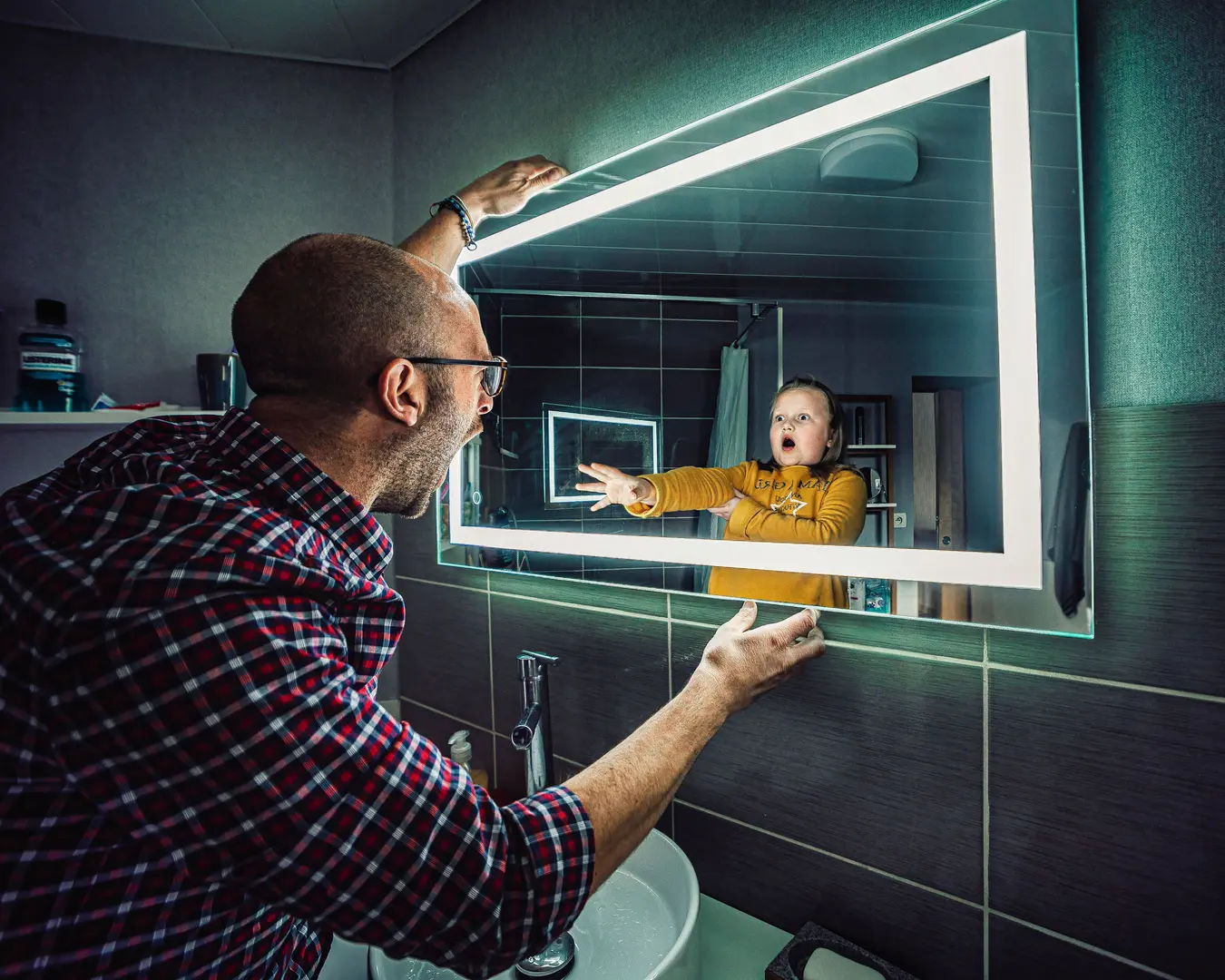
LED illuminated bathroom mirrors combine a reflective surface with integrated lighting, helping to create a practical area for shaving, skincare, make-up and other close-up tasks. However, models can differ significantly in light output, colour temperature, controls and convenience features.
Choosing the right mirror means looking beyond its shape and appearance. Consider how the light is delivered, who will use it and whether features such as a demister or shaver socket will be useful in your daily routine.
How LED illuminated bathroom mirrors provide light
An LED mirror delivers light directly at the mirror surface rather than relying entirely on a ceiling fitting or separate wall lights. This can improve visibility around the face and reduce the shadows that may occur when the main light source is positioned behind or above you.
There are two main lighting configurations:
- Front-lit mirrors: Light shines forwards through illuminated areas on the face of the mirror. Because the light is directed towards the user, this design is often well suited to detailed grooming.
- Edge-lit mirrors: LEDs illuminate areas around the perimeter or edges of the mirror. This creates a defined outline and can contribute to the room’s atmosphere while still providing useful light.
Neither configuration is automatically right for every bathroom. A front-lit design may be preferable when facial visibility is the main priority. An edge-lit mirror may appeal when you want practical illumination combined with a more understated visual effect. The mirror’s position and the bathroom’s other light sources should also inform the decision.
When comparing led illuminated bathroom mirrors, pay attention to both lumens and wattage. Lumens describe light output, while wattage indicates the power used. A mirror with a visually prominent illuminated border is not necessarily the option with the most suitable light output, so check the stated specifications rather than judging performance from photographs alone.
Your priorities will depend on how the mirror is used. Someone applying make-up may value clear, even facial illumination and adjustable colour temperature. Another person may be more interested in gentle lighting, easy controls or a built-in demister. In a family bathroom, flexible settings are generally more useful than a single specialised mode.
Controls can also affect the experience. Depending on the model, lighting may be operated through a wall switch, a button or an integrated touch sensor. Some mirrors allow the user to change brightness or colour temperature, while simpler designs provide one fixed light setting.
The main differences between models can therefore be grouped into three areas:
- The mirror base: The physical design, dimensions and overall form of the mirror must suit the wall and surrounding bathroom furniture.
- The illumination method: This includes whether the mirror is front-lit or edge-lit, together with its lumen output, wattage and colour temperature.
- The available features: Controls, memory settings, demister pads, shaver sockets and smart functions vary between ranges.
Before buying, decide which of these characteristics are essential and which are optional. A long list of features offers little value if the mirror does not provide the type of illumination you need.
Choosing the Right LED Tubes for Mirror Conversion
Some older illuminated mirrors use fluorescent tubes rather than integrated LEDs. If the mirror itself remains suitable, it may be possible to convert the existing lighting instead of replacing the entire unit.
Hybrid LED tubes are one possible option. They can last longer and be less prone to flickering than traditional fluorescent tubes. Their main limitation is the higher upfront cost, so the value of conversion depends partly on the condition of the mirror and its existing electrical components.
Do not assume that any LED tube with similar dimensions will work. A successful conversion depends on compatibility between the selected tube and the mirror’s lighting system. Relevant considerations include:
- The format and size of the existing tube
- The type of lamp holders or connectors
- The control gear already fitted inside the mirror
- Whether the LED tube is designed to work with the existing ballast
- Whether other components must be changed or removed
- The required light output and colour temperature
Hybrid tubes and other LED replacement tubes are not all designed to operate in the same way. Some conversion approaches retain compatible components, while others require changes to the existing arrangement. Follow the tube and mirror manufacturers’ compatibility information rather than choosing solely by shape or price.
Start by identifying the current tube and any ballast or control gear. Check whether the proposed LED replacement is specifically compatible with that setup. If compatibility cannot be confirmed, the installation should be assessed before parts are purchased. Bathroom electrical work also needs to be approached carefully, so use a suitably qualified professional where installation or rewiring is required.
Conversion is not always the most practical choice. If the mirror has damaged components, recurring lighting faults or few of the features you now want, replacing it with a purpose-designed LED model may be more appropriate. On the other hand, a compatible LED tube can be a reasonable upgrade when the mirror base is in good condition and the existing system can support the conversion correctly.
Understanding colour temperature and lighting memory
Colour temperature describes whether white light appears warmer, more neutral or cooler. It is measured in Kelvin, usually shown with the symbol K in product specifications.
Lower colour temperatures create a warmer appearance, while higher temperatures produce a cooler-looking white. The best choice depends on the bathroom’s atmosphere and the tasks carried out at the mirror.
| Lighting preference | Typical purpose |
|---|---|
| Warmer-looking light | Creating a softer, more relaxed atmosphere |
| Neutral-looking light | General bathroom use and everyday grooming |
| Cooler-looking light | Clearer, task-focused illumination |
Colour temperature should not be confused with brightness. A cooler light may appear crisp, but that does not necessarily mean it has a higher lumen output. Check both specifications when evaluating a mirror.
A fixed colour temperature can work well when the bathroom has one clear, consistent use. For example, if the mirror is mainly used for a regular morning grooming routine and everyone prefers the same appearance, a single temperature keeps operation simple.
Switchable colour temperatures are more helpful when several people use the bathroom or when the room serves different purposes. One user may prefer a warmer setting in the evening, while another may want a neutral or cooler setting for make-up or shaving. Being able to move between tones makes the mirror more adaptable without changing the rest of the lighting.
Some LED mirrors also include lighting memory. This allows the mirror to return to a previously selected setting rather than requiring brightness or colour temperature to be adjusted every time it is switched on. When comparing models, check exactly which settings the memory function retains. Controls and memory behaviour can vary, so the presence of a “memory” label alone does not explain how the feature operates.
It is also worth considering the mirror alongside the other lights in the room. A mirror with a noticeably different colour appearance from the ceiling and wall lights may create a mixed effect. This is not necessarily undesirable, particularly if the mirror is being used as focused task lighting, but it should be an intentional choice.
A practical selection process is to decide:
- Whether you prefer warm, neutral or cool-looking light
- Whether the mirror has one main purpose or several
- Whether different users have different preferences
- Whether switchable settings would be used regularly
- Whether lighting memory would make those adjustments more convenient
This helps prevent paying for flexibility that will never be used—or choosing a fixed model that feels restrictive in a shared bathroom.
Demisters, shaver sockets and smart mirror functions
Lighting is only one part of an illuminated mirror’s specification. Convenience features can make a significant difference, but they should be selected according to how the bathroom is actually used.
A demister pad is designed to help prevent the mirror from fogging. This is particularly useful when steam from a bath or shower would otherwise obscure the reflective surface. Instead of repeatedly wiping the glass, the user can retain a clearer area for grooming.
Check how the demister is controlled. Depending on the mirror, it may operate with the light or have a separate control. The size and location of the demisting area may also differ from the overall mirror dimensions, so review the product details rather than assuming the whole surface will remain clear.
A built-in shaver socket provides a convenient power point for compatible electric devices. It can be useful for electric shavers and similar grooming equipment, particularly when there is no suitable socket near the mirror. If this feature matters, check its position as well as its presence. A socket should be accessible without making cables awkward to manage around nearby fittings.
Touch sensors replace or supplement visible mechanical switches. They can help preserve a cleaner, more streamlined appearance on the mirror surface. They may control the light, demister or other settings, depending on the model. Look at the control layout and symbols to make sure the functions will be straightforward for everyone using the bathroom.
Premium ranges may offer additional smart functions. These vary between mirrors, so it is important to assess each feature individually rather than treating “smart mirror” as a single standard. Consider whether the added functions support your routine or simply add complexity.
A useful priority list is:
- Essential: Suitable light output, preferred lighting configuration and appropriate dimensions
- Helpful: Switchable colour temperature, lighting memory or touch controls
- Routine-dependent: Demister pad and shaver socket
- Optional: Premium smart functions
This order keeps the focus on the mirror’s primary roles: providing a useful reflection and suitable illumination. Extra functions should improve those roles rather than compensate for inadequate lighting.
Troubleshooting faults in illuminated bathroom mirrors
Inconsistent lighting does not always mean the entire mirror has failed. In fluorescent illuminated mirrors, a faulty ballast can cause flickering, unreliable operation or failure on one side of the mirror. Replacing the tube without investigating the ballast may therefore produce only a temporary improvement—or no improvement at all.
Begin by noting the symptoms. Useful observations include:
- Whether the lights flicker or take time to operate
- Whether the fault affects one side or the whole mirror
- Whether a replacement tube behaves in the same way
- Whether the problem is intermittent or constant
- Whether there is existing fluorescent control gear inside the unit
A one-sided failure can point to a problem with the ballast or another component serving that part of the mirror. Ignoring this possibility can lead to ineffective repairs, such as repeatedly replacing tubes while leaving the underlying fault unresolved.
Assess the ballast before deciding whether to repair, convert or replace the mirror. If it is faulty, determine whether a suitable replacement is available and whether the mirror remains worth maintaining. If you are considering an LED conversion, the condition and type of ballast will also influence which tubes and conversion method are compatible.
The practical sequence is to identify the existing lighting system, diagnose the control-gear problem and then choose an appropriate remedy. That remedy might be replacing a compatible component, using a suitable hybrid LED tube, carrying out a properly specified conversion or fitting a new LED mirror.
Avoid buying conversion parts until the cause of the fault is understood. A new tube cannot correct every ballast problem, and an incompatible conversion can leave the original issue unresolved. Where internal electrical testing or wiring changes are needed, have the mirror assessed by an appropriately qualified professional.
By addressing existing faults first, you can make a better-informed choice between repair and replacement—and ensure that any new led illuminated bathroom mirrors are selected for the right lighting, controls and practical features rather than simply as a reaction to an undiagnosed problem.