Choosing Magnifying Makeup Mirrors for Everyday Use
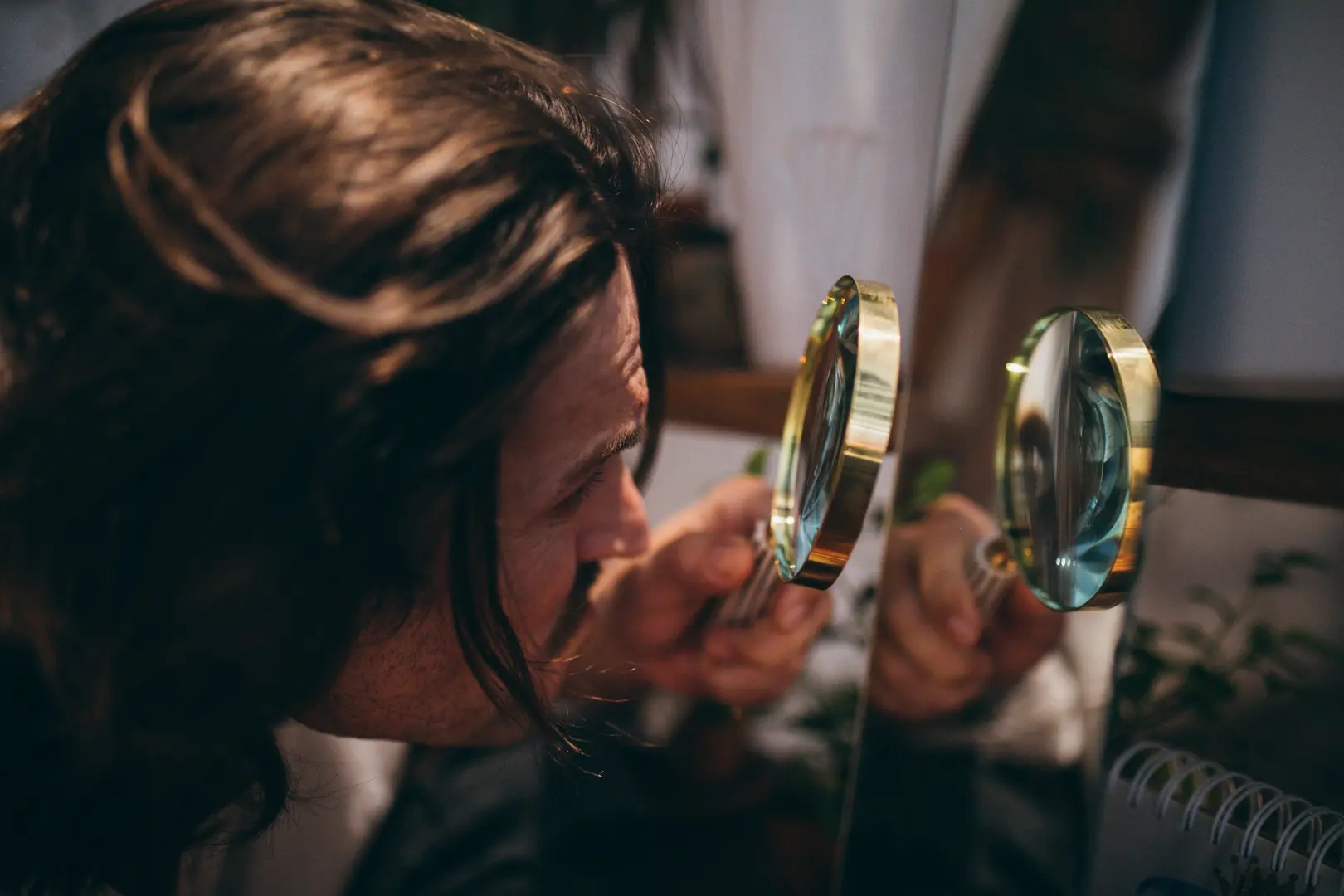
Magnifying makeup mirrors can make everyday grooming easier, but more magnification is not always better. The right choice depends on how you apply makeup, groom facial hair, insert contact lenses and use the available bathroom space. Lighting, mirror size and mounting style are just as important as the magnification level.
Selecting the Right Magnification Level
Choose magnification according to the closest, most detailed task in your routine. A mirror that is too weak may not reveal enough detail, while one that is excessively strong can make it difficult to find a comfortable viewing position or see the face as a whole.
A practical guide is:
| Magnification | Best suited to |
|---|---|
| 3x | Light grooming and quick checks |
| 5x | Everyday makeup application |
| 7x | Detailed grooming and shaving |
| 10x | Very close tasks, including contact lens insertion and eyebrow shaping |
| Above 15x | Rarely necessary for normal household routines |
A 3x mirror provides a modestly enlarged view. It can be useful for simple grooming, checking makeup or tidying facial hair without bringing every small detail into prominence.
For most people, 5x is the most versatile everyday choice. It provides enough enlargement for foundation, eyeliner and other routine makeup tasks while remaining manageable for regular use. It can also help people who find that an ordinary mirror does not show facial details clearly enough.
A 7x mirror is better for precision work. It is a practical option for wet shaving, detailed makeup and grooming areas that are difficult to inspect in a standard mirror.
Choose 10x magnification when you need a very close view, such as when inserting contact lenses or shaping individual eyebrow hairs. Because the visible area is smaller, a 10x mirror is generally more useful as a specialist option than as the only bathroom mirror.
Magnification higher than 15x is rarely needed for everyday grooming. Stronger magnification does not automatically improve usability. It may simply require you to position your face more carefully and can make it harder to maintain an overall sense of balance when applying makeup.
If your routine includes both general makeup and occasional precision work, consider a dual-sided mirror. A standard or lower-magnification side can provide an overall view, while a stronger side handles close tasks.
Why Lighting Matters for Makeup and Shaving
Magnification reveals detail, but those details still need to be evenly visible. Poor bathroom lighting can create shadows, obscure facial hair and make makeup colors harder to judge. An illuminated mirror can therefore be more useful than a highly magnified mirror placed in a dim corner.
Look for neutral-to-cool illumination. This type of light supports a clear, accurate view during makeup application and shaving. Very warm light may be comfortable, but it can make it harder to assess how makeup will appear under brighter or cooler lighting elsewhere.
Adjustable brightness is also valuable. A single fixed setting may be too intense at night or too weak in a bright room. Brightness controls allow the mirror to work in changing conditions and for different users. Increase the light for close tasks, then reduce it when checking the final result.
Steady, even illumination is particularly important for wet shaving. Shadows can hide small areas of stubble, even when magnification is strong enough. Place the mirror where overhead fixtures or nearby lights do not leave one side of the face noticeably darker than the other.
Mirror dimensions matter too. A small, highly magnified surface may be excellent for an eyebrow or contact lens, but it is not ideal for checking whether makeup looks balanced across the entire face. A larger mirror makes it easier to step back and assess overall coverage, symmetry and blending.
For a flexible setup, combine:
- A larger mirror for seeing the full face
- Approximately 5x magnification for routine makeup
- Stronger magnification for occasional close work
- Neutral-to-cool illumination
- Adjustable brightness for different tasks and times of day
Remember that magnification and lighting serve different purposes. Magnification enlarges the reflection, while illumination makes that reflection easier to see. Increasing one does not fully compensate for a lack of the other.
Safety Precautions When Using Magnifying Makeup Mirrors
Do not use or position a magnifying mirror where it can reflect direct sunlight toward your eyes. This applies near bathroom windows, bedroom windows and dressing tables, including locations that are technically indoors.
Sunbeams can move across a room as the time of day changes. A mirror that appears safely positioned in the morning may catch direct light later. Curtains and blinds can reduce incoming light, but the mirror should still be kept away from any place where a direct beam may reach its reflective surface.
Follow these simple precautions:
- Keep magnifying mirrors out of direct sunlight.
- Do not look into a mirror that is producing a bright reflected glare.
- Reposition or cover a portable mirror when it is not being used.
- Check window-facing wall-mounted models at different times of day.
- Teach children not to aim mirrors toward the sun or other people.
- If direct sunlight reaches the bathroom, place the mirror on a wall or surface outside the beam.
Magnifying makeup mirrors are intended for close grooming under ordinary indoor illumination. The practical concern is not normal magnified viewing but exposure to reflected direct sunlight. If a reflection is uncomfortably bright, look away and move the mirror rather than trying to complete the task.
Comparing Wall-Mounted and Freestanding Mirrors
Wall-mounted and freestanding magnifying makeup mirrors can provide the same magnification, but they suit different spaces and routines.
A wall-mounted mirror saves counter space and stays in a predictable position. It is especially useful in compact or shared bathrooms where bottles, toothbrushes and grooming tools already occupy the vanity. Extendable or adjustable wall-mounted designs can be pulled closer for use and moved back afterward.
Installation is the main consideration. Before choosing a position, make sure the user can bring the mirror comfortably toward the face. Also consider the height needs of everyone who will use it. Depending on the model and wall, secure installation may require appropriate fixings or professional help. An illuminated wall-mounted mirror may also need access to power.
A freestanding mirror is portable. It can move between the bathroom, bedroom and dressing area, making it useful for renters or anyone who prefers not to install permanent hardware. It is also easy to reposition when the room’s lighting changes.
The disadvantage is that a freestanding model occupies a surface and can be knocked or moved in a busy room. It also needs to be stored away from direct sunlight rather than left facing a window.
Choose according to intended use:
- Select wall-mounted for regular use in one location, limited counter space or a shared bathroom.
- Select freestanding for portability, flexible positioning or use in several rooms.
- Check the available viewing distance before installing a fixed model.
- Consider where an illuminated mirror will obtain power.
- Avoid placing either style in a path of direct sunlight.
A wall-mounted model is often the more orderly long-term solution, while a freestanding mirror offers greater flexibility.
Answers to Common Magnifying Mirror Questions
Magnifying mirrors are useful for tasks that become difficult when ordinary reflections do not show enough detail. A curved magnifying surface makes a nearby reflection appear larger, allowing the user to inspect a smaller area more closely.
This can be helpful for someone who struggles to perform close grooming without glasses. Instead of trying to wear glasses while applying eye makeup or inserting contact lenses, the person can move close to an appropriately magnified mirror. The clearest position depends on the magnification and the user, so it may take a little adjustment to find a comfortable viewing distance.
Magnification does not replace a full-face mirror, suitable lighting or professional vision care. It is a practical grooming aid. The following recommendations provide starting points for common routines.
What Magnification Suits Everyday Makeup and Occasional Brow Shaping?
For everyday makeup, 5x magnification is the most balanced choice. It enlarges the face enough for tasks such as applying eyeliner, blending foundation and checking coverage without restricting the view as much as stronger magnification.
Occasional eyebrow shaping may benefit from 10x magnification. The closer view makes individual hairs easier to identify. Use the stronger mirror for precision, but return to a standard or 5x view regularly to check the overall shape of both eyebrows. Focusing only on a tiny area can make it harder to judge balance across the face.
A dual-sided model with 5x and 10x surfaces can accommodate both parts of this routine.
Which Mirror Helps Contact Lens Wearers See Their Pupils?
A 10x mirror is a suitable choice for contact lens insertion, particularly for users who cannot clearly see their pupils without glasses. Strong magnification provides the close view needed for this precise task.
Illumination can improve visibility further. Choose a mirror with steady, adjustable light and position it so that the eye is clearly visible without glare. Keep the mirror stable while inserting the lens; a wall-mounted or firmly based freestanding model is generally easier to use than a mirror that must be held by hand.
Because 10x magnification shows only a small area, move into position slowly until the eye comes into clear view.
Is Magnification Helpful for Daily Wet-Razor Shaving?
Yes. 7x magnification is a practical level for daily wet-razor shaving. It offers a detailed view of facial hair and areas that may be missed in an ordinary mirror without being as specialized as 10x magnification.
Steady lighting is essential. Even strong magnification will not help if shadows hide part of the jawline or neck. Neutral-to-cool illumination and adjustable brightness can make facial hair easier to distinguish.
Use the magnified view to inspect close areas, then check the full face in a larger mirror. This combination provides detail without losing sight of the complete shaving area.
Can a Magnifying Mirror Help With Age-Related Vision Changes?
A 5x mirror can help users who find close facial details harder to see because of age-related vision changes. It may be particularly useful when glasses interfere with applying makeup or grooming around the eyes.
Illumination is equally important. A well-lit reflection can appear clearer than one viewed with stronger magnification in a dim room. Look for adjustable lighting so the brightness can be increased when necessary without forcing every user to accept the same setting.
The user should be able to sit or stand comfortably rather than leaning awkwardly toward the mirror. A stable mirror with adjustable positioning is often easier to manage.
Where Should a Magnifying Mirror Go in a Busy Family Bathroom?
For a bathroom shared by four people, a wall-mounted mirror is generally the best choice. It saves vanity space, remains available in a consistent location and is less likely to be knocked over than a freestanding model.
Install it where users can adjust the angle and viewing distance without blocking the sink or storage. If family members vary significantly in height, an extendable or pivoting design may make access easier.
Avoid freestanding mirrors in heavily used areas where they can create clutter or be moved into an unsafe position. Keep the wall-mounted mirror away from direct sunbeams, including light that enters through a window at only certain times of day. A secure, accessible position with steady lighting will make it more useful for everyone.