Mixer Showers: A Complete Pre-Purchase Guide
Mixer showers combine hot and cold water from your home’s existing supplies, allowing you to control the final temperature and flow at the shower valve. They can provide a stronger flow than a similarly sized electric shower, but their performance depends heavily on the quality and pressure of the available water supplies.
Before buying, consider how the shower will connect to your plumbing, whether its design suits your bathroom and how safely it will maintain a comfortable temperature. This guide covers the main operating principles, common safety concerns and the differences between bar, exposed and concealed designs.
Understanding the Operation of Mixer Showers
A mixer shower receives water through two separate pipes. One carries hot water from the property’s hot-water supply, while the other carries cold water. Both supplies meet inside the mixer valve, where they are blended before the water reaches the showerhead.
Moving the temperature control changes the balance between the two supplies. A cooler setting allows a greater proportion of cold water into the mix, while a hotter setting increases the proportion of hot water. Depending on the model, flow may be adjusted by the same control or by a separate handle.
Unlike an electric shower, a mixer shower does not need an internal heating element to heat cold water on demand. It uses water that has already been heated elsewhere in the home. This distinction has several practical consequences:
- The shower relies on the availability of hot water.
- Its temperature is affected by the quality and consistency of the hot-water supply.
- Its flow depends on the pressure reaching the mixer valve.
- It does not independently heat incoming cold water.
This means that choosing a mixer shower is not only about selecting a style. You also need to understand the plumbing system that will supply it. An attractive valve cannot compensate for an unsuitable or inconsistent water supply.
Water pressure affects both flow and temperature. If pressure is insufficient, the shower may not deliver the experience you expect. If the balance between the hot and cold feeds changes, the blend reaching the showerhead can also change. Pressure should therefore be considered before you commit to a particular mixer.
When comparing products, avoid assessing performance solely from the apparent size of the shower or showerhead. The available pressure and the strength of the hot-water supply are fundamental. Product specifications and installation requirements should be checked against the conditions in your home.
One of the main attractions of mixer showers is their potential for stronger flow. Compared with an electric shower of a similar size, a mixer can often deliver more water because it is not heating cold water internally as it passes through the unit. Instead, it blends two existing supplies.
This is also why high-flow showers are often mixer models. Their design can make use of the hot and cold water already available from the property. However, “mixer” does not automatically mean “high flow.” The actual result still depends on the pressure and supply quality at the installation point.
Before purchasing, establish the following:
How the shower will receive hot water. Confirm that the property has a dependable hot-water supply suitable for the proposed shower.
Where the cold feed will come from. The valve needs separate hot and cold connections, so both pipe routes must be considered.
Whether the pressure is appropriate. Pressure affects how strongly the water flows and how effectively the two supplies can be mixed.
Whether both supplies behave consistently. Changes in either feed can affect the temperature or flow experienced by the user.
Whether the chosen mixer matches the intended installation. Bar, exposed and concealed designs place different demands on pipework and wall access.
It is useful to distinguish between the controls and the supplies. A temperature control tells the valve how to blend the incoming water, but it does not create hot water or improve the underlying pressure. Similarly, opening the flow control cannot make more water available than the plumbing can deliver.
Your pre-purchase assessment should therefore begin with the home rather than the showroom. Identify the available supplies and pressure first, then choose a mixer shower designed to work with them. This approach reduces the risk of selecting a shower whose expected performance cannot be achieved after installation.
A mixer shower may be a suitable choice if you value:
- A potentially stronger flow than that of a comparably sized electric shower
- Direct control over the blend of existing hot and cold water
- A choice of visible or concealed valve designs
- A shower that does not require an internal heating element
Its suitability is less certain if the hot-water supply is unreliable or the available pressure does not meet the model’s requirements. These are plumbing questions, not simply matters of appearance, so obtain installation advice when the existing setup is unclear.
Safety Tips for Mixer Showers
Temperature stability deserves particular attention when choosing and using a mixer shower. Some users report an initial burst of very hot water when moving a mixer control towards a hotter setting, followed by a more stable temperature. Even if the water settles quickly, that first burst can be uncomfortable and may create a burn risk.
Do not assume that the water will immediately match the position of the control. When starting the shower or changing the setting, keep out of the direct spray until the temperature has stabilised. Test the water cautiously before allowing a child to enter.
This issue is especially important in households with children. A child may be less able to move away quickly or recognise that the control has produced water that is too hot. Reducing the possibility of sudden temperature changes should therefore be part of both product selection and installation planning.
Practical precautions include:
- Begin with a moderate temperature setting rather than turning the control sharply towards hot.
- Allow the flow to stabilise before stepping underneath the shower.
- Make small control adjustments and pause to assess the result.
- Check the temperature before a child uses the shower.
- Do not rely on a familiar handle position if the water supply has been behaving differently.
- Seek professional plumbing advice if very hot bursts or repeated temperature changes continue.
Unexpected hot water should not simply be treated as an unavoidable characteristic. The cause may relate to the mixer’s settings, installation or the behaviour of the incoming supplies. A competent installer can inspect the arrangement and determine whether adjustments or installation changes are appropriate. The correct response depends on the actual plumbing, so avoid making unsupported alterations yourself.
During installation discussions, explain how the shower will be used. If children or other users may be particularly vulnerable to hot water, make burn-risk reduction a clear priority. Ask how the proposed mixer and installation will help users manage temperature changes, rather than focusing only on flow and appearance.
It is also important to separate plumbing problems from electrical work. If water is leaking, do not open or inspect an electrical panel to investigate. Water and electrical equipment can create an electrocution risk. Keep away from the affected electrical area and contact the appropriate qualified professional.
A safe response to a suspected problem is straightforward:
- Stop using the shower if the temperature becomes dangerously hot or unpredictable.
- Keep children and other users away from the affected area.
- Avoid contact with electrical panels or equipment where leaking water may be present.
- Arrange for the plumbing or electrical issue to be assessed by a qualified person, as appropriate.
- Do not resume normal use until the problem has been addressed.
Safety begins before installation. Make sure the controls are understandable and practical for everyone who will use the shower. A design that looks minimal may still need to be easy to operate without accidentally selecting an excessively hot setting. Consider everyday use, not only how the valve appears on the wall.
After installation, users should be shown how to start the shower, alter the temperature and shut off the flow. This is particularly useful when replacing another type of shower, as the new controls may respond differently. If temperature behaviour changes later, arrange an inspection rather than repeatedly compensating with larger control movements.
Choosing Between Bar, Exposed and Concealed Designs
Mixer showers are available in bar, exposed and concealed formats. All blend separate hot and cold supplies, but they differ in how the valve and connections are presented. Your decision should account for installation as well as appearance.
| Design | Basic arrangement | Main pre-purchase consideration |
|---|---|---|
| Bar mixer | Horizontal valve fitted across the hot and cold connections | Generally straightforward to fit where suitable connections are available |
| Exposed mixer | Valve and working parts are mounted on the wall surface | Compact, visible arrangement with accessible surface-mounted components |
| Concealed mixer | Main valve is built into the wall | Cleaner appearance, but installation must accommodate the hidden valve and pipework |
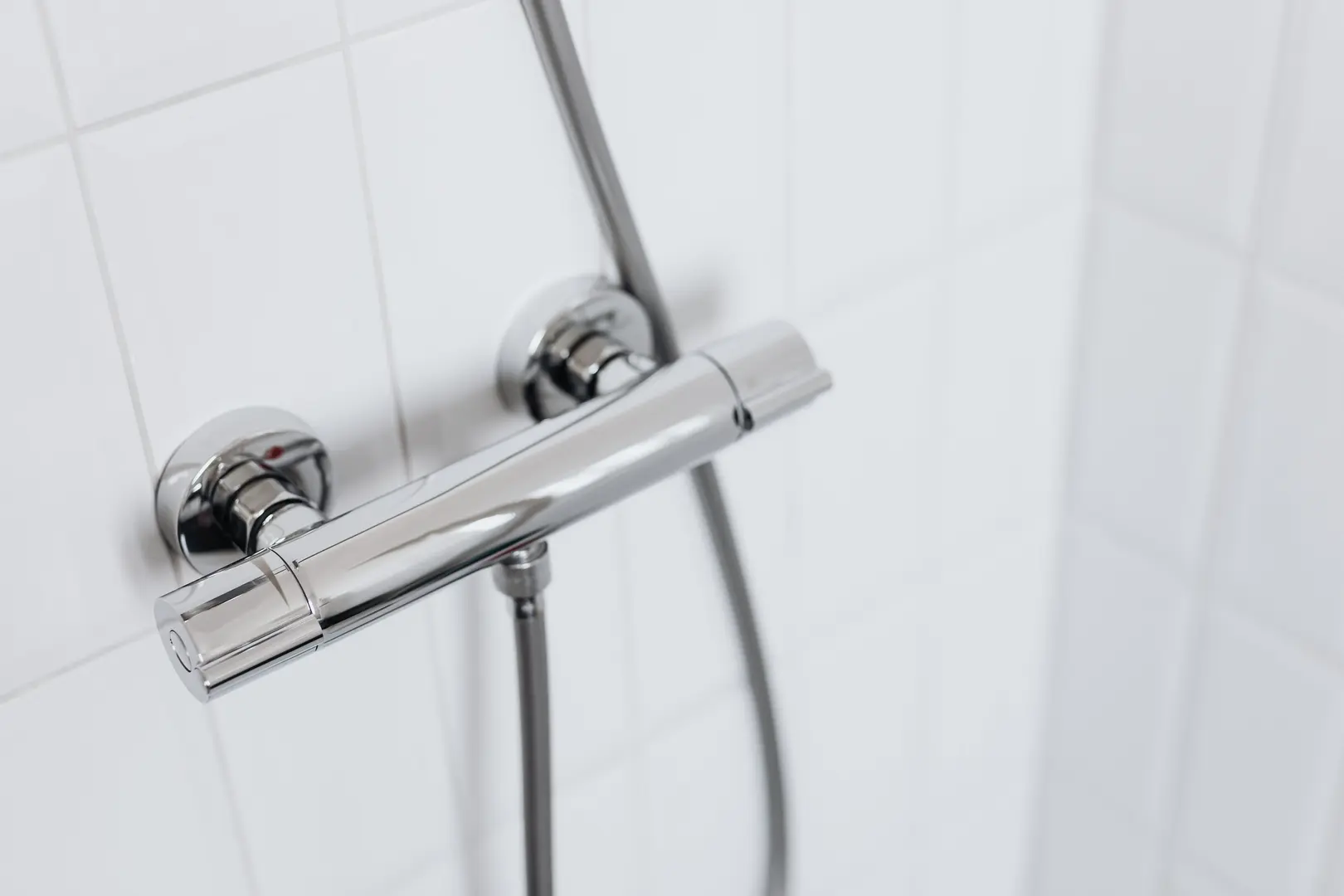
A bar mixer is recognisable by its horizontal valve body. The hot and cold supplies connect at either side, with the controls positioned on the bar. Bar mixers are generally easy to fit compared with arrangements that require the valve to be hidden inside the wall.
This design can be a practical choice when you want a clearly visible unit and a relatively direct installation. However, “easy to fit” does not mean suitable for every bathroom without assessment. The pipe positions and pressure must still match the chosen model’s requirements.
An exposed mixer is also mounted on the wall surface. Its working body remains visible rather than being recessed into the wall. Exposed designs can be compact, making them useful where you want to avoid the visual or installation demands of a concealed valve.
Because the valve is surface-mounted, it becomes part of the room’s appearance. Consider how its shape and finish will sit alongside the showerhead, enclosure, taps and other bathroom fittings. Also check how the visible pipe connections will be arranged.
A concealed mixer places the main valve inside the wall, leaving the operating controls visible. This creates a cleaner, more streamlined appearance because much of the mechanism is hidden.
The visual simplicity does not remove the need for careful planning. The wall must accommodate the valve and the pipes feeding it. The installation needs to be considered before surfaces are completed, and the chosen position must work with the available hot and cold supply routes.
When comparing the three formats, use these questions:
- Do you want the valve to be visible or mostly hidden?
- Are suitable hot and cold connections already available?
- Can the wall accommodate a concealed valve?
- How much installation work is appropriate for the project?
- Does the mixer suit the property’s water pressure?
- Will the controls be convenient and clear for regular users?
- How important is a compact or minimal appearance?
Pressure remains relevant whichever design you choose. A concealed mixer is not inherently more powerful because it sits inside the wall, and an exposed or bar valve is not automatically weaker because it remains visible. Performance depends on the incoming water supplies and the requirements of the mixer itself.
For a straightforward replacement, a bar or exposed design may be appealing because the valve remains on the surface. For a bathroom renovation focused on a clean appearance, a concealed mixer may integrate more discreetly. The best option is the one that fits both the decorative plan and the plumbing conditions.
Make the final decision in the right order: confirm the hot-water supply, assess pressure, identify feasible pipe routes and then select the design. Once those practical points are established, you can compare finishes and visual styles with greater confidence.
Mixer showers can combine strong flow, simple temperature control and flexible design choices, but they remain dependent on the home’s water system. A well-chosen mixer should suit the available pressure, provide controls appropriate for the household and be installed with particular attention to temperature safety.