Multi-Functional Bathroom Fixtures for Building a Modern Bathroom
A modern bathroom should look calm, work efficiently, and make good use of every available surface. For homeowners researching “multi functional bathroom fixtures building a modern bathroom,” the central idea is simple: choose products that perform two or more useful roles without making the room feel crowded.
From baths with concealed compartments to radiators that also store towels, these fixtures can improve organization, comfort, and visual continuity. Their value is especially clear in compact bathrooms and busy households, where storage and floor space are often limited.
Bathroom Fixtures Designed to Do More
Multifunctional bathroom fixtures have become increasingly popular because they respond to practical design problems. Instead of filling a bathroom with separate products, homeowners can select individual fixtures that combine storage, heating, washing, or reflective surfaces.
Common examples include:
- Baths with storage behind removable or hinged panels
- Toilets with sinks mounted above their cisterns
- Mirrored radiators that provide heat and reflection
- Towel radiators that warm the room while holding towels
- Wall-mounted vanities that combine a basin, cabinetry, and open floor space
- Shower kits designed in separate sections for easier handling in tight areas
These features are not limited to small bathrooms. They can also help larger family bathrooms feel more organized. In a busy household, toiletries, towels, cleaning products, and bathing accessories quickly create clutter. A bath with built-in compartments keeps frequently used items nearby without requiring another freestanding cabinet.
The best multifunctional fixture is one that solves a genuine problem. A feature that adds complexity but is rarely used may not justify its cost. Before buying, consider how people move through the room, which items need to be accessible, and where clutter tends to collect.
Wall-mounted vanities are a good example of this trade-off. They keep the floor visible and can make a small room feel less crowded, but their compact cabinets may not provide enough storage for a large household. Similarly, a three-piece shower kit may be easier to transport and install in a restricted space, but it can offer fewer design and customization choices than a more individualized enclosure.
Function should therefore guide the design. The goal is not to fit as many features as possible into the bathroom. It is to select fixtures that make daily routines easier while supporting a clean, modern appearance.
Benefits of Choosing Multi-Functional Bathroom Features
The most immediate benefit is space efficiency. A fixture that performs two roles reduces the need for separate items, leaving more room for movement and storage. This can be particularly valuable in cloakrooms, en suites, apartments, and bathrooms with awkward layouts.
Multifunctional products can also improve visual appeal. Fewer separate fixtures may result in cleaner sightlines and a more coordinated design. A mirrored radiator, for instance, avoids the need to place a standard radiator and a separate mirror on different walls. A bath with hidden compartments reduces visible bottles and baskets.
Other potential advantages include:
- Better organization: Integrated storage gives everyday items a defined location.
- Simpler routines: Towels, toiletries, and bathing supplies can remain close to where they are used.
- Reduced visual clutter: Concealed compartments help preserve a streamlined look.
- More efficient use of walls: Mirrors, radiators, basins, and storage can share the same area.
- Environmental benefits: Water-saving and energy-efficient options can reduce unnecessary resource use.
Cost requires a more careful assessment. A multifunctional fixture may replace two individual products, but that does not automatically make it cheaper. The purchase price, installation requirements, plumbing changes, electrical work, and future access for maintenance all affect the final budget.
Bathroom remodeling costs vary substantially according to scope, fixture quality, labor, and the condition of the room. Although some homeowners expect a complete update to fall within a particular price range, there is no reliable universal figure. A cosmetic refresh is very different from a renovation that moves plumbing and changes the layout.
To control costs, plan in the following order:
- Define the room’s main problems. Decide whether the priority is storage, accessibility, heating, water efficiency, or open floor space.
- Measure the existing layout. Record fixture dimensions, door swings, wall space, and clear routes through the room.
- Identify services that can remain in place. Keeping the toilet, bath, and basin near their current plumbing connections can avoid major work.
- Create a complete budget. Include fixtures, materials, labor, removal, installation, and a reserve for unexpected work.
- Confirm maintenance access. Concealed storage and integrated systems should not prevent access to plumbing or heating components.
- Use qualified help for complex work. Plumbing, electrical, structural, and heating tasks can create safety concerns and additional costs when attempted without appropriate expertise.
Relocating a toilet or bathtub is often difficult and expensive, particularly when pipes must be altered beneath a concrete foundation. A multifunctional unit that works with the existing layout can therefore be more practical than redesigning the entire room around a new fixture position.
Rushing into a renovation is another costly mistake. Products may fit individually but conflict once doors, drawers, screens, and access panels are opened. Planning the complete room before ordering helps uncover these problems. It also reduces the chance of choosing a stylish fixture that does not meet the household’s actual storage or maintenance needs.
Ventilation should be considered at the same time. Space-saving fixtures can reduce clutter, but they do not resolve moisture problems. Poor ventilation allows damp conditions to persist and may contribute to mold. Heating, storage, and ventilation should work together rather than being treated as unrelated decisions.
Incorporating Sustainability in Bathroom Design
Sustainable bathroom design begins with reducing avoidable water and energy use. Multifunctional fixtures can support that goal when their combined functions are efficient and suited to the household.
A toilet with an integrated sink is a clear example because it can reuse handwashing water for flushing. Water-efficient taps, showers, and toilet mechanisms can also limit consumption without adding more fixtures to the room. When comparing products, look for clear information about water use and compatibility with the property’s plumbing.
Heating choices matter as well. Select a radiator that is appropriately sized for the bathroom rather than assuming a larger model is always better. A towel radiator that both heats the space and dries towels may provide more practical value than separate heating and storage products. Controls that allow heat to be used when needed can further support energy-conscious operation.
Materials also affect the long-term performance of the room. Consider:
- Durable surfaces that will not need frequent replacement
- Building materials with recycled or responsibly sourced content where available
- Products designed to be maintained or repaired
- Finishes suitable for humid bathroom conditions
- Fixtures that can be accessed without damaging surrounding walls or panels
Durability is an important part of sustainability. A low-impact material offers limited value if it performs poorly in a wet environment and must soon be replaced. Balance environmental credentials with moisture resistance, maintenance needs, and expected use.
Do not overlook the building systems around the fixtures. Effective ventilation helps moisture leave the room, while suitable insulation and efficient heating help maintain comfort without unnecessary energy use. A sustainable bathroom is not created by one product; it comes from coordinating water use, heating, materials, ventilation, and the layout as a whole.
Toilets Featuring Integrated Top-Mounted Sinks
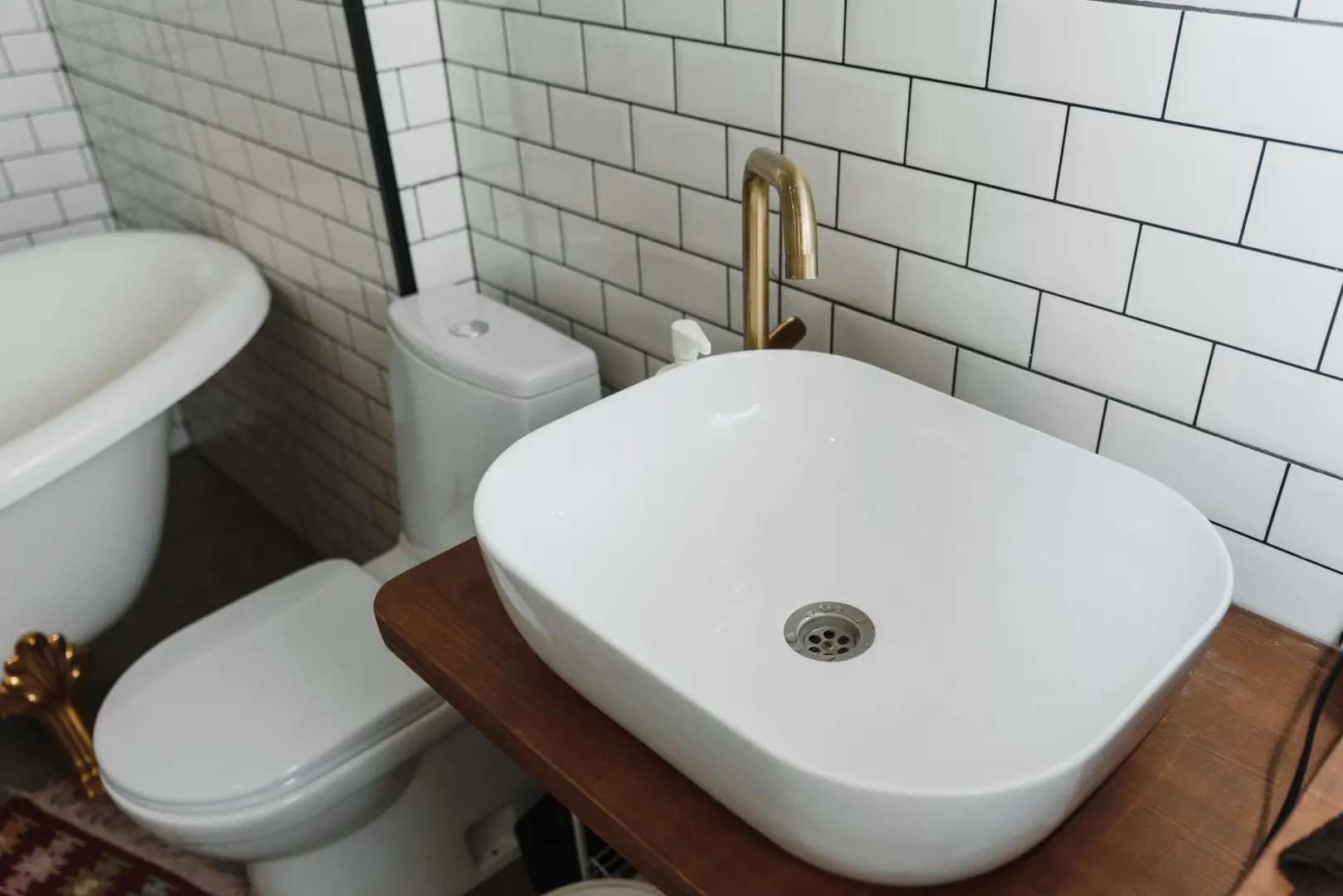
A toilet with a top-mounted sink combines handwashing and flushing in one compact unit. The basin sits above the cistern, so a separate wall-mounted or pedestal sink may not be necessary. This arrangement makes it particularly useful in small bathrooms where every section of floor and wall has to work hard.
After the toilet is used, clean supply water flows through the tap for handwashing. The resulting sink water is collected for use in a subsequent flush rather than being sent directly away. The exact operation depends on the product, but the underlying benefit is the same: water performs more than one task.
The design offers several advantages:
- It places the basin and toilet within one footprint.
- It can free wall space that would otherwise be occupied by a sink.
- It reduces the need for separate sanitary fixtures.
- It supports water reuse within the unit.
- It can simplify the visual layout of a compact room.
These toilets are well suited to cloakrooms and very small en suites. However, placement still needs attention. Users must be able to reach the basin comfortably, and the surrounding layout should allow access for cleaning and maintenance.
Style is another consideration. Because the sink and toilet form a single visual unit, the fixture is likely to become a noticeable part of the room. Choose a design that coordinates with the shower, bath, hardware, and overall finish rather than treating it purely as a technical space-saving device.
Professional advice may be needed to confirm plumbing compatibility and installation requirements. The benefit of the unit depends on it functioning reliably as an integrated system, so complex plumbing work is not a good area for rushed DIY decisions.
Baths That Include Concealed Storage
Bath panels are often treated as decorative coverings, but they can also become useful storage areas. A bath with built-in compartments uses otherwise overlooked space to hold toiletries, bathing accessories, cleaning supplies, or spare items.
This approach addresses a common bathroom problem: the need to keep essentials close without leaving them on the bath edge or adding bulky furniture. Concealed compartments preserve a tidy appearance while keeping selected products accessible.
Storage may be hidden behind hinged, sliding, or removable panels, depending on the design. Lockable sections can add control over access to particular items. This may be useful in a family home, although a lockable panel should be used alongside appropriate household safety practices rather than assumed to make every product safe to store there.
When planning bath storage, think about what will go inside. Frequently used bathing products should be easy to reach, while less attractive supplies can be placed in deeper or less visible compartments. Avoid turning the space into an overcrowded area where plumbing access becomes difficult.
A good built-in storage design should provide:
- Convenient access to everyday essentials
- Securely fitted panels
- Separation between stored items and service components
- Sufficient access for plumbing inspection or repair
- Materials and finishes appropriate for a wet room
Measure carefully before choosing the bath. Storage mechanisms need room to open, and nearby toilets, vanities, or doors may obstruct them. This is another reason to plan the whole layout rather than selecting each fixture independently.
Mirrored Radiators for Heat and Reflection
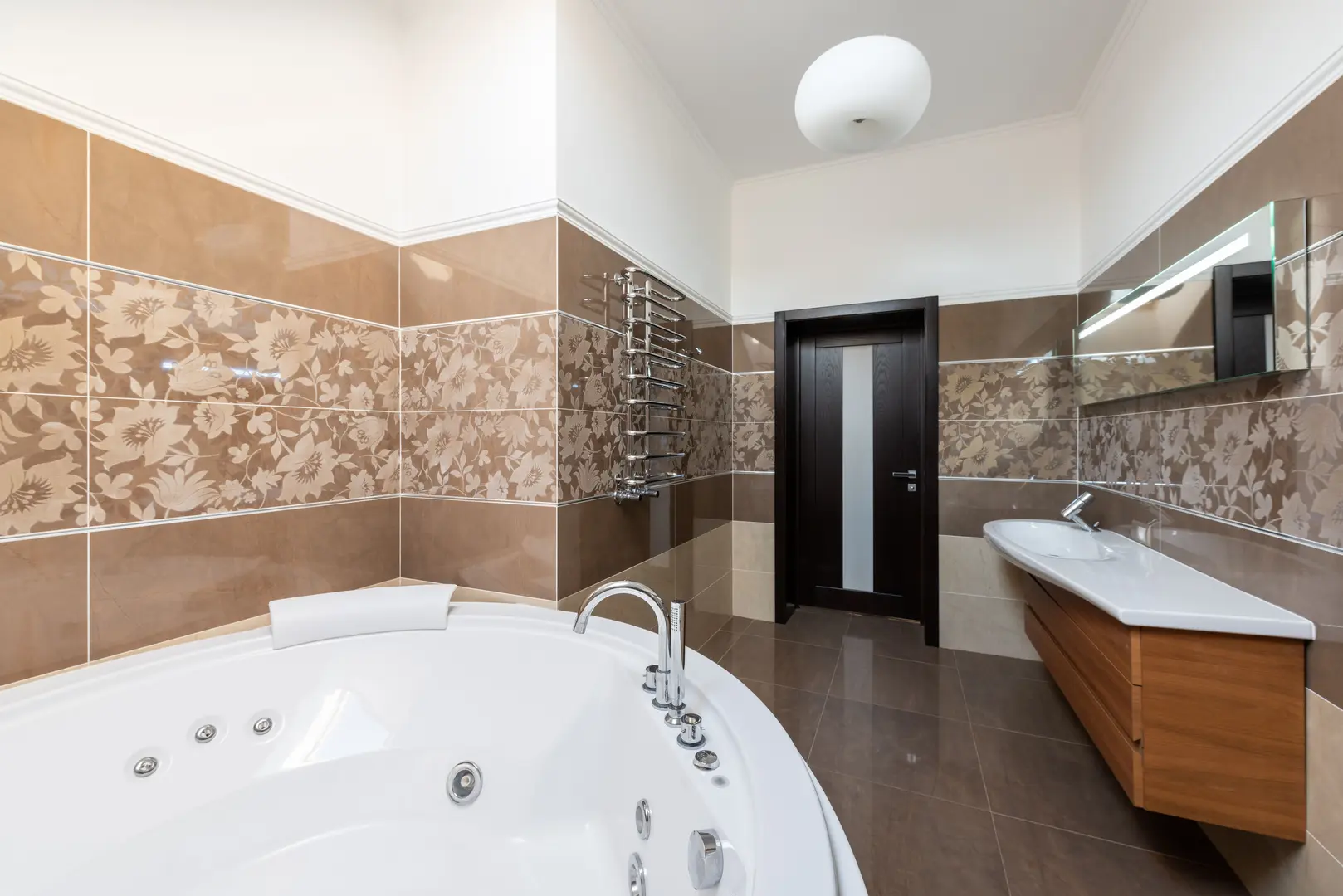
A mirrored radiator combines room heating with a reflective surface. It can replace two separate wall-mounted features, creating a polished and coordinated focal point. In a contemporary bathroom, the smooth reflective finish can also support a brighter, more open visual effect.
This fixture is useful where a suitable wall needs to provide both warmth and a mirror. It may work well near a vanity or dressing area, provided the location is appropriate for the heating system and daily use.
Mirrored radiators are stylish, but they are not automatically suitable for every small bathroom. The unit may require a significant uninterrupted wall area, and its scale can dominate a compact room. A smaller conventional mirror paired with another heating solution may sometimes produce a more balanced layout.
Before choosing one, consider:
- Whether the mirror is positioned at a practical height
- How much usable wall area the unit requires
- Whether doors or cabinets will obstruct it
- How it fits with the room’s heating plan
- How easily the surface can be cleaned
The radiator should be selected for its heating function as well as its appearance. A beautiful mirrored panel is not a substitute for a properly planned bathroom heating system.
Towel Radiators That Add Storage and Warmth
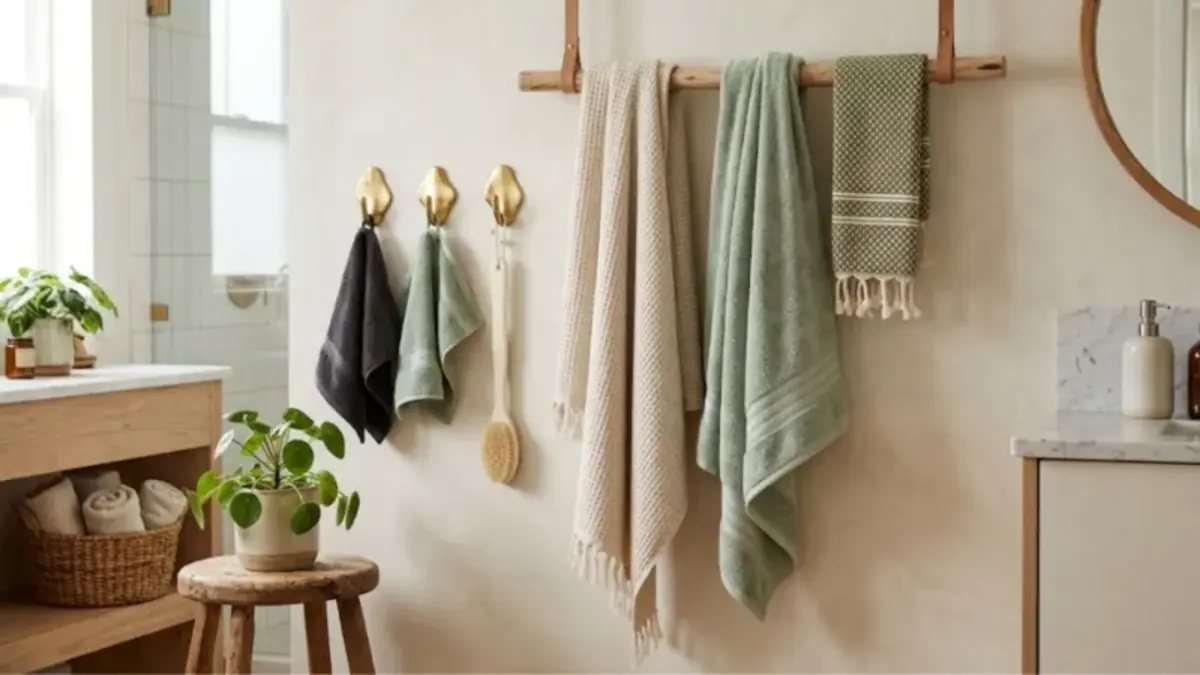
Towel radiators combine room heating with a convenient place to hang textiles. Their rails keep towels organized while helping them remain warm and dry between uses. This makes them one of the most familiar and practical multifunctional bathroom fixtures.
They are available in a range of sizes, making them adaptable to different layouts. A compact model may fit a narrow wall in an en suite, while a larger version can hold several towels in a shared family bathroom.
When selecting a towel radiator, estimate how many towels will usually be hung at once. A unit that looks large when empty may offer less usable rail space after thick towels are added. Placement should also make the towels easy to reach without blocking doors, cabinets, or movement through the room.
A towel radiator can reduce the need for separate hooks, racks, and heating fixtures, but it should still be incorporated into the overall heating plan. Its position, size, and intended load all affect how useful it will be.
The most successful modern bathrooms use multifunctional products selectively. Toilets with integrated sinks conserve space and reuse water, baths hide essential supplies, mirrored radiators combine warmth with reflection, and towel radiators organize textiles while helping them dry. By measuring carefully, protecting the budget, retaining existing plumbing where practical, and avoiding rushed or overly complex DIY work, homeowners can create a bathroom that is efficient, attractive, and genuinely easier to use.