Pedestal Sink vs Vanity: Choosing the Best Fit for Your Bathroom
Choosing between a pedestal sink vs vanity affects much more than the look of a bathroom. The right sink influences available floor space, storage, cleaning, and how comfortably the room works each day.
Pedestal sinks provide a light, streamlined appearance, while vanities combine a basin with countertop and cabinet storage. Understanding the strengths and limitations of each option will help you select a fixture that suits both your bathroom and your routine.
Understanding Pedestal Sinks
A pedestal sink consists of a basin supported by a single pedestal. Its slim profile takes up relatively little visual and physical space, helping a compact bathroom feel more open.
Although pedestal sinks are often associated with traditional interiors, their clean form can also complement contemporary bathrooms. They are especially suitable for powder rooms, guest bathrooms, and other spaces where extensive storage is not essential.
Pedestal Sink Design and Materials
A typical pedestal sink has a freestanding basin and a narrow supporting base. The pedestal creates a finished, coordinated appearance while concealing at least some of the plumbing beneath the bowl.
Common materials include:
- Porcelain
- Ceramic
- Vitreous china
These materials create a smooth bathroom surface and are available in styles ranging from decorative traditional designs to simple modern forms.
What a pedestal sink does not include is equally important. There is no cabinet underneath and usually little or no usable counter space around the basin. Everyday items such as hand soap may fit on the rim, but larger collections of toiletries will need to be stored elsewhere.
Advantages of a Pedestal Sink
The compact shape is one of the main reasons to choose a pedestal sink. Without a wide cabinet or countertop, it occupies less of the room and preserves an open feeling. This can make it an effective choice for a small bathroom where a full vanity would appear bulky.
Pedestal sinks are also versatile from a design perspective. A sculpted basin can support a vintage or traditional scheme, while a sink with crisp lines can suit a modern room.
Other benefits include:
- Fewer cabinet and countertop surfaces to maintain
- A streamlined appearance
- Compatibility with small or awkward spaces
- A generally lower purchase cost than a complete vanity
For a bathroom that already has enough storage, the simplicity of a pedestal sink can be an advantage rather than a compromise.
Drawbacks of a Pedestal Sink
The most significant drawback is the absence of built-in storage. There are no drawers or cupboards for spare towels, cleaning products, toilet paper, or personal care items. This can quickly become frustrating in a busy main bathroom.
Countertop space is also extremely limited. If several people need to keep toiletries near the basin, the sink rim is unlikely to be sufficient. Adding too many items around it can undermine the uncluttered appearance that makes a pedestal sink appealing.
Plumbing may also remain partially visible, depending on the sink and pipe arrangement. Some homeowners appreciate this straightforward look, while others prefer the way a vanity cabinet conceals pipework.
Finally, a pedestal sink is not maintenance-free. Although its exposed surfaces can be easy to access, dust and dirt may collect around the base, behind the pedestal, or where the pedestal and basin meet.
Understanding Vanity Sinks
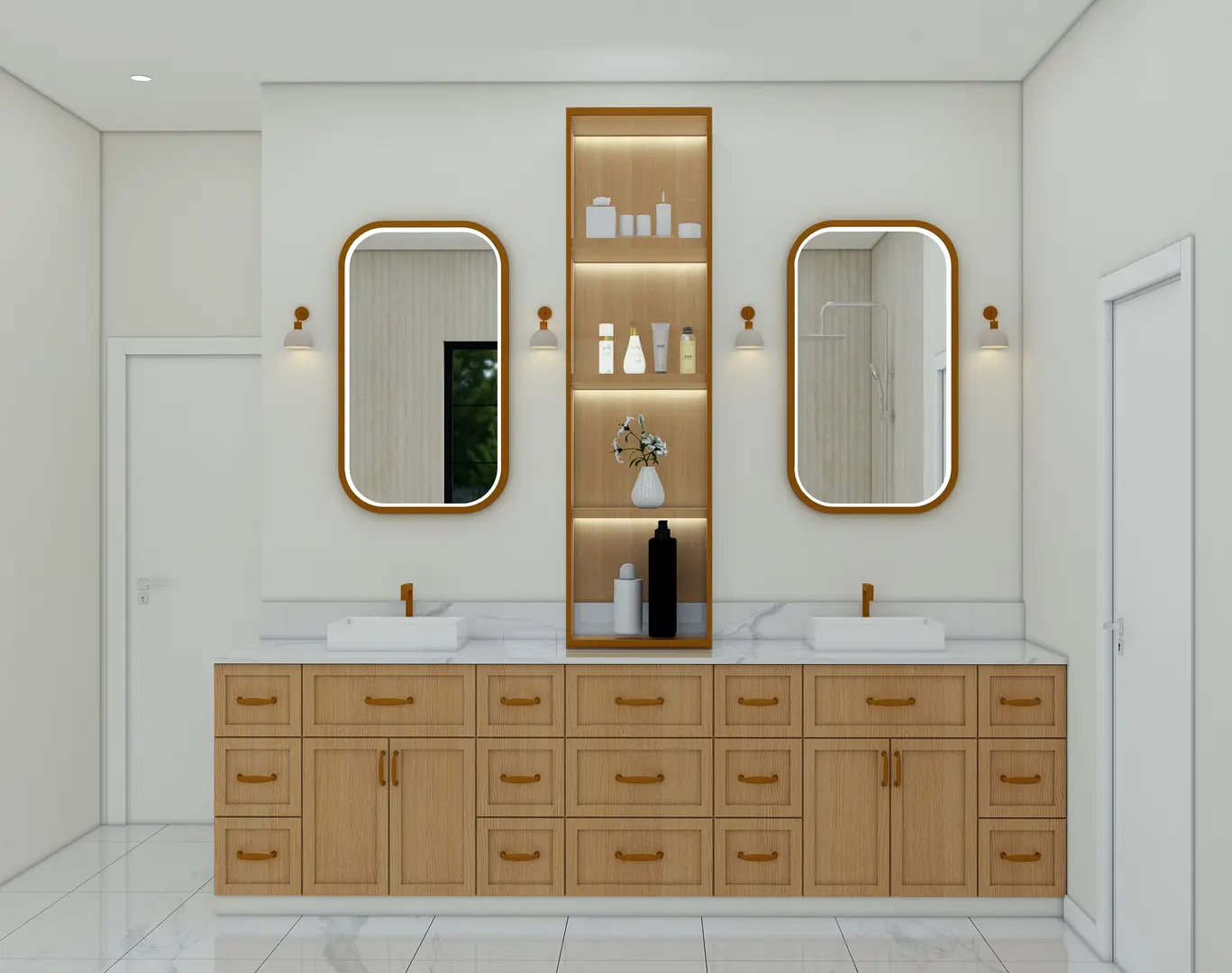
A vanity sink combines a basin with a countertop, cabinet, or both. The sink may be fitted into the counter, placed on top of it, or incorporated into the overall vanity surface.
Vanities come in a wide range of sizes and styles. A small unit can provide modest storage in a compact room, while a larger vanity can become a major feature in a spacious bathroom. Their defining practical advantage is the storage available beneath or around the sink.
Vanity Sink Components and Options
A vanity generally brings together three functional elements:
- A bathroom sink
- A countertop or surrounding surface
- Cabinet, drawer, or shelf storage
Cabinet structures may be made from wood or MDF, while countertops can include stone and other bathroom-suitable materials. The chosen materials influence the vanity’s appearance, price, and maintenance needs.
Both freestanding and wall-mounted configurations are available. Freestanding vanities extend to the floor or stand on legs, creating a substantial furniture-like effect. Wall-mounted models leave the floor visible underneath, resulting in a lighter visual profile while still providing storage.
Benefits of a Vanity Sink
Storage is the clearest advantage of a vanity. Cabinets and drawers provide dedicated places for toiletries, towels, grooming tools, and cleaning supplies. Keeping these items out of sight helps the room remain organised.
The countertop also creates a convenient surface for frequently used toiletries. Instead of balancing items along a narrow sink edge, users have a defined area for soap, toothbrush holders, and other daily necessities.
Vanities also offer extensive design flexibility. Homeowners can choose among different:
- Cabinet sizes and layouts
- Countertop materials
- Colours and finishes
- Freestanding or wall-mounted forms
- Traditional and contemporary styles
This customisation makes it easier to coordinate the sink area with the rest of the bathroom.
Limitations of a Vanity Sink
A vanity takes up more floor or wall space than a pedestal sink. In a narrow bathroom, a deep or wide cabinet can restrict movement and make the room look crowded. Even when a unit technically fits, it may not create a comfortable layout.
Cost is another consideration. Because a vanity includes a sink, countertop, cabinetry, fittings, and multiple materials, it will generally cost more than a basic pedestal sink. Larger sizes and customised finishes can raise the price further.
A vanity also has more surfaces and components to maintain. The basin and countertop need regular cleaning, while cabinet fronts, handles, edges, and interior storage areas also require attention. Cabinet materials must be cared for appropriately in the bathroom environment.
Pedestal Sink and Vanity: The Main Differences
The choice between these sink types usually comes down to space, storage, style, cost, and maintenance.
| Consideration | Pedestal sink | Vanity |
|---|---|---|
| Space use | Slim and visually open | Requires more floor or wall area |
| Storage | None built in | Cabinets, drawers, or shelves |
| Counter space | Very limited | Usually provides a useful surface |
| Style | Streamlined, classic, or minimalist | Broad range of designs and finishes |
| Purchase cost | Generally more affordable | Usually higher due to added components |
| Maintenance | Fewer overall surfaces | Basin, counter, and cabinet need care |
Neither option is automatically better. The best choice depends on what the bathroom needs to provide.
How Much Space Each Option Needs
A pedestal sink can preserve an open feeling in a small bathroom. Its narrow base leaves more of the floor visible, and the absence of a cabinet reduces visual bulk. This is particularly useful in powder rooms or bathrooms where ease of movement matters more than under-sink storage.
A vanity is often better suited to a larger room, especially when storage is a priority. Compact vanities can work in smaller bathrooms, but the cabinet dimensions must be considered carefully. The room should still feel comfortable once doors, drawers, and other fixtures are taken into account.
Storage and Everyday Use
A vanity offers storage exactly where many people need it: beside and beneath the sink. Frequently used toiletries can stay in a drawer or on the countertop, while less attractive supplies can be hidden behind cabinet doors.
A pedestal sink provides no equivalent storage. Separate furniture or accessories may therefore be necessary. Failing to plan for this difference can result in bottles, grooming products, and other items collecting around the basin.
Think about who uses the bathroom. A lightly used guest bathroom may function perfectly with a pedestal sink. A shared bathroom containing numerous personal care items will often benefit from a vanity.
Storage Solutions for Bathrooms with Pedestal Sinks
Choosing a pedestal sink does not mean accepting a permanently cluttered room. Storage can be added elsewhere through:
- A mirrored cabinet above the sink
- Wall-mounted shelves
- Baskets for grouped essentials
- A slim freestanding storage unit
- Hooks or rails for towels
- Storage placed above the toilet
- A nearby linen cupboard
Use wall space carefully so that storage does not make the bathroom feel crowded. Keep daily essentials within easy reach and move occasional-use items to another cabinet when possible.
These additions can make a pedestal-sink bathroom more functional, but they do not change the sink itself. If substantial built-in storage is essential, a vanity remains the more direct solution.
Comparing Style and Visual Appeal
Pedestal sinks have a strong classic appeal. Their simple silhouette can create an elegant focal point without visually dominating the room. Decorative versions work well in traditionally styled bathrooms, while plain designs can contribute to a clean, modern scheme.
Vanities provide a broader range of visual choices. Cabinet profiles, colours, countertops, hardware, and sink configurations can all influence the finished design. A vanity can resemble a traditional piece of furniture or appear sleek and minimal.
Personal preference plays a large role here. Some people find pedestal sinks more attractive because of their uncluttered form. Others prefer a vanity because it combines decorative impact with practical storage. Ideally, appearance should support rather than interfere with daily use.
Comparing Purchase Costs
Pedestal sinks are generally the more affordable option because they have fewer components. They do not require a full cabinet or a large countertop, making them appealing when the project budget is limited.
A vanity normally costs more because its price reflects the basin, countertop, cabinet construction, and chosen finishes. However, the higher cost may be justified when storage and customisation are priorities.
Purchase price is only one part of the decision. Plumbing modifications and installation requirements can affect either option, particularly when replacing one sink type with the other.
Cleaning and Maintenance Differences
A pedestal sink has fewer broad surfaces to clean. There is no countertop to wipe or cabinet to maintain, and much of the basin and pedestal remains exposed and accessible.
However, dust and dirt can gather behind the sink, around the narrow base, and at connection points. These areas may require deliberate attention during routine cleaning. The exposed floor also remains visible, so buildup may be more noticeable.
A vanity requires regular care across several surfaces. In addition to cleaning the basin, users need to wipe the countertop and maintain cabinet doors, handles, edges, and interior storage. The appropriate cleaning method will depend on whether the vanity incorporates wood, MDF, stone, or another finish.
Bathroom Sink Selection Mistakes to Avoid
A sink should suit the bathroom’s dimensions and provide the functionality required by its users. Avoid making the decision based on appearance alone. Storage, layout, maintenance, plumbing, and everyday habits all matter.
Failing to Account for Bathroom Size
Measure the available area before choosing a pedestal sink or vanity. Consider the width and depth of the fixture as well as how it relates to doors, drawers, toilets, showers, and walking space.
A vanity that is too large can make a small room feel cramped. Conversely, a very small pedestal sink may appear out of proportion or provide too little usable basin area for a larger, frequently used bathroom. The fixture should fit both the dimensions and the scale of the room.
Underestimating Storage Requirements
Storage is central to an organised bathroom. Before selecting a sink, list the items that need to remain in the room and decide where each category will go.
If you choose a pedestal sink, plan separate storage in advance. Shelves and cabinets can help, but they require their own wall or floor space. If adding multiple storage pieces defeats the purpose of choosing a compact sink, a vanity may be the more practical option.
Putting Appearance Before Practicality
A beautiful fixture can become inconvenient if it does not support everyday routines. Consider how many people use the room, how much counter space they need, and which supplies must remain close to the basin.
This does not mean sacrificing style. Instead, look for the best balance. Choose a pedestal sink when its simplicity genuinely suits the room, or select a vanity that delivers storage in a finish consistent with your preferred design.
Overlooking Plumbing Requirements
Pedestal sinks and vanities can require different plumbing arrangements. A vanity may conceal pipes inside its cabinet, while a pedestal installation may leave some connections more visible. Existing supply and drainage positions may not work equally well with both fixtures.
Before making a final purchase, check whether plumbing modifications will be necessary. This is particularly important when switching from a vanity to a pedestal sink or replacing a pedestal with a cabinet unit. Accounting for these requirements early helps you compare the options more accurately and choose a sink that fits the bathroom as well as the project plan.