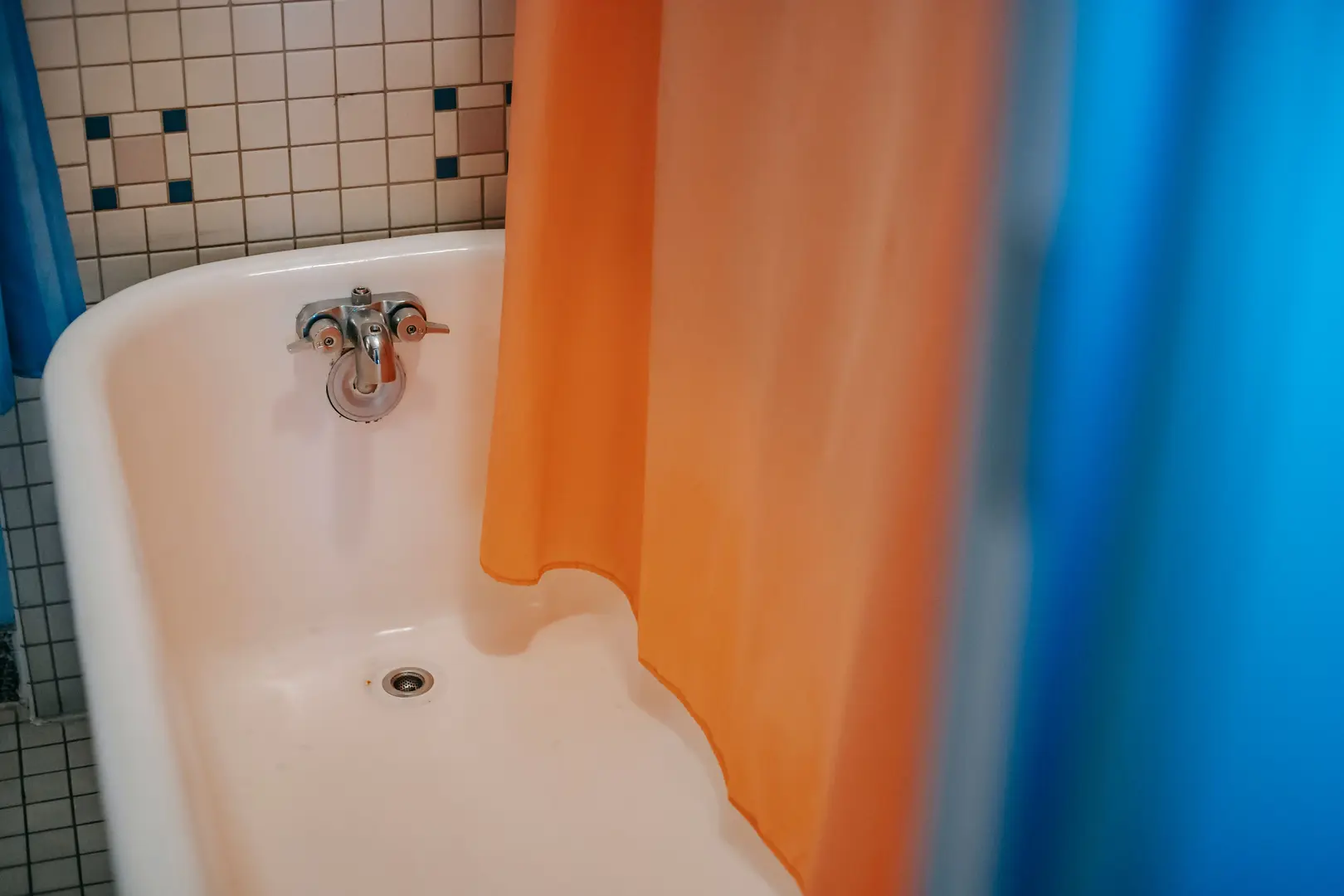
How to Remove Pink Stains From a Shower Curtain Liner
Pink stains on a shower curtain liner are usually caused by moisture-loving buildup rather than a problem with the curtain itself. The pink, salmon, or orange film often collects near the bottom hem because that is where water, soap residue, and slow drying come together. Cleaning the liner can remove it, but the stain will keep returning unless the liner can dry fully between showers.
The practical fix is to clean the liner according to its material and care label, then improve the conditions around it: pull it closed after showering, keep it inside the tub, reduce soap film, and give the bathroom more airflow. If the liner remains stained, slimy, cracked, or musty after cleaning, replacement is usually the simpler choice.
What are pink stains on a shower curtain liner?
People often call this problem pink mold on a shower curtain liner, but pink discoloration is not necessarily mold. It can be a bacterial film, often associated with Serratia marcescens, as well as a mixture of soap residue, body oils, minerals, and other bathroom buildup. The resulting color may be pink, peach, red-orange, or rusty orange.
This is different from the dark spotting commonly associated with mold or mildew. Black, dark green, or deeply embedded spots deserve more caution, especially if there is a persistent musty odor or the material cannot be cleaned thoroughly. In that case, follow the liner manufacturer’s care guidance and consider replacing the liner rather than repeatedly treating it.
Pink or orange stains on a shower curtain liner are most likely when the liner stays damp for long periods. They are especially common along the lower few inches, inside folds, around magnets, and behind a liner that stays bunched to one side.
Why the pink stain keeps coming back
A clean liner can develop pink staining again quickly if the bathroom conditions have not changed. Look for one or more of these causes:
- The liner is pushed open after a shower instead of spread out to dry.
- The bottom of the liner sits outside the tub or against the tub ledge, where water can collect.
- The liner folds tightly against itself and remains wet inside the folds.
- The bathroom fan is not used, is not working well, or the room has limited airflow.
- Soap, shampoo, conditioner, and body wash leave a film on the liner.
- The liner is rarely washed or wiped down.
- A plastic liner has become rough, brittle, or permanently stained, making it harder to clean.
The key point is that cleaning removes existing buildup; drying and regular maintenance make the surface less welcoming for it to return.
How to clean a pink shower curtain liner
Start by checking the sewn-in care label or packaging, if available. Fabric liners are often machine washable, while plastic, vinyl, PEVA, or EVA liners may need gentler hand cleaning. Do not assume every liner can go in a washing machine or dryer.
Cleaning a washable fabric liner
If the care label allows machine washing, remove the liner from the hooks and wash it on the recommended setting with regular laundry detergent. Washing the liner with a couple of clean towels can help create gentle agitation and keep the liner from twisting into a tight bundle.
Before washing, inspect the lower edge. If there is loose residue, rinse it away or gently wipe it first. Avoid using a harsh product that is not approved for the fabric or its waterproof coating.
After washing:
- Hang the liner back on the rod while it is still damp.
- Pull it fully closed inside the tub.
- Smooth out major folds so both sides can air-dry.
- Keep the bathroom ventilated until the liner is dry.
Do not put a fabric liner in a dryer unless its label specifically permits it. Heat can damage some water-resistant backings and coatings.
Cleaning a plastic, vinyl, PEVA, or EVA liner
For a plastic liner, begin with the least aggressive approach. Fill the tub with enough warm water to reach the stained area, or lay the liner flat in the tub. Use a soft cloth or non-abrasive sponge with a mild bathroom cleaner or dishwashing liquid diluted according to its label.
Wipe the stained area gently, paying attention to the bottom hem, folds, magnets, and grommets. Rinse thoroughly so cleaner residue does not remain on the liner. Then hang it straight and pull it closed to dry.
For stains that remain, use only a product that is suitable for that liner material and follow its label instructions. Some cleaners can discolor, stiffen, or weaken plastic liners. Test a small, hidden area first when the manufacturer does not give clear cleaning guidance.
Using disinfecting or bleach-based products carefully
A disinfecting product may be appropriate when pink film is recurring, but use it only as directed on the product label and only on materials the liner manufacturer permits. Good ventilation and gloves can help reduce contact with cleaning products.
Never mix bleach with ammonia, acids, vinegar, or other cleaning products. Mixing household cleaners can create dangerous fumes. If you are unsure whether two products are compatible, do not combine them.
For a fabric liner, check both the liner label and the laundry product label before using any bleach-containing product. For plastic liners, avoid leaving strong cleaners on the surface longer than directed, since the material can become dull, brittle, or damaged.
A simple reset for recurring pink stains
If your pink shower curtain liner keeps coming back stained, clean more than the liner. The tub edge, shower wall, curtain rings, and lower portion of the curtain can all hold the same residue and transfer it back.
Use this reset routine:
- Clean the liner using the correct method for its material.
- Wipe the tub rim, wall corners, and the area where the liner rests.
- Clean shower hooks or rings if they have visible residue.
- Rinse away leftover soap and cleaner from the tub and liner.
- Hang the liner inside the tub and pull it fully closed to dry.
- Run the bathroom exhaust fan during the shower and afterward, if you have one.
A fully spread liner dries more reliably than one gathered at one end of the rod. Keeping it inside the tub also helps prevent water from collecting on the bathroom floor or running behind the liner.
How to prevent pink and orange stains from returning
The best prevention routine is short enough to do every day.
After every shower
- Pull the liner closed rather than leaving it bunched to one side.
- Keep the liner inside the tub basin.
- Separate stuck folds with your hand so trapped moisture can escape.
- Run the exhaust fan if available, or open a door or window when practical.
- Check that the bottom edge is not folded over the tub rim.
Once a week
- Wipe the lower section of the liner where residue first appears.
- Rinse soap film from the tub edge and shower walls.
- Look behind the liner for damp folds or trapped water.
On a regular washing schedule
Wash a machine-washable fabric liner before buildup becomes obvious. For a plastic liner, wipe it down regularly and clean it more thoroughly when the bottom edge starts to look dull, slippery, pink, or orange.
The right schedule depends on how often the shower is used, how humid the bathroom is, and whether the liner dries between uses. A liner in a busy bathroom with limited ventilation will need attention more often than one in a well-ventilated guest bath.
Liner placement details that make a difference
Small placement problems can keep a liner wet even in an otherwise clean bathroom.
Keep the liner inside the tub
The liner should hang inside the tub or shower base while in use and while drying. If it hangs outside the tub, water can drip onto the floor, but if it is trapped between the tub wall and decorative curtain, it may also stay damp longer.
Use enough hooks and a stable rod
A liner that sags or gathers excessively tends to form wet pockets. Make sure the hooks are evenly spaced and the rod is level enough that the liner does not slide into one damp pile.
Check the liner length
A liner that is much too long can bunch on the tub floor, where it stays wet. One that is too short may allow water to escape. The bottom should hang into the tub without pooling heavily on the floor of the tub.
Separate the decorative curtain from the liner
If you use an outer fabric shower curtain, keep it on the dry side of the tub. The liner should handle the water inside the tub, while the decorative curtain should not stay pressed against it after bathing.
When replacement is more practical than cleaning
A shower curtain liner is inexpensive to replace compared with the time spent trying to restore a heavily worn one. Consider replacement when any of these are true:
- Pink, orange, black, or dark staining remains after appropriate cleaning.
- The liner has a persistent musty smell.
- The surface feels slimy again soon after washing.
- Plastic material is stiff, cracked, brittle, torn, or permanently cloudy.
- The weighted hem, magnets, or grommets are corroded or damaged.
- The liner no longer hangs smoothly enough to dry well.
For a recurring issue, a machine-washable fabric liner can be easier to maintain than a thin plastic liner. It is not automatically stain-proof, but regular washing may be more practical than scrubbing a deteriorating plastic surface.
Pink stains versus black mold: when to be more cautious
Pink or orange staining often points to a moisture-and-residue problem, but color alone cannot identify exactly what is on a liner. Treat any visible buildup as a cue to clean the liner and improve drying conditions.
Use additional caution with black, green, or dark spots that persist after cleaning, widespread growth, strong odors, or a liner that appears deeply affected. Replacement is often the most straightforward option for a damaged liner. If mold is extensive elsewhere in the bathroom or returns despite regular drying and cleaning, it may be worth investigating the bathroom’s ventilation and moisture conditions more closely.
The most effective long-term answer is simple: clean the liner before buildup becomes heavy, pull it closed after each shower, and make sure it has enough air to dry.
References
- That Pink Stuff on Your Shower Curtain Probably Isn’t Mold—Here’s …. (n.d.). https://www.yahoo.com/lifestyle/articles/pink-stuff-shower-curtain-probably-140000683.html
- Why Is My Shower Curtain Turning Pink and How Can I Stop It?. (n.d.). https://daviesdecor.com/why-is-my-shower-curtain-turning-pink
- Why Does A Shower Curtain Turn Pink | Storables. (n.d.). https://storables.com/furniture-and-design/bathroom-accessories/why-does-a-shower-curtain-turn-pink
- Fabric Shower Curtain Liners Waterproof & Mold Resistant | Orange - Walmart.com. (n.d.). https://www.walmart.com/browse/home/fabric-shower-curtain-liners/orange/4044_539095_2141805_7546250/Y29sb3I6T3Jhbmdl
- When to Replace Shower Curtain Liner | ExpireGuide. (n.d.). https://expireguide.com/home-maintenance/shower-curtain-liner
- Pink Mold in Shower and Bathroom: what causes it, how does it form …. (n.d.). https://mintconditionorlando.com/pink-mold-shower-bathroom
- That pink film in your bathroom isn’t just unsightly soap scum. It’s an …. (n.d.). https://www.instagram.com/p/DUOX2NpDZZy?hl=en
- How To Remove Pink Mold On Shower Curtain - Roochii Cleaning. (n.d.). https://roochiicleaning.com/pink-mold-on-shower-curtain