How to Stop Water from Escaping a Walk-In Shower
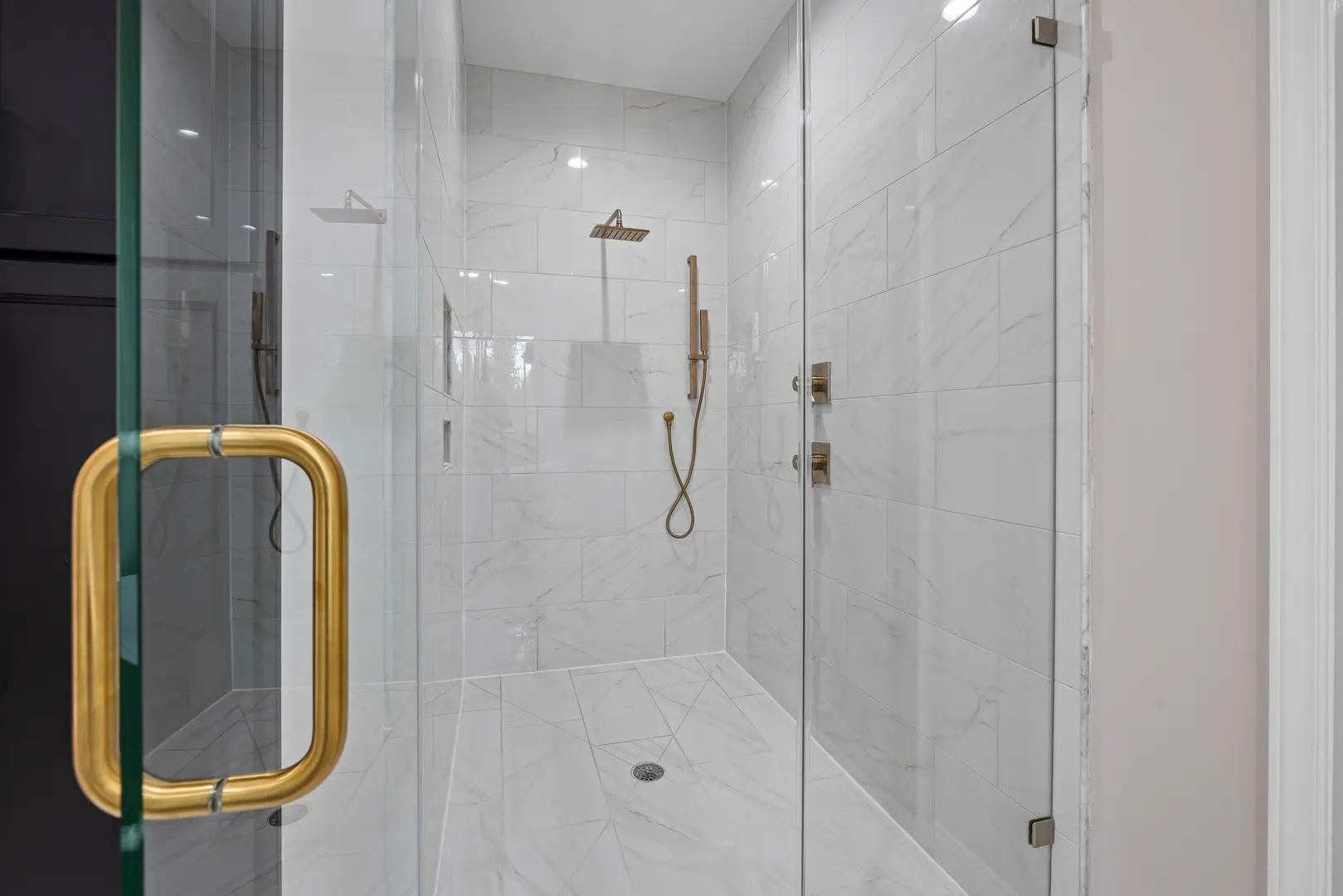
Water on the bathroom floor is one of the most frustrating problems with a walk‑in shower. You step out and immediately land in a puddle, risking a slip and a mess that soaks into towels or rugs. Keeping water where it belongs — inside the shower — is the whole point of the enclosure you choose.
The good news is you have more options than you might think. Some are cheap and quick; others are more permanent and upscale. Each approach has trade‑offs. Here we walk through seven practical ideas to prevent water from escaping a walk‑in shower, with honest pros and cons so you can decide what fits your space, budget, and style.
Whether you are remodeling a small guest bath or designing a master suite, these solutions will help you keep the floor dry. Let’s start with the most budget‑friendly choice.
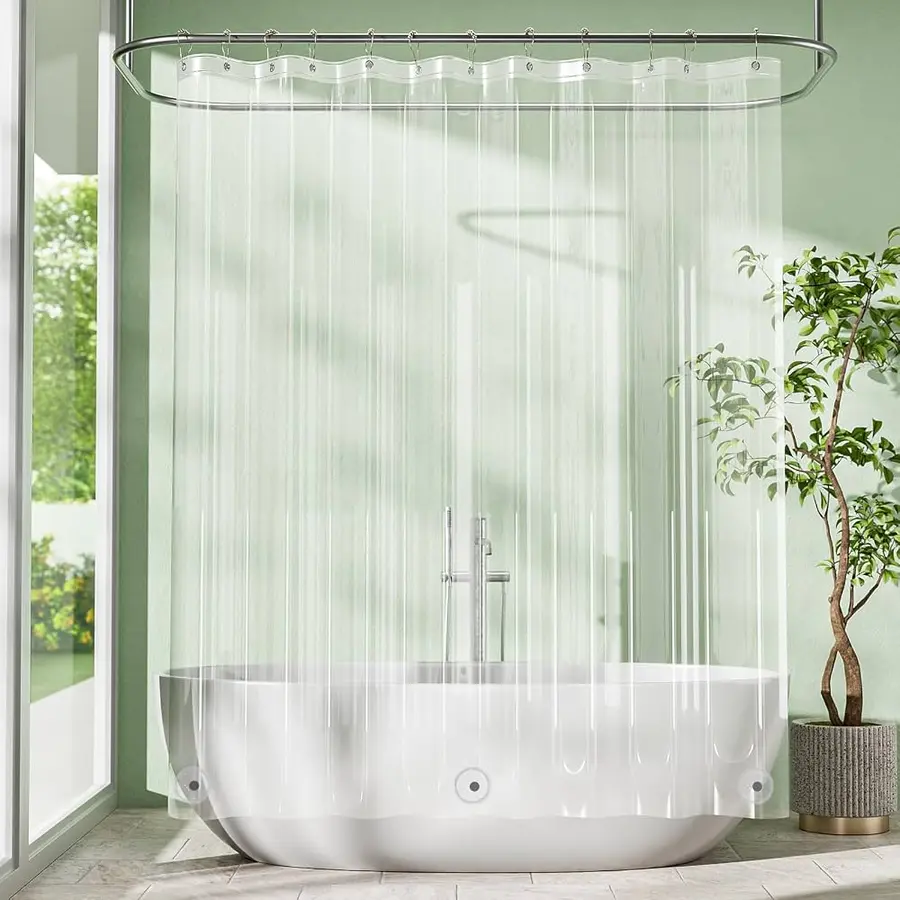
Idea #1: Use a Shower Curtain (or Weighted Shower Curtain)
If you want the most affordable way to reduce water on the floor, a shower curtain is the route to take. It is widely available and costs very little. But this low‑price option comes with its own drawbacks, which are spelled out in the cons below.
Pros of a Shower Curtain
- They are cheap – You can find shower curtains anywhere, and they won’t cost a lot.
- Wide variety – Curtains come in virtually any color, pattern, or style. There are even clear designs with pockets for a phone or tablet.
- Privacy – A curtain keeps your shower private without the expense of opaque glass.
- Simple installation – Any DIYer can hang a curtain rod and curtain. No professional needed.
- Full opening access – The entire side of the shower stays open, which is helpful if a caregiver needs to assist someone.
Cons of a Shower Curtain
- Short lifespan – Shower curtains get moldy and scummy quickly. They need regular replacement; it is not a one‑time purchase.
- Water still escapes – If the curtain is not weighted, water will find its way onto the floor. Even a curved rod helps only so much.
- Not an upscale look – A standard curtain will not give you the “wow” factor. High‑end custom curtains exist, but they are a different budget entirely.
Temporary Fixes: Using Curtains, Liners, and Bath Mats
While you decide on a permanent solution, a few quick measures can cut down on water. One user reported using a shower curtain with an inner liner to help contain water that hits the wall and floor. Another suggestion is to place a bath mat in the corner just outside the shower to absorb whatever escapes. These are temporary patches — they do not stop the leak itself, but they can save your floor from damage in the short term.
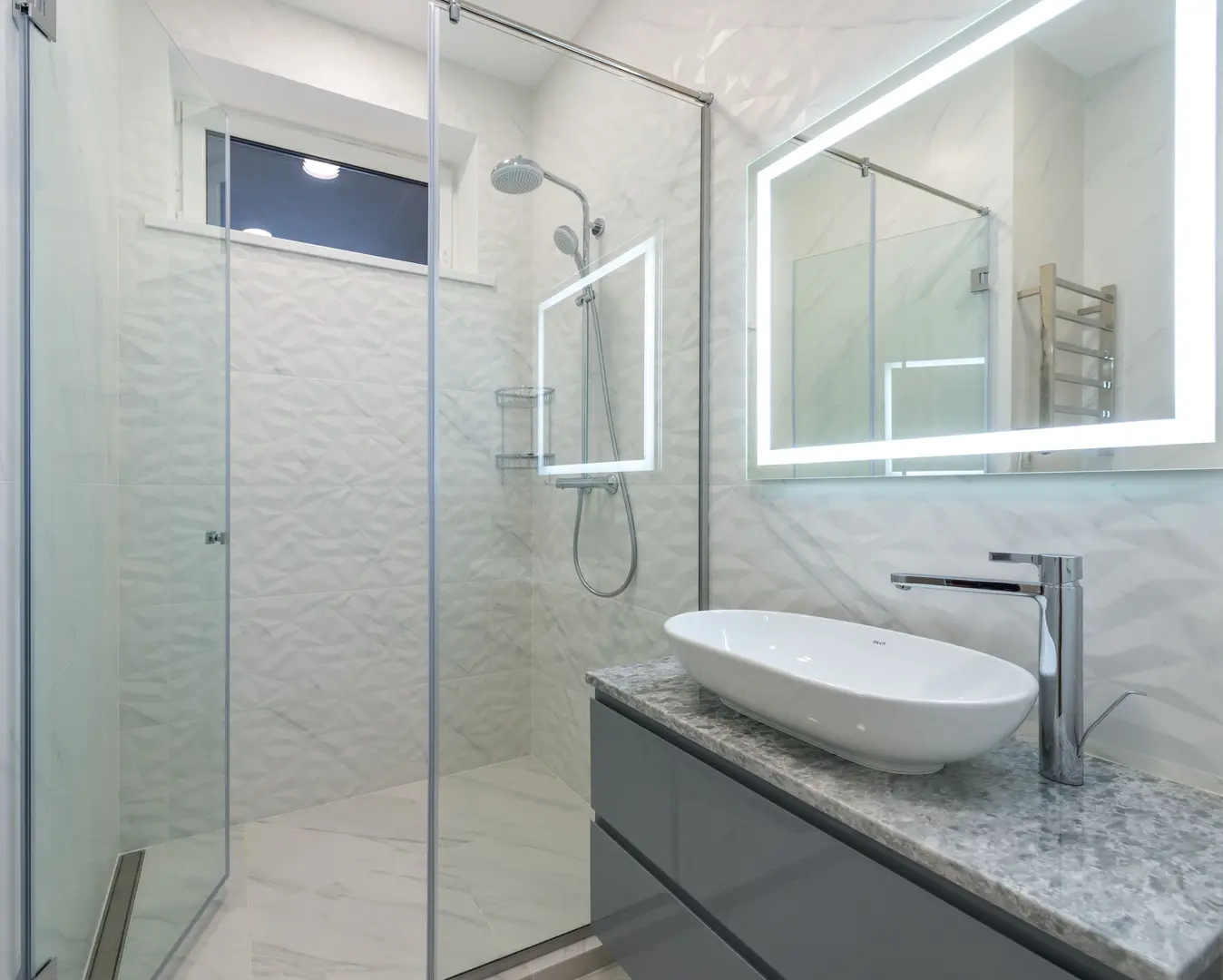
Idea #2: Use Fixed Shower Glass
A fixed glass panel is the hotel‑inspired option. It gives a clean, upscale look and can be cost‑effective compared to other glass enclosures. It works with standard shower pans, which keeps the project simpler.
Pros of a Fixed Glass Shower
- Cost‑effective – Fixed glass costs less than pivoting or sliding doors, though more than a curtain.
- Works with standard shower pans – The glass can be positioned on the centerline of the curb and anchored to the side of a standard pan.
- Customizable for privacy – You can order obscure glass without a big price jump.
- Any size – The width and height can be varied easily.
- Simple installation – The glass anchors on one wall and seals at the bottom. Easy for a DIYer or contractor.
Cons of a Fixed Glass Shower
- Water escapes through the entry gap – Because you need at least 20 inches of opening, water splashes out. In showers narrower than 66 inches, expect spillage.
- Hard to reach the valve – If the valve is on the plumbing wall behind the fixed glass, you may have to reach around and get wet before the water warms.
Are Half‑Glass Doors a Bad Choice? What to Know Before You Buy
Half‑glass doors are a specific type of fixed glass that leaves the upper portion open. One user regretted following a plumber’s recommendation for a half‑glass door — water splashed onto the floor and created a mess. The professional’s advice did not account for poor water containment. Before you buy, test the door layout or add a splash guard to avoid the same problem.
Sealing Gaps: Silicone vs. Rubber Seals
To stop water from leaking under or around a glass door, two seal options are common. One user suggested applying clear silicone along the inside of the door to seal gaps. Another recommended installing rubber seals along the door’s edge. Both cut off escape paths. A key mistake is failing to use either — water will sneak out if no barrier is in place. Silicone may need reapplication over time, while rubber seals require correct sizing and adhesion.
Idea #3: Use a Combo Fixed and Pivoting Glass Shower Screen
This clever combination adds a small fixed glass section with a pivoting door at the end. A typical size is a 23‑inch fixed panel paired with a 15‑inch pivoting door, totaling 38 inches. It is not as well known, but it solves many water‑containment issues.
Pros of a Combo Fixed and Pivoting Glass Shower Screen
- Reasonably priced – More expensive than curtains or fixed glass, but less than bypass doors, full enclosures, glass block, or curved walls.
- Works with standard shower pans – Standard pans cost less and are easy to source.
- Keeps water inside – The pivoting door can be angled inward during a shower, directing water back into the stall rather than out.
- Usable in narrow 48‑inch showers – Even a 48‑inch space can accommodate a 23‑inch fixed piece and a 15‑inch pivot door.
- Larger opening – With a total width of 38 inches and a door that swings 180 degrees, you get nearly 36 inches of entry — great for larger individuals or those with mobility challenges.
Cons of a Combo Fixed and Pivoting Glass Shower Screen
- Not the least expensive – If you are on the tightest budget, a curtain or fixed glass will be cheaper. This option sits in the middle of the cost range.
Idea #4: A Straight Glass Block Shower Wall
Glass block is a polarizing material — you either love it or hate it. But there are many design possibilities beyond the classic wave pattern. A straight glass block wall offers durability and privacy at a moderate cost.
Pros of a Straight Glass Block Shower Wall
- Moderate cost – More expensive than curtains, fixed glass, or a combo screen, but less than curved glass block, bent glass, or a framed wall.
- Fun design possibilities – Mix sizes and patterns to create a custom look.
- High privacy – Many glass block patterns obscure the view completely.
- Prefabricated for DIY – Pre‑made glass block panels install like large Lego pieces, so even a DIYer can handle it.
- Easy to clean – Glass blocks do not show water marks or hard water deposits as much as clear glass.
- Sturdy – Blocks are 3 1/8 inches thick and anchored every 16 inches — they will not fall over.
Cons of a Straight Glass Block Shower Wall
- Thick, reduces elbow room – The 3 1/8‑inch thickness eats up space compared to flat glass (which is 3/16 to 1/2 inch).
- Traditional wave pattern may not suit contemporary tastes – Standard wavy glass block looks traditional, though metric contemporary patterns exist.
- More water escape in narrow showers – Just like fixed glass, a straight wall allows more splash‑out if the shower is not wide.
Idea #5: A Framed Wall in the Front of the Shower Entry
A framed wall might seem cheap to build, but it requires a custom offset shower pan and interior wall coverings (panels or tile), which drives up the total cost. It is one of the pricier options on the list.
Pros of a Framed Wall at the Entry of a Walk‑In Shower
- Easy to build – Framing is straightforward, and you can use the same waterproofing techniques as the rest of the shower.
- Provides structure for grab bars and accessories – The wall can support grab bars inside and towel bars or toilet paper holders outside.
- Full privacy – No one can see through a solid wall.
- Sturdy – Properly anchored, it is not going anywhere.
Cons of a Framed Wall at the Entry of Your Shower
- Thick, reduces space – A 4‑inch frame takes up much more room than glass, which is less than half an inch.
- Blocks light – Age‑in‑place showers benefit from natural light; a solid wall blocks it.
- Requires custom shower pan and interior wall materials – The pan must be shaped around the wall, which is expensive. You also need tile or panels on the inside, adding to the bill.
Idea #6: A Curved Glass Block Shower Wall
A curved glass block wall is stylish and unique — a real show‑stopper. The company behind this product has been supplying and installing glass block showers since 1977, so the system is well‑proven.
Pros of a Curved Glass Block Shower Wall
- Visually striking – The curved shape and wave pattern make a bold design statement.
- Privacy with wave pattern – The standard wave obscures views effectively.
- Prefabricated sections allow DIY – Pre‑made curved panels mean a handy DIYer can install them. About 40% of buyers are DIYers.
- Easy to clean – Glass blocks do not show water spots.
- Sturdy – Same 3 1/8‑inch thickness and frequent anchoring as straight block.
Cons of a Curved Glass Block Shower Wall
- Thick and curves inward – The wall bends into the shower, eating up precious elbow room. Avoid this option if the shower depth is 34 inches or less.
- Traditional wave pattern may not be contemporary – For a modern look, consider a straight glass block wall with metric patterns instead.
- Contractors may be reluctant – Some contractors are intimidated by glass block, even with prefabricated systems. You may need to explain that it is DIY‑friendly.
Idea #7: Custom Curved and Bent Shower Glass
Curved and bent glass is the high‑end choice you see in design magazines. It makes a dramatic statement but comes with a price tag that most homeowners cannot afford.
Pros of Curved and Bent Glass
- Unparalleled aesthetic – It looks unbelievable and instantly elevates a bathroom.
- Custom shaping – Can be made to a specific radius — not limited to standard sizes.
- Switchable smart glass – Available as clear‑to‑obscure glass that you control with a switch, button, or smartphone.
- Structurally strong – Especially laminated curved glass.
- Eliminates boxiness – Curves add drama and sophistication to any design.
Cons of Curved and Bent Glass
- Very expensive – The glass alone costs $70 to $120 per square foot; switchable smart glass is $85 to $120 per square foot.
- Specialty product – Your local glass shop will not stock or offer this. It requires a specialty manufacturer.
- Finding experienced installers is challenging – Many installers avoid the risk of handling costly curved panels.
Which Walk‑In Shower System(s) Do You Love? Do You Need Help with Design and Product Supply?
Here are two questions for you:
- Which of these walk‑in shower systems would you choose to keep water off the floor if money were no object?
- Which system makes practical sense for your own project?
There is no single best choice. The right system depends on your shower size, budget, taste, water-containment needs, and whether you or your contractor can install it.
Thanks for reading — and for putting up with a little humor along the way.