7 Quadrant Shower Enclosure Benefits for Your Bathroom
A quadrant shower enclosure combines efficient use of space with a clean, contemporary appearance. Its corner-based shape can make a compact bathroom feel less crowded without reducing the shower to an impractical size. The main quadrant shower enclosure benefits also include easier access, flexible fitting options, reliable water containment, and greater privacy.
Before choosing one, however, it is important to compare materials, measure the installation area carefully, and consider whether older plumbing or fixtures need attention.
Understanding Quadrant Shower Enclosures
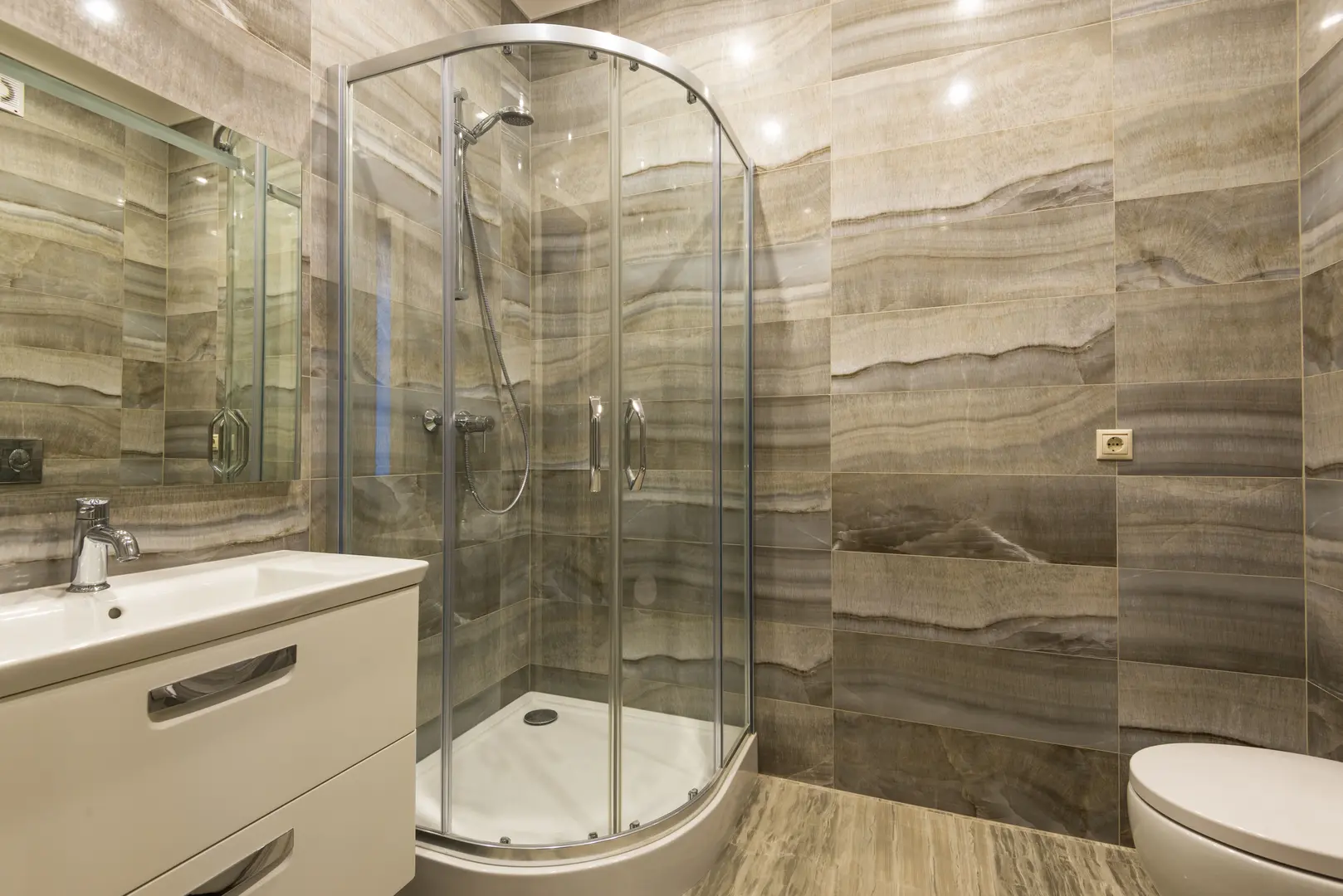
A quadrant shower enclosure has two straight sides and a curved front. The straight sides meet the bathroom walls in a corner, while the rounded outer edge projects into the room.
This shape differs from a square or rectangular enclosure, which has a more angular footprint. By removing the projecting outer corner, a quadrant design leaves more open floor space around the shower. That can make it easier to move between the shower, toilet, basin, and bathroom entrance.
Although the enclosure is designed for corner placement, it can still create a full-sized, comfortable showering area. The curved front uses the available footprint efficiently rather than allowing a sharp corner to extend into a walkway.
Quadrant enclosures are available in different sizes and configurations. Some have an evenly balanced shape, while others are designed to extend farther along one wall. Door arrangements also vary, so buyers should consider both the total footprint and the space needed to enter the shower.
Key Advantages of Choosing a Quadrant Enclosure
The seven main quadrant shower enclosure benefits cover both appearance and everyday practicality. The corner shape saves floor space, while the curved profile creates a modern focal point. Depending on the model, the enclosure may also be straightforward to fit, offer convenient access, suit different bathroom surfaces, contain water effectively, and provide more privacy than an open shower.
Make Better Use of Limited Bathroom Space
Space efficiency is one of the strongest reasons to choose a quadrant enclosure. Bathrooms often contain several essential fittings within a limited area, and a projecting shower corner can make the room feel cramped.
A quadrant enclosure uses a corner that might otherwise be difficult to use efficiently. Its two straight sides sit against the walls, while the curved front reduces how far the enclosure intrudes into the main floor area. This can preserve more room for walking and make the layout feel less obstructed.
The design is particularly useful when:
- The bathroom has a narrow central walkway.
- The shower needs to sit close to a basin or toilet.
- An inward- or outward-opening door would be inconvenient.
- A square enclosure would project too far into the room.
- The goal is to retain a useful showering area in a compact layout.
Space efficiency is not limited to very small bathrooms. In a larger room, a quadrant enclosure can help maintain a more open arrangement or leave space for additional storage. It may also soften the visual boundary between the shower and the rest of the room.
Careful planning remains essential. The enclosure should not interfere with nearby fixtures, and users still need enough room to enter and leave comfortably. The curved footprint makes better use of the available area, but it cannot compensate for inaccurate measurements or a poorly planned layout.
Add a Sleek, Contemporary Look
The curved front gives a quadrant enclosure a smooth, sophisticated profile. Compared with a sharply angular cubicle, the rounded shape can make the bathroom look less rigid and create a more natural visual flow.
Glass panels also help the room feel brighter and more open. Clear glass allows sight lines to continue through the enclosure, which can be helpful in compact bathrooms where solid visual barriers make the space appear smaller.
Frameless and minimally framed choices reinforce a clean, minimalist style. With fewer prominent borders, the curved glass becomes the main design feature. More visible frames can still work well where the aim is to coordinate the enclosure with other bathroom finishes.
The design is versatile enough to complement different decorative approaches. A simple clear enclosure suits a restrained contemporary room, while patterned or frosted glass can add texture and visual interest. The final appearance depends on the glass, frame, handles, shower tray, wall finish, and surrounding fixtures rather than on the enclosure alone.
Simplify the Installation Process
Many quadrant enclosures are designed with straightforward fitting in mind. Pre-assembled panels may reduce the number of individual components that have to be put together during installation, and clear manufacturer instructions can make some models suitable for experienced DIY installers.
The corner position can also provide a clear basis for the layout because the enclosure aligns with two existing walls. Nevertheless, those walls must be suitable for secure fixing, and the shower tray or tiled surface must be correctly prepared.
Installation normally involves more than assembling the enclosure itself. The complete project may require:
- Checking that the walls and base are properly aligned.
- Positioning and securing the panels.
- Confirming that doors move and close correctly.
- Sealing the appropriate joints.
- Connecting or adjusting shower plumbing.
- Preparing a tray or tiled shower surface.
DIY fitting is most realistic when the area has already been prepared, the plumbing is suitable, and the installer is confident handling large enclosure panels. Professional help is advisable when waterproofing, plumbing alterations, old components, or renovation decisions are involved. Paying for guidance early can help prevent a seemingly simple enclosure installation from turning into a more expensive correction later.
Improve Shower Access
A quadrant enclosure can provide a wide and convenient entrance, depending on its size and door configuration. The curved front allows doors to follow the shape of the enclosure rather than projecting awkwardly into the room.
This arrangement may make access easier in a bathroom where nearby fixtures limit how a conventional hinged door could open. It can also benefit people with mobility issues who need a less obstructed approach to the shower.
Access should be assessed using the actual opening rather than the overall width of the enclosure. When comparing models, consider:
- How wide the usable entrance will be.
- Whether the doors slide or open into the room.
- The height of any shower tray edge.
- The location of handles and controls.
- The clear floor area directly outside the entrance.
A wider doorway does not automatically make an enclosure suitable for every accessibility requirement. Individual mobility needs vary, and the tray, flooring, support features, and surrounding layout all affect ease of use. Where accessibility is a priority, involve the intended user and an appropriate bathroom professional before choosing the enclosure.
Fit Different Bathroom Designs
Quadrant shower enclosures are compatible with a broad range of bathroom styles. Their curved form works particularly well in contemporary interiors, but glass, frame, and hardware choices can also help them fit more traditional or decorative rooms.
They can be installed on a matching shower tray or over a properly prepared tiled surface. A tray provides a defined base for the enclosure, while a tiled installation can create a more integrated appearance. The right option depends on the room design, existing floor, drainage arrangement, and installation requirements.
Their corner placement also gives designers flexibility. The enclosure can be introduced into a new layout or used to replace another corner shower, provided the dimensions and plumbing are suitable.
Do not assume that every quadrant model will fit every corner. Door orientation, wall length, nearby fittings, and plumbing positions can affect compatibility. If the room is being fully renovated, it is best to choose the enclosure early enough for the tray, tiles, drainage, and shower controls to be planned around it.
Keep Shower Water Better Contained
An enclosure provides a physical barrier around the showering area. Unlike a more open design, it surrounds the user with panels and doors that help limit spray and keep water inside the designated space.
Better containment can make the rest of the bathroom easier to manage by reducing water splashing onto nearby flooring, storage, or fixtures. This is especially valuable where the shower is close to the toilet or basin.
Effective containment depends on correct installation. Panels should meet as designed, doors need to close properly, and the enclosure must be fitted to a suitable tray or tiled surface. Seals and joints also need routine inspection because worn or displaced components can allow water to escape.
The enclosure should therefore be viewed as part of a complete water-management system. Its shape and doors help contain spray, but correct preparation, fitting, sealing, and maintenance are equally important.
Create a More Private Showering Area
A quadrant enclosure usually feels more private than an open shower because it defines and surrounds the showering space. Privacy can be increased further by choosing frosted, tinted, or patterned panels instead of fully clear glass.
Each finish creates a different balance:
- Clear glass keeps the room visually open but offers the least screening.
- Frosted glass obscures the showering area while still allowing light through.
- Patterned glass adds decorative detail and partial visual screening.
- Tinted glass reduces direct visibility and can create a more distinctive look.
This flexibility is useful in shared bathrooms or households where people may need to use different parts of the room at the same time. It also allows buyers to gain privacy without adding a solid wall that could make the bathroom feel closed in.
What to Consider Before Buying a Quadrant Enclosure
A quadrant enclosure should be chosen for the actual room rather than appearance alone. Materials, dimensions, door operation, installation surface, plumbing condition, maintenance needs, and budget all deserve attention.
It is also worth looking beyond the initial purchase price. A lower-cost enclosure or set of fixtures may appear economical, but weaker components can involve a trade-off in long-term durability. The best value is usually the option that balances cost, suitable materials, practical access, and compatibility with the bathroom.
Compare Available Enclosure Materials
Glass is a common choice because it creates a bright, polished appearance. The finish affects both style and privacy:
| Material or finish | Main advantages | Points to consider |
|---|---|---|
| Clear glass | Open appearance and uninterrupted sight lines | Provides limited privacy and makes visible marks more noticeable |
| Frosted glass | Greater screening while allowing light through | Makes the enclosure appear more visually defined |
| Patterned glass | Decorative finish with partial privacy | The pattern should suit the wider bathroom design |
| Acrylic | Affordable, lightweight, and easy to clean | May not provide the same appearance or long-term durability as more robust options |
| Composite materials | Durable and stylish choices are available | Quality, finish, and price can vary |
The panel material is only part of the decision. Frames, handles, rollers, hinges, seals, and other fittings also affect daily use. Cheap fixtures can reduce the initial cost, but they may be less satisfying over time if they wear quickly or become difficult to replace.
That does not mean the most expensive enclosure is always necessary. Instead, compare the quality of the complete system. Look at how the doors operate, whether fittings appear sturdy, how easy surfaces will be to clean, and whether replacement components are likely to be obtainable. Manufacturer care instructions should guide cleaning so that panels, finishes, and seals are not damaged.
Choose the Right Size and Configuration
Quadrant enclosures come in a range of sizes, allowing them to suit different rooms. Accurate measurement is critical because the enclosure has to match the available wall lengths, base, and surrounding layout.
Measure the intended installation area carefully and check:
- The usable length of both walls.
- The position and dimensions of the tray or tiled base.
- The location of pipes, controls, windows, and wall projections.
- Clearance around the shower entrance.
- Space between the enclosure and nearby bathroom fixtures.
- Whether the chosen door arrangement suits the approach to the shower.
Use the product’s stated dimensions and fitting guidance rather than estimating from photographs. If an existing tray will remain, confirm that its shape and dimensions are compatible with the new enclosure.
Professional input is particularly valuable during a wider renovation. Moving plumbing, changing the floor, altering drainage, or working around older components may influence which size and configuration are practical. Involving an installer or plumber early adds to the initial planning cost, but it can help avoid choosing an enclosure that conflicts with the room or existing services.
Identifying and Replacing Outdated Shower Fixtures
Older shower fixtures can complicate an otherwise straightforward enclosure replacement. A leaking control, worn connection, or unidentified component may be difficult to repair if compatible parts are no longer readily available.
Before removing anything, inspect and document the existing setup:
- Photograph the fixtures and connections. Include controls, shower outlets, visible pipework, and any labels or markings.
- Look for identifying information. A manufacturer name, model reference, or distinctive fitting can help a plumber or supplier determine what is installed.
- Note recurring problems. Leaks, stiff controls, loose parts, or repairs that do not last may indicate that replacement deserves consideration.
- Check the planned layout. Confirm whether the existing controls and outlet will remain conveniently positioned inside the new enclosure.
- Ask about compatibility before buying. Do not assume a new visible fitting will connect directly to old concealed plumbing.
- Plan plumbing work before finishing surfaces. Decisions about fixtures should be made before walls, tiles, or enclosure panels restrict access.
If an outdated fixture cannot be identified, replacement parts are unavailable, or connections are difficult to reach, seek professional advice. A plumber can assess whether the component can reasonably be repaired or whether replacing it is the more practical option.
This early assessment is especially important when leaks are already present. Installing a new enclosure around unresolved plumbing problems can make later work more disruptive. Addressing old fixtures as part of the design stage helps ensure that the enclosure, shower controls, water connections, and finished surfaces work together.