Regular Bathroom Mirror vs Mirror Cabinet: Choosing the Right Bathroom Option
Choosing between a standard mirror and a cabinet can shape both the appearance and practicality of a bathroom. A regular mirror creates a simple, open look, while a mirror cabinet places everyday storage directly above the vanity.
The best option is not automatically the one with the most features. Your available space, storage needs, preferred style, budget, cleaning habits, and existing vanity layout should all guide the decision. This regular bathroom mirror vs mirror cabinet comparison will help you identify which choice is more suitable for your renovation.
How Does a Regular Mirror Compare With a Mirror Cabinet?
The main difference is straightforward: a regular bathroom mirror is primarily a reflective surface, whereas a mirror cabinet combines a mirror with enclosed storage.
Regular mirrors are often selected for their minimalist format. They sit relatively close to the wall and allow the vanity, lighting, tile, or other decorative elements to stand out. Because they do not contain shelves or doors, they can also make the area above the sink feel less visually crowded.
Mirror cabinets serve two purposes. The mirrored door provides the reflective surface needed above a vanity, while the cabinet holds toiletries and other small bathroom items. This can be particularly useful when there is not enough drawer or countertop space.
| Consideration | Regular bathroom mirror | Mirror cabinet |
|---|---|---|
| Main purpose | Reflection and decoration | Reflection and storage |
| Appearance | Clean and minimalist | More substantial and functional |
| Storage | None | Enclosed shelving |
| Cleaning | Generally straightforward | More surfaces and compartments |
| Features | May include lighting or anti-fog technology | May include lighting, anti-fogging, and other conveniences |
| Typical priority | Simplicity and design freedom | Practical organization |
A regular mirror may be the better choice if you already have sufficient storage or want to keep the wall above the vanity visually simple. A mirror cabinet is often more useful when toiletries regularly accumulate on the countertop.
Before deciding, think about what currently frustrates you. If clutter is the main concern, additional storage may improve the room more than a decorative mirror. If the bathroom already feels enclosed, however, a streamlined regular mirror may preserve a lighter appearance.
How Much Bathroom Storage Will You Need?
Bathrooms often need to hold more than their layouts comfortably accommodate. Toothbrushes, skincare products, grooming tools, medicine, and other daily essentials can quickly occupy a vanity top. Even a well-designed vanity may not provide convenient storage for everything used at the sink.
A mirror cabinet takes advantage of vertical wall space that would otherwise be occupied only by a mirror. Its shelves keep frequently used items at eye level and within easy reach. Enclosed storage also reduces visible countertop clutter, which can make the vanity area feel more orderly.
To assess your needs, sort bathroom items into three practical categories:
- Products used every morning or evening
- Occasional items that can remain in vanity drawers or other cabinets
- Unnecessary, expired, or duplicate products that should not influence the storage decision
If only a few items need to be accessible, a regular mirror paired with vanity drawers may be enough. If numerous small products are left around the basin because there is nowhere convenient to place them, a mirror cabinet is likely to be more useful.
Storage also has a visual effect. A cabinet adds depth and may appear heavier than a flat mirror, especially in a compact bathroom. While it can hide clutter, the cabinet itself becomes a more noticeable part of the wall. Its frame, door edges, and side profile should therefore coordinate with the vanity and surrounding finishes.
A regular mirror does not add storage, but it gives you greater freedom to use the surrounding wall decoratively. It may also work well with separate storage elsewhere in the room. The goal is not to maximize storage at all costs; it is to provide enough storage without making the bathroom feel unnecessarily crowded.
Which Mirror Style Fits Your Bathroom?
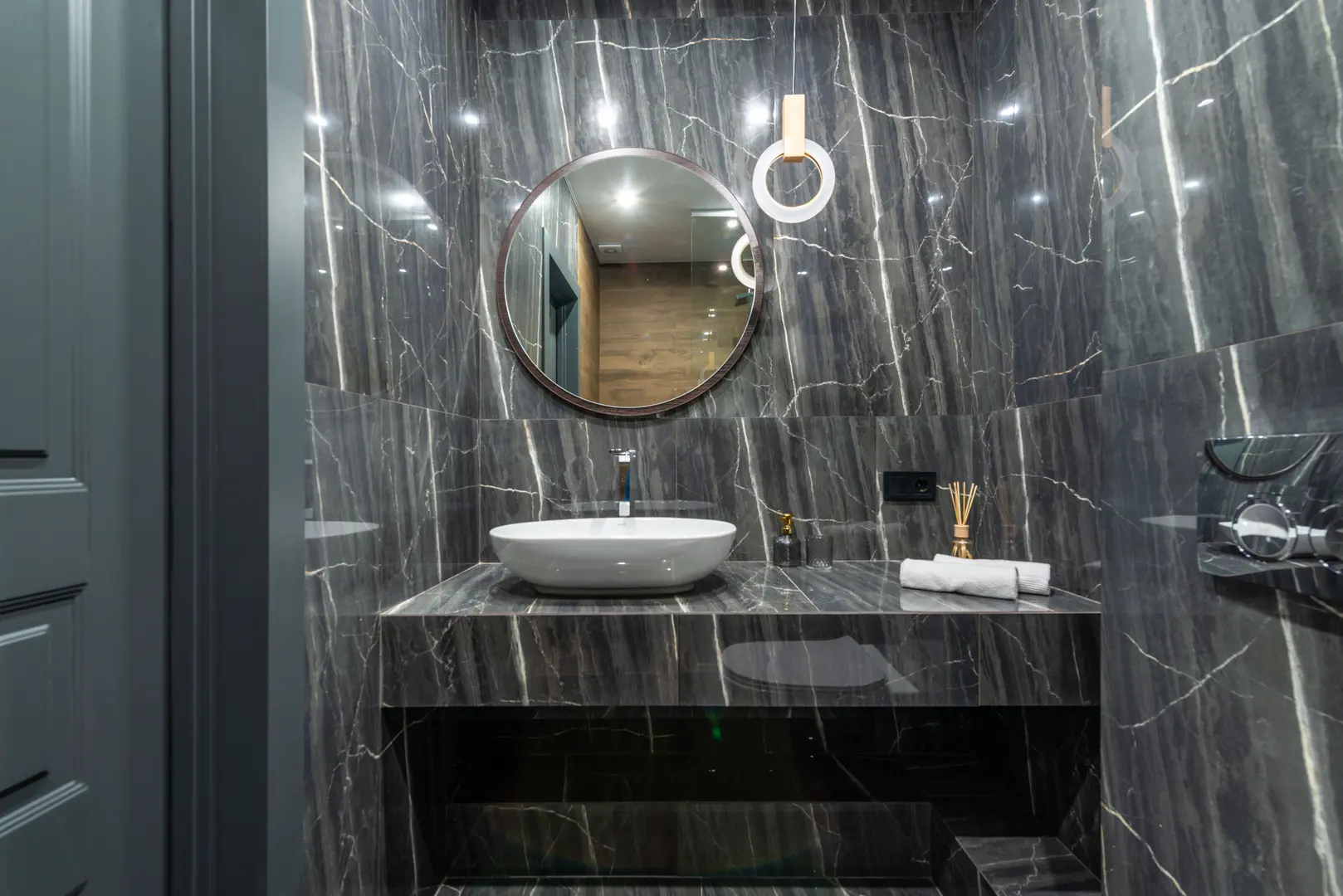
Regular mirrors are associated with a clean, uncomplicated appearance. Their primary design role is to reflect light and complement the vanity. Depending on the shape and frame, a regular mirror can blend quietly into the room or act as a decorative focal point.
Mirror cabinets tend to communicate practicality, but that does not mean they must look purely utilitarian. Both regular mirrors and mirror cabinets are available in different shapes, finishes, and design styles. The important distinction is that a cabinet has visible depth and must accommodate doors and interior shelving.
Consider the relationship between the mirror and the following elements:
- The width and visual weight of the vanity
- The position of wall lights or ceiling lighting
- Faucets and other fixtures
- Tile patterns and grout lines
- Nearby shelving, windows, or cabinets
- The amount of open wall space
A simple mirror can balance a vanity with strong colors, detailed hardware, or patterned surfaces. A mirror cabinet may suit a more restrained vanity where the extra depth will not compete with other features.
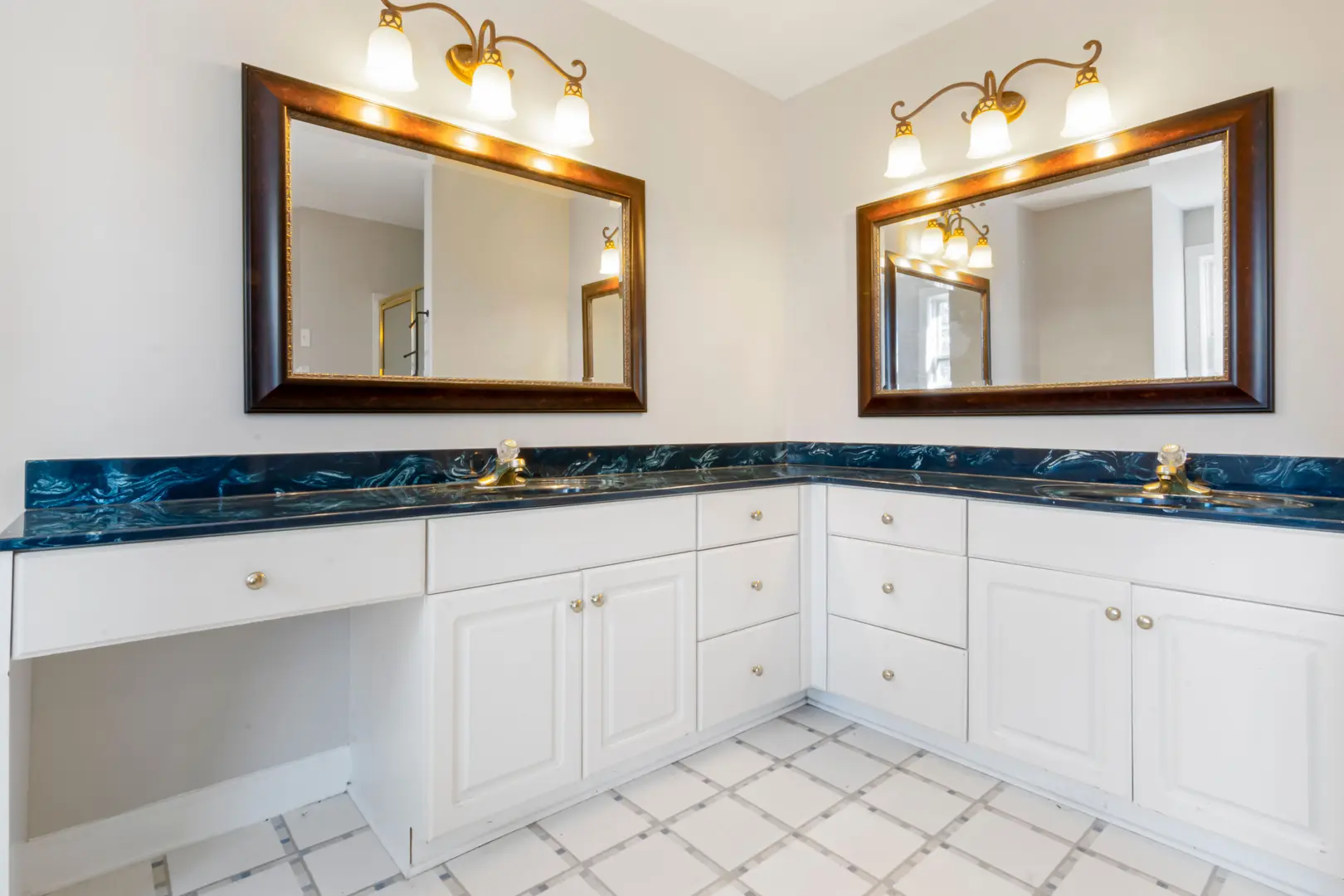
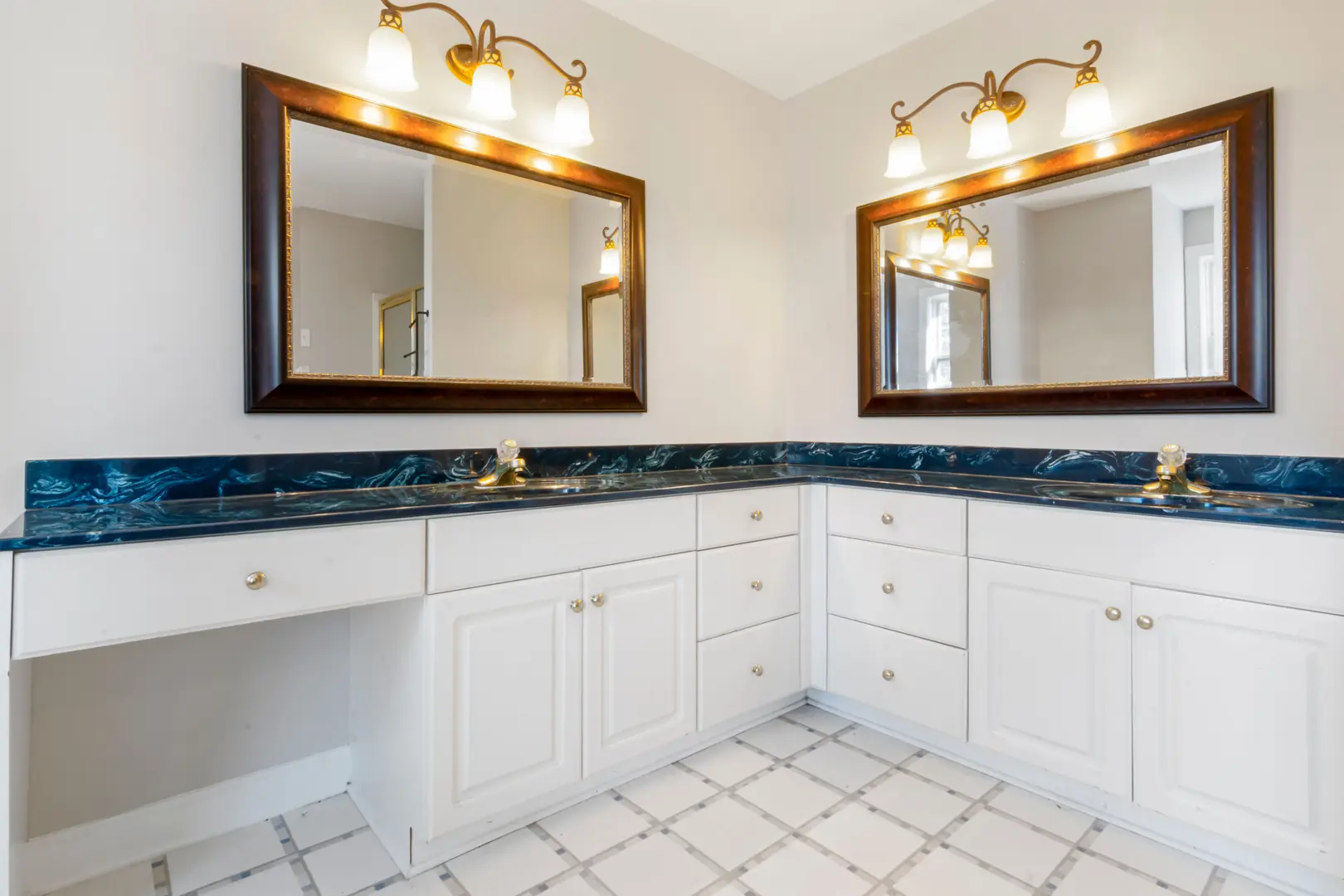
Mirror height deserves special attention during renovations. A common problem occurs when a new vanity is taller than the previous one but the existing mirror remains in place. The backsplash, faucet, or countertop may then overlap the mirror area or leave an awkwardly small gap.
Before installing the vanity, check the full wall arrangement rather than considering each item separately. Account for the finished vanity height, faucet placement, backsplash, mirror edge, lighting, and comfortable viewing position. If the existing mirror is too low, possible solutions include repositioning it or choosing a replacement that fits the updated layout. A cabinet requires even more careful planning because its doors must open without interference.
Do not assume that a larger mirror is always more attractive or that a larger cabinet is always more practical. The best proportions are those that look intentional above the vanity and serve the people using the room.
Do Extra Mirror Features Justify a Higher Price?
Some mirrors and mirror cabinets go beyond basic reflection and storage. Depending on the model, available features may include integrated lighting and anti-fog technology. These additions can make daily routines more convenient, but they can also increase the purchase price and may require changes during installation.
Evaluate each feature according to how often you will use it. A technology-rich mirror is not automatically better if its main benefits duplicate features the bathroom already has.
Useful questions include:
- Is the existing vanity lighting adequate?
- Does the mirror fog after most showers?
- Would enclosed, eye-level storage improve daily routines?
- Is the renovation already set up to support a powered mirror?
- Is the added convenience worth prioritizing over other bathroom upgrades?
A basic regular mirror will usually suit homeowners who want an uncomplicated and budget-conscious option. A standard mirror cabinet may cost more but can replace the need for separate wall storage. Feature-equipped versions may justify a higher price when both their storage and technology address genuine problems.
Compare the complete result rather than the price of the mirror alone. For example, a regular mirror might need separate lighting and another storage solution. Conversely, an advanced cabinet could include features you do not need. The better value is the option that solves the room’s specific problems without adding unnecessary complexity.
LED Mirror Features: Weighing Cost Against Benefits
LED mirrors are appealing because integrated light can illuminate the face and reduce some of the shadowing associated with poorly positioned traditional fixtures. Models with anti-fog functionality can also keep the glass clearer by warming the mirror surface.
These features are especially relevant when a bathroom has weak vanity lighting or the mirror regularly becomes unusable after a shower. Combining light and anti-fogging in one unit may make morning and evening routines more convenient.
However, cost remains an important concern. LED and anti-fog mirrors can be significantly more expensive than a basic mirror, and installation may require changes to accommodate their powered features. Homeowners should include those requirements when comparing options rather than looking only at the listed purchase price.
The value depends on priorities:
- An LED mirror may be worthwhile if facial lighting is a recurring problem, anti-fogging will be used frequently, and the budget can accommodate installation.
- Traditional lighting may be preferable if the existing fixtures already provide suitable illumination or the renovation budget is limited.
- A basic anti-fog solution may be unnecessary if effective ventilation already keeps condensation under control.
- An advanced mirror cabinet may offer stronger overall value when you need lighting, fog control, and storage rather than technology alone.
Some homeowners consider LED mirrors a worthwhile investment because they address both visibility and fogging. Others prefer conventional lights because they are satisfied with the result and do not want the higher expense. Neither view is universally correct. Focus on how often the features would improve your actual routine.
Which Option Is Easier to Clean and Maintain?
A regular bathroom mirror is generally the simpler option to maintain. Its exposed glass surface can be wiped clean without opening doors or removing items. Frameless designs have especially few edges where dust or residue can collect, although every mirror still needs routine cleaning.
A mirror cabinet has more components. In addition to cleaning the exterior glass, you may need to wipe the door edges, handle or touch points, sides, hinges, and interior shelves. Stored products can leak or leave residue, so the contents should occasionally be removed while the cabinet is cleaned and reorganized.
Maintenance requirements should match your habits. A cabinet can make the countertop easier to keep tidy, but the cabinet itself needs attention. If you prefer the fewest surfaces possible, a regular mirror has an advantage. If keeping daily products out of sight matters more, the additional cleaning may be a reasonable trade-off.
Fogging is another common concern. Warm, humid air from a shower can condense on a cooler mirror, making it difficult to use immediately. Smaller or poorly ventilated bathrooms may experience the issue more persistently.
Ventilation should be the first consideration. Use the bathroom’s ventilation while showering and allow humid air to clear afterward. Inadequate ventilation can contribute to repeated fogging regardless of whether you choose a regular mirror or a mirror cabinet.
An anti-fog mirror can improve visibility by keeping the glass warm enough to reduce condensation. This is convenient, but it usually costs more than a standard mirror and may require an appropriate powered installation. If fogging happens only occasionally, ventilation and routine wiping may be sufficient. If it disrupts daily use, the added anti-fog feature may be easier to justify.
For either mirror type, follow the manufacturer’s care instructions, particularly around frames, cabinet finishes, lighting, and powered components. Avoid allowing excess moisture or cleaning product to remain around edges and internal fittings.
Can Larger Bathrooms Benefit From Combining Mirror Styles?
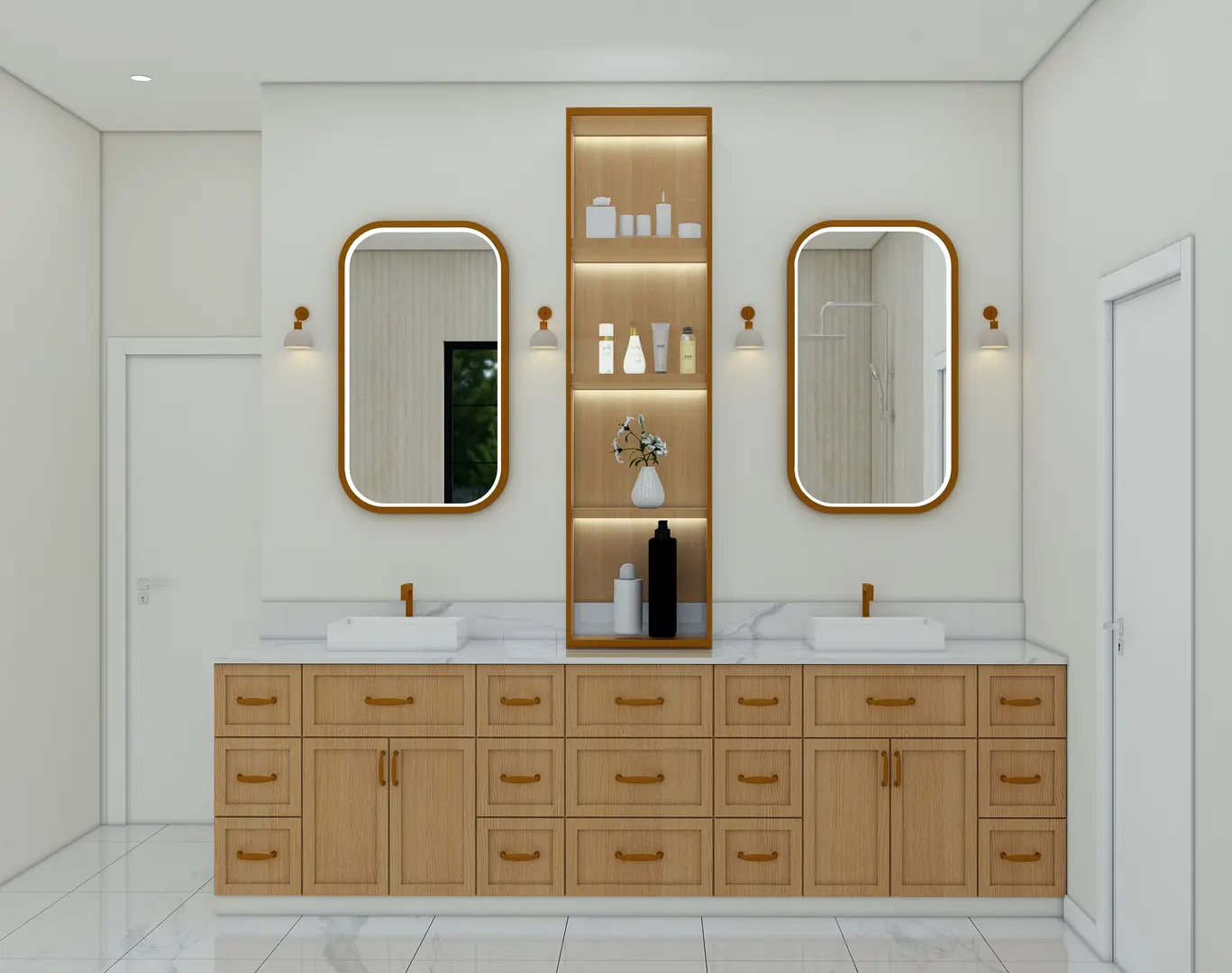
A larger bathroom does not always require choosing only one mirror type. Combining a regular mirror with a mirror cabinet can provide storage where it is most useful while preserving a more open or decorative look elsewhere.
For example, a mirror cabinet can be positioned at the main grooming area, where easy access to toiletries matters. A regular mirror can then serve a second vanity or another wall where storage is less important. This approach allows each mirror to perform a distinct role.
Mixing mirror types also creates design flexibility. The mirrors do not have to be identical, but they should share enough visual qualities to feel connected. Repeating a shape, finish, frame color, or lighting style can create continuity even when one mirror includes a cabinet and the other does not.
Balance is important. A deep cabinet beside a very delicate mirror may look mismatched unless other elements connect them. Consider how both mirrors relate to the vanity widths, lighting positions, and open wall space. The complete composition should appear planned rather than assembled from unrelated pieces.
In a shared bathroom, combining styles can also respond to different needs. One user may benefit from cabinet storage, while another area can remain simple and uncluttered. Larger rooms offer more freedom to separate these functions without overwhelming the design.
Ultimately, the regular bathroom mirror vs mirror cabinet decision comes down to how the room needs to work. Choose a regular mirror for simplicity, easy cleaning, and a visually light finish. Choose a mirror cabinet when accessible storage and optional technology will meaningfully improve the space. In a larger bathroom, using both can provide a practical balance between organization and decorative freedom.