How to Remove Adhesive Towel Hooks Without Damaging Bathroom Walls
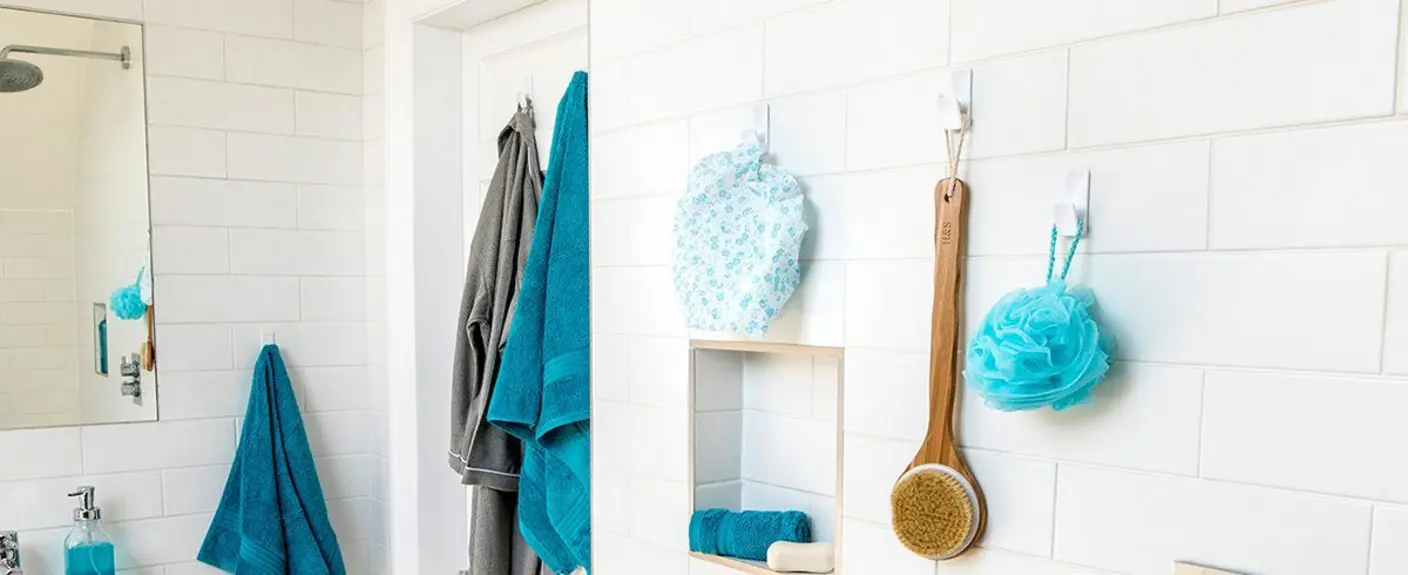
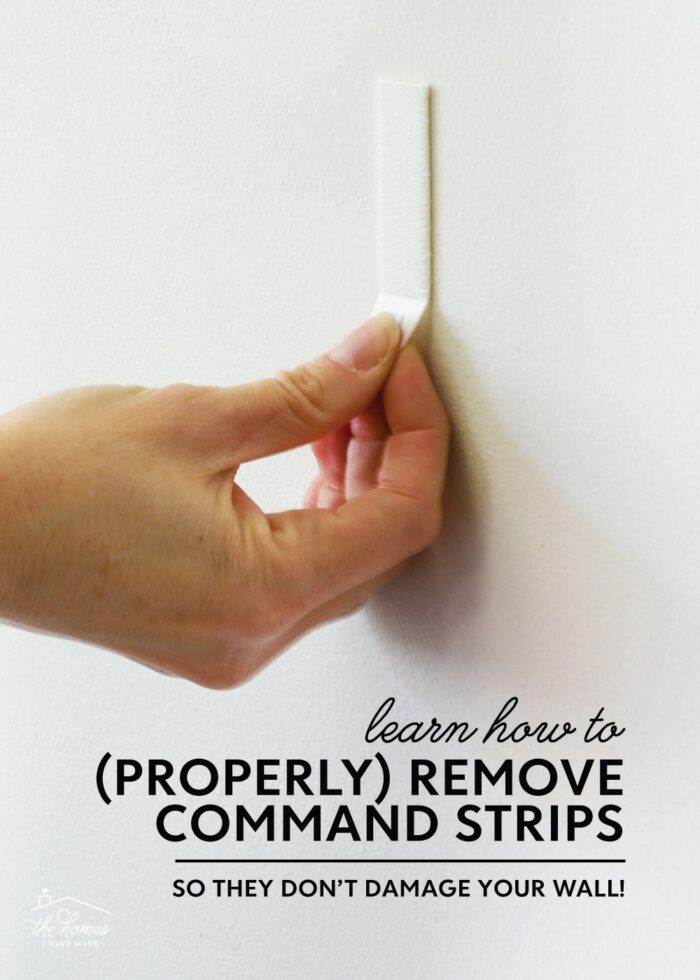
If you need to remove adhesive towel hooks, do not pull the hook straight toward you. First check whether the hook has a stretch-release tab or slides off a separate mounting base. For a removable strip, hold the hook or base gently and pull the exposed tab slowly straight down, keeping it close and parallel to the wall. This lets the adhesive stretch and release instead of lifting paint or plaster.
If the strip is broken, hidden, or stuck, warm it with a hair dryer, then try again. Dental floss can cut through the adhesive behind the hook when pulling is no longer working. After the hook is off, remove residue gently and treat any small paint or wall marks separately.
Identify how the hook is attached
Adhesive towel hooks do not all come down in the same way. Look closely before applying force.
- Stretch-release strip: A tab may extend beyond the hook or mounting base. This is designed to be pulled down slowly so the strip lengthens and releases.
- Two-piece hook: The decorative hook may slide upward and off a separate base. Removing it first exposes the adhesive strip.
- Permanent or unknown adhesive: Some hooks use double-sided foam tape or another adhesive without a pull tab. These usually need gentle heat, floss, or careful separation.
If you can see a tab, do not use a putty knife or pry the hook from the wall as your first step. The tab is usually the least aggressive removal point.
How to remove an adhesive towel hook
1. Empty the hook and clear the area
Remove the towel, robe, or other item from the hook. Move nearby bottles and accessories so you have room to work without bumping the wall or pulling sideways on the hook.
If the hook is above a sink or hard floor, place a towel below it to catch the hook if it slips. This is especially useful for heavier metal hooks.
2. Remove the hook from its base, if possible
For a two-piece design, gently slide the hook upward and off the mounting base. Do not twist it outward. Once the hook is removed, you should be able to see the adhesive strip and its pull tab more clearly.
If the hook does not slide off easily, stop rather than forcing it. Some designs are one piece, and others release in a different direction.
3. Pull the adhesive tab straight down
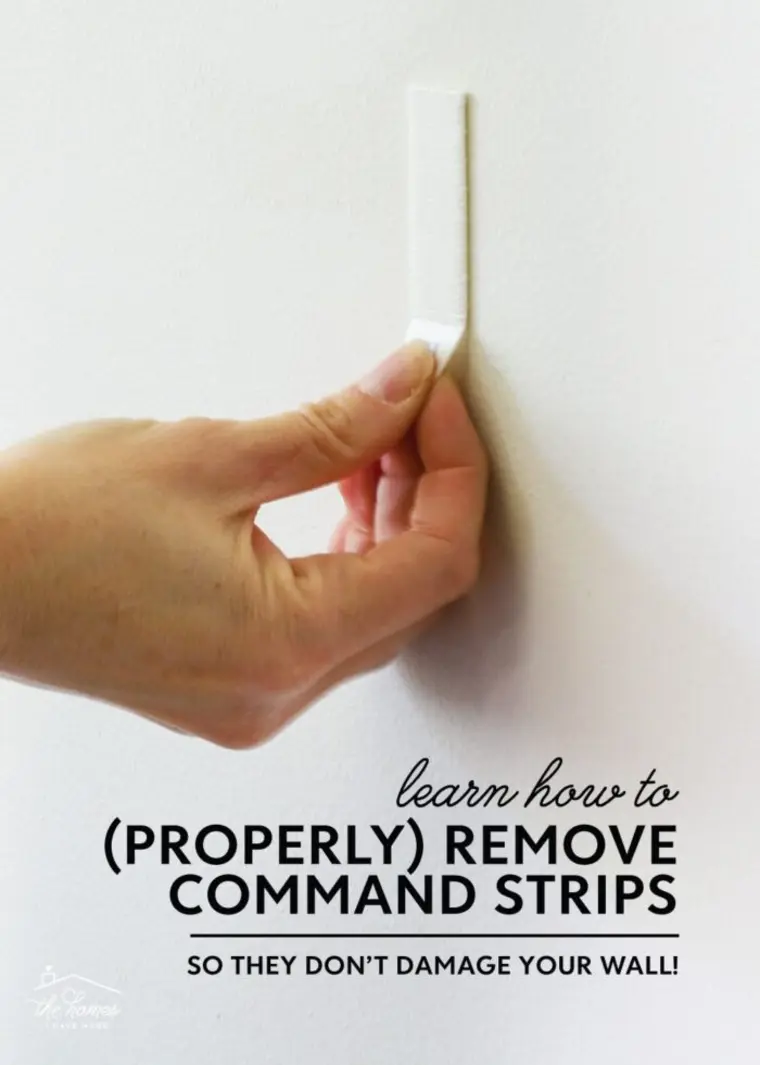
Hold the mounting base lightly with one hand. Do not press it harder against the wall. With the other hand, grasp the tab and pull it slowly downward, keeping the strip close to the wall rather than pulling it toward your body.
As the strip stretches, move your hand closer to the wall-side end and continue pulling down. Slow, steady tension is more useful than a quick tug. If the strip is working correctly, it may become much longer before it separates.
Source: thehomesihavemade
The key distinction is direction: pull the strip down, not the hook out. Pulling the hook outward transfers force into the paint, wallpaper, or surface beneath the adhesive.
4. Warm a stuck strip
If the pull tab breaks or the adhesive will not stretch, warm the hook and adhesive with a hair dryer on a moderate setting for about 30 to 60 seconds. Keep the dryer moving rather than holding heat in one spot.
Try pulling the strip straight down again while it is warm. The goal is to soften the adhesive slightly, not to make the wall hot. On delicate wallpaper, fresh paint, or a wall with uncertain finishes, use the lowest practical heat and test cautiously.
Do not use an open flame, boiling water, or a heat source that could damage the wall finish.
5. Cut through the adhesive with dental floss
When the hook remains firmly attached, slide a length of unwaxed dental floss behind the hook or mounting base. Work it from side to side in a gentle sawing motion, keeping the floss as close to the wall as possible.
The floss separates the hook from the adhesive without requiring you to lever the hook against the wall. If the hook is large, you may need to work gradually from one edge to the other. Keep your free hand on the hook so it does not fall when the adhesive gives way.
If the floss will not fit behind the hook, do not force a sharp tool into the gap. Warm the adhesive first, then try the floss again.
6. Lift remaining adhesive carefully
After the hook is removed, small patches of adhesive may remain. Start with your fingers and gently roll or lift the residue. A clean, soft cloth may help with loose pieces.
On a hard, moisture-resistant surface such as glazed tile or glass, warm soapy water can help with residue. Painted walls and wallpaper require more caution. Avoid spreading moisture over the wall or rubbing aggressively, since both can disturb the finish.
A plastic putty knife may help lift softened residue from a durable hard surface. Keep the edge nearly flat and use very light pressure. Avoid metal blades on painted walls, plaster, and wallpaper.
What to do about rubbing alcohol
Rubbing alcohol is often used to clean a wall before installing adhesive hooks, but that does not make it suitable for every removal job. It can affect some paint, wallpaper coatings, and delicate finishes.
If you are considering it for residue, test a small hidden area first and follow any instructions supplied with the hook. Do not saturate the wall. For a rental or a surface you cannot identify, mechanical removal with your fingers, gentle warmth, or floss is the more cautious starting point.
If paint or wallpaper comes off
Sometimes the wall surface is already weak, the paint is poorly bonded, or the adhesive has been left in place for a long time. If paint begins lifting, stop pulling. Continuing can turn a small mark into a larger peeled area.
For a small paint scuff, wipe away loose dust and leave the area dry. A matching touch-up may be possible once the surface is stable, but the repair is separate from removing the hook. Do not glue the loose paint back down or cover a damp area immediately.
Wallpaper needs extra care. Stop if the paper lifts, wrinkles, or begins separating at a seam. Avoid heat, water, solvents, and scraping until you know what type of wallpaper and adhesive are involved. If the hook is on textured wallpaper or a fragile wall covering, accepting a small mark may be safer than escalating the removal force.
Common mistakes to avoid
- Pulling the hook straight outward: This is the fastest way to put lifting force on paint or plaster.
- Skipping the base-removal step: A two-piece hook may need to slide upward before the strip can be released.
- Yanking the tab: A quick pull can break the strip before it has stretched.
- Prying with a metal knife: The tool can gouge the wall even if it removes the hook.
- Soaking the wall: Water may soften paper, paint, or plaster and spread the damage.
- Using solvent without testing: A cleaner that removes adhesive can also dull or dissolve a wall finish.
- Ignoring the load: Remove towels or robes first so the hook is not under tension while you work.
A simple removal checklist
Before you begin, confirm that you have:
- A clear area around the hook
- A hair dryer available if the adhesive is stuck
- Dental floss for a hook without a usable tab
- A soft cloth for loose residue
- A plastic scraper only if the surface is hard and durable
- A plan to stop if paint, wallpaper, or plaster starts lifting
The safest method for most stretch-release towel hooks is to slide off the hook if it has a separate base, then pull the adhesive strip slowly straight down. When that method is unavailable, gentle warmth and dental floss can help separate the adhesive without treating the wall like a surface to pry against.
References
- How To Remove Adhesive Wall Hooks. (n.d.). https://www.hunker.com/13420014/how-to-remove-adhesive-hooks
- adhesive - How do you remove stick-on hooks?. (n.d.). https://diy.stackexchange.com/questions/23311/how-do-you-remove-stick-on-hooks
- How to remove 3M Command strips?. (n.d.). https://www.workshop.bunnings.com.au/discussion/305315/how-to-remove-3m-command-strips
- The Bathroom Essential That Removes Adhesive Hooks From Walls Without Damaging Them. (n.d.). https://www.housedigest.com/2087404/bathroom-essential-floss-remove-adhesive-hook-from-wall-without-damage
- How to Use Command™ Hooks | Command™ | 3M Australia. (n.d.). https://www.commandbrand.com.au/3M/en_AU/command-au/hooks-strips/all-other-hooks
- Simple Tricks to Ensure Adhesive Hooks Stay Secure. (n.d.). https://www.walterscoop.com/markets/stocks.php?article=abnewswire-2026-1-19-simple-tricks-to-ensure-adhesive-hooks-stay-secure
- How to Remove Command Hooks Without Damaging Paint. (n.d.). https://www.tiktok.com/@lilytheswan/video/6946511310603439365
- 3M Large Bath Hook Durable Metal Construction Wall Mount Bathroom Towel Robe Hook | Ranch and Home. (n.d.). https://shop.ranch-home.com/p/command-white-bath-hook-with-water-resistant-adhesive-051131851597