How to Remove Bathroom Mould Safely and Effectively
Bathroom mould is more than an unsightly mark. Left untreated, it can damage finishes, produce unpleasant odours and affect the air you breathe. The good news is that small areas can often be cleaned safely at home once you have addressed the moisture causing them.
This guide explains how to remove bathroom mould from tiles, grout, sealant and shower curtains, as well as how to reduce the chance of it returning.
What Is Bathroom Mould and What Causes It to Grow?
Mould is a type of fungus that develops in warm, damp conditions. Bathrooms provide an ideal environment because bathing and showering release moisture into the air and leave water on walls, floors and fittings.
Common causes of bathroom mould include:
- Excess moisture: Condensation can settle on tiles, windows, painted walls and ceilings.
- Poor ventilation: Without effective airflow, humid air remains in the room instead of escaping.
- Water leaks: Dripping pipes, taps, basins or shower fittings can keep hidden areas persistently wet.
- Wet surfaces: Shower screens, bath surrounds and grout lines may stay damp long after the bathroom has been used.
- Inadequate cleaning: Residue on bathroom surfaces can make mould more difficult to control.
Cleaning visible mould will not provide a lasting solution if the source of moisture remains. Before reaching for a cleaning product, check whether the bathroom needs better ventilation or whether a leak requires repair.
What Health Problems Can Bathroom Mould Cause?
Exposure to mould can cause or aggravate breathing problems and allergic reactions. Symptoms may vary between people, but mould can irritate the airways and is linked with asthma.
Children and older people may be particularly affected. Anyone with asthma, allergies or an existing respiratory condition should take additional care and avoid cleaning significant mould growth themselves.
Do not ignore symptoms that occur or become worse when someone spends time in the bathroom. Seek appropriate medical advice if you are concerned about the effects of mould on your health. Cleaning the visible growth and correcting the moisture problem can help reduce further exposure.
How Should I Remove Mould from My Bathroom?
Begin by assessing both the amount of mould and its likely cause. A few marks on a tile require a different response from extensive growth across walls, ceilings or flooring.
Follow this basic process:
- Inspect the bathroom carefully. Look around the shower, bath, basin, toilet, windows, ceiling and pipework.
- Find the moisture source. Check for condensation, weak ventilation, dripping fittings or leaks.
- Decide whether DIY cleaning is suitable. Small areas on intact, washable surfaces can often be treated at home.
- Prepare the room and protective equipment.
- Clean the affected material using a suitable method.
- Dry the area thoroughly.
- Repair leaks or ventilation problems to prevent recurrence.
Specialist help may be necessary where mould is extensive, repeatedly returns despite cleaning, or appears to have spread behind walls or beneath flooring. You should also avoid tackling areas affected by sewage or contaminated water.
Tiles, basins and other smooth surfaces are usually easier to clean than damaged grout, sealant or wall finishes. The condition of the underlying material matters as much as the visible size of the patch.
How Can I Tell Whether There Is Mould in My Bathroom?
Visible mould commonly appears as dark or discoloured patches. It may look spotted, streaky or slimy, particularly around wet surfaces and joints.
Signs to check for include:
- A persistent damp or musty smell
- Dark patches on tiles, ceilings or walls
- Slimy marks around a basin, bath or shower
- Discolouration in grout or sealant
- Warped, swollen or damaged wall surfaces
- Flooring that feels soft or spongy
- Mould that returns soon after cleaning
A damp smell without obvious surface growth may indicate moisture in a concealed area. Warped walls and spongy floors can also point to a leak or water damage below the surface. Rather than repeatedly cleaning the visible area, arrange for the source to be investigated.
What Safety Steps Should I Take Before Cleaning Mould?
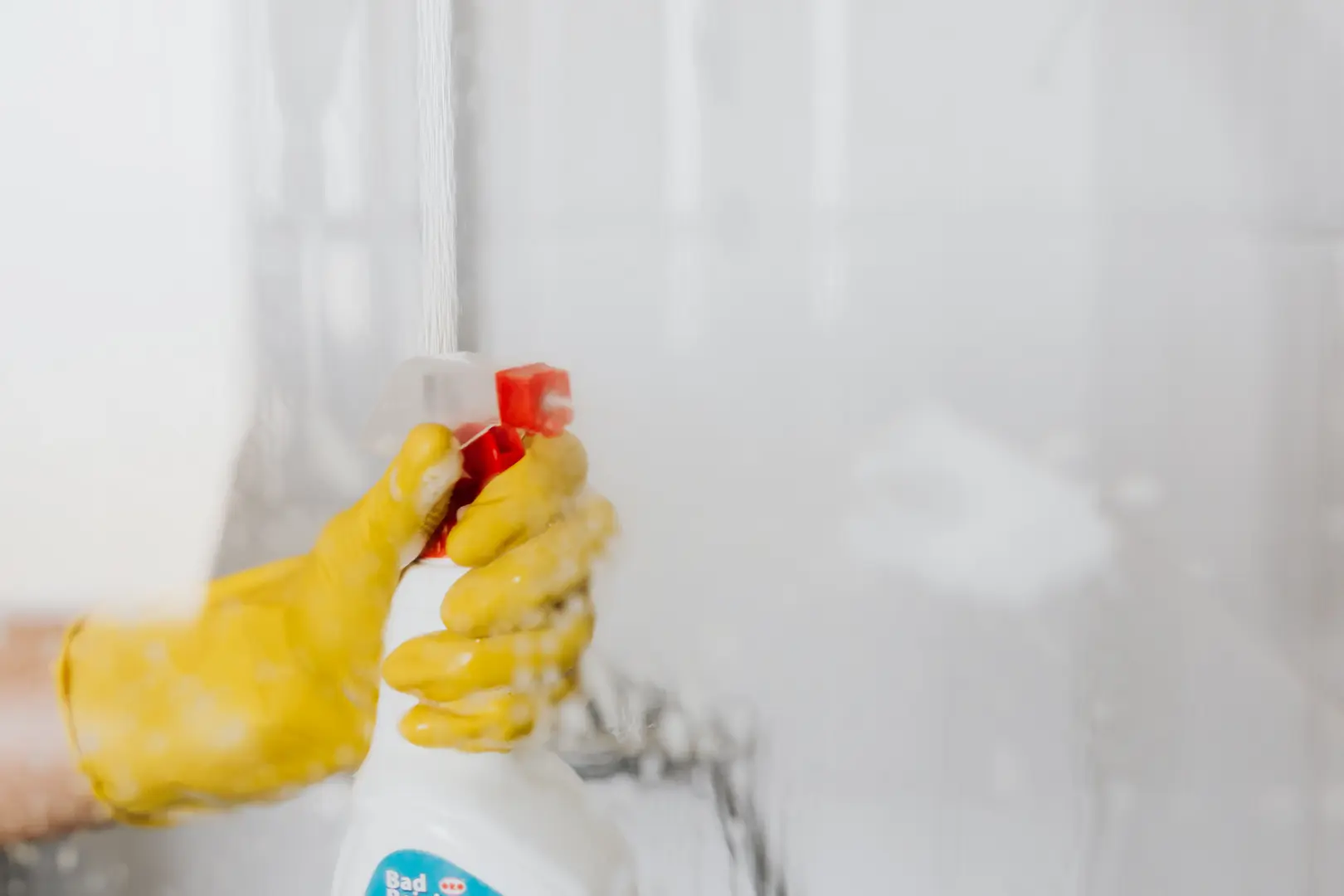
Protect yourself before disturbing mould or using cleaning products. Wear gloves, eye protection and suitable protective clothing. If there is a risk of inhaling disturbed material or cleaning spray, use appropriate respiratory protection.
Open a window and run the bathroom extractor fan where possible. Keep the room ventilated while cleaning, but avoid directing airflow in a way that spreads loosened material through the home.
Additional precautions include:
- Keep children and pets away from the work area.
- Read and follow the cleaner manufacturer’s instructions.
- Never mix bleach with vinegar or other cleaning products.
- Avoid splashing cleaning solution onto skin, clothing or nearby finishes.
- Do not work in areas affected by sewage or contaminated water.
- Wash reusable brushes, cloths and tools thoroughly after use.
- Seal and dispose of items that cannot be cleaned safely.
- Wash your hands after removing protective equipment.
Bleach requires particular care. Use it only in a well-ventilated room and only on materials for which it is suitable. Stop if fumes become uncomfortable, and leave the area for fresh air.
Where Does Bathroom Mould Appear, and How Can I Clean It?
Bathroom mould often appears in places where water collects or surfaces remain damp. Common locations include:
- Tile faces and grout lines
- Silicone sealant around showers, baths and basins
- Shower curtains
- Basin edges and splashbacks
- Window frames
- Corners of walls and ceilings
- Areas around dripping taps or pipes
You can use either a homemade solution or a shop-bought mould cleaner, provided it is appropriate for the affected surface. Always check the product instructions and test it on a small, inconspicuous area first if you are unsure about compatibility.
Preparation is important. Remove bottles, towels and other loose items from the area, clear away surface dirt and make sure you can reach the mould without spreading it. Avoid soaking walls, joints or gaps unnecessarily, as extra moisture can worsen the conditions that allowed the mould to develop.
How Can I Make a Mould-Cleaning Solution at Home?
White vinegar is a practical non-toxic option for many washable bathroom surfaces. Apply it to the affected area, allow it to remain in contact as directed by your chosen cleaning method, then wipe or scrub the surface. Check compatibility before using vinegar on sensitive finishes.
Borax can also be used in a cleaning solution and may help discourage further mould growth. Follow the product’s instructions when preparing and applying it rather than guessing the concentration.
Bleach may be suitable for tougher staining on compatible, non-porous surfaces. However, it is not appropriate for every material and should be handled carefully. Ensure good ventilation, wear protective equipment and follow the label.
Whichever option you choose:
- Prepare only what you need.
- Keep the solution in an appropriate, clearly identified container.
- Do not combine different cleaning agents.
- Avoid using abrasive tools on finishes that scratch easily.
- Rinse or wipe the surface if the product instructions require it.
- Dry the cleaned area thoroughly.
How Do I Clean Mould from Tiles and Smooth Bathroom Surfaces?
Tiles, basins and other smooth surfaces are generally the simplest areas to clean because mould is less likely to penetrate an intact, non-porous finish.
Use the following method:
- Remove toiletries and loose objects from the surrounding area.
- Wipe away ordinary soap residue or surface dirt.
- Apply your selected mould-cleaning solution without over-saturating the surface.
- Leave it for the contact period given in the product instructions.
- Wipe the area with a clean cloth.
- Use a suitable brush or non-scratch pad on persistent marks.
- Wipe or rinse as instructed.
- Dry the surface completely.
Pay attention to edges, corners and the junction between the basin or shower and the wall. If mould returns quickly, inspect nearby sealant, grout and fittings for hidden moisture or leaks.
What Is the Best Way to Remove Mould from Grout?
Grout is more difficult to clean than tile because its textured surface can hold dirt and moisture. A bleach- or borax-based solution may be used if it is compatible with the grout and surrounding tiles.
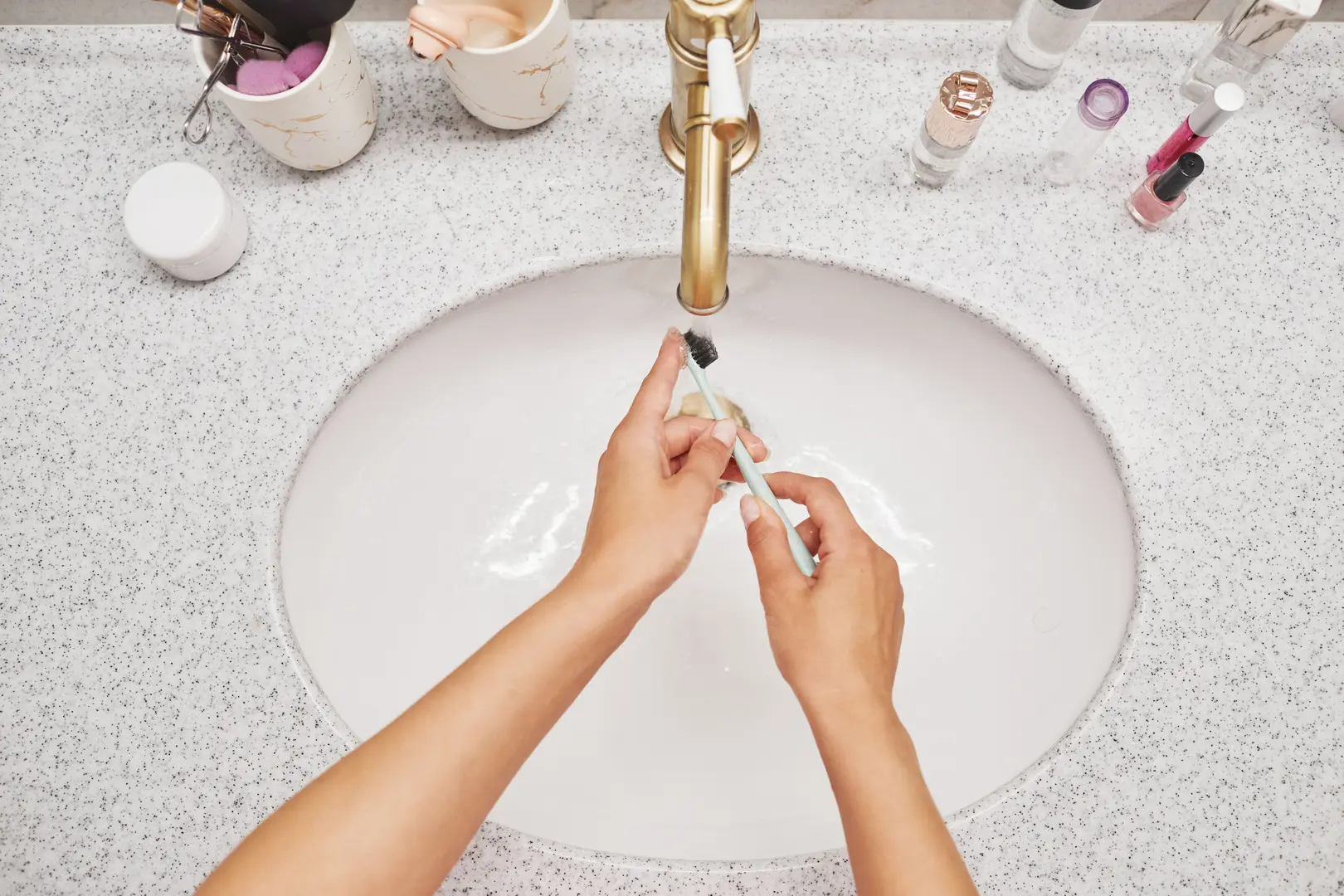
Apply the chosen cleaner carefully to the grout lines. Scrub with an old toothbrush or a small grout brush, concentrating on discoloured areas without damaging the joint. Wipe away the residue and dry the surface once cleaning is complete.
Avoid flooding the grout with water or cleaner. Too much liquid may soak into damaged joints and keep them damp.
Cleaning may not restore grout that is cracked, loose or deeply affected. If dark marks remain or the grout has deteriorated, removing and replacing the affected section may be more effective. Check for leaks or failed sealant before regrouting, or the problem is likely to return.
How Can I Get Mould off Bathroom Sealant?
Start by cleaning the sealant with a suitable mould remover and a soft brush or cloth. A bleach-based cleaner can help with stubborn mould on compatible sealant, but it must be used with gloves, eye protection and good ventilation. Follow the label and never mix it with other cleaners.
If the mould is beneath the surface, scrubbing may not remove the discolouration. Sealant that is split, loose or heavily affected should usually be replaced.
To renew it:
- Remove the old sealant carefully.
- Clean the joint and remove any remaining residue.
- Allow the area to dry completely.
- Apply fresh bathroom sealant according to its instructions.
- Let it cure before exposing it to water.
A neat, intact seal helps stop water entering the joint behind a bath, basin or shower enclosure. However, it still needs regular cleaning and drying to remain mould-free.
How Should I Remove Mould from a Shower Curtain?
First check the curtain’s care label. Some shower curtains can be machine-washed, while others need to be cleaned by hand.
Depending on the material and instructions, you may be able to use a bleach solution or baking soda as part of the cleaning process. Do not use bleach on a curtain unless the care information confirms that it is safe, and never combine bleach with another cleaner.
After cleaning, rinse the curtain if required and hang it fully extended to dry. Bunched-up folds trap moisture and make it easier for mould to return.
Regular cleaning is more effective than waiting for widespread staining. If mould remains after treatment, has become embedded in the material or the curtain is damaged, replacement may be the safest and most practical option.
How Can I Prevent Mould from Returning to My Bathroom?
Long-term prevention depends on moisture control. Even a thorough cleaning will have limited value if steam, condensation or leaks continue to keep the bathroom damp.
Use these habits to reduce future growth:
- Improve ventilation. Open a window where appropriate and use the extractor fan during and after bathing or showering.
- Wipe wet surfaces. Remove water from tiles, shower screens, bath edges and basins after use.
- Dry shower curtains. Spread the curtain out rather than leaving it folded against the side of the bath.
- Repair leaks promptly. Check taps, pipes, basins, shower fittings and seals.
- Clean regularly. Pay particular attention to grout lines, corners and silicone joints.
- Keep joints in good condition. Replace cracked grout or failed sealant before water reaches hidden areas.
- Use mould-resistant paint. When redecorating a suitable bathroom wall or ceiling, choose a finish designed to resist mould and cope with humid conditions.
- Allow air to circulate. Avoid leaving wet towels or damp items in ways that hold moisture against walls and fittings.
Continue to monitor previously affected areas. If mould keeps returning despite regular cleaning and improved ventilation, there may be a concealed leak or a broader damp problem. Addressing that underlying issue is essential to keeping the bathroom clean, dry and comfortable.