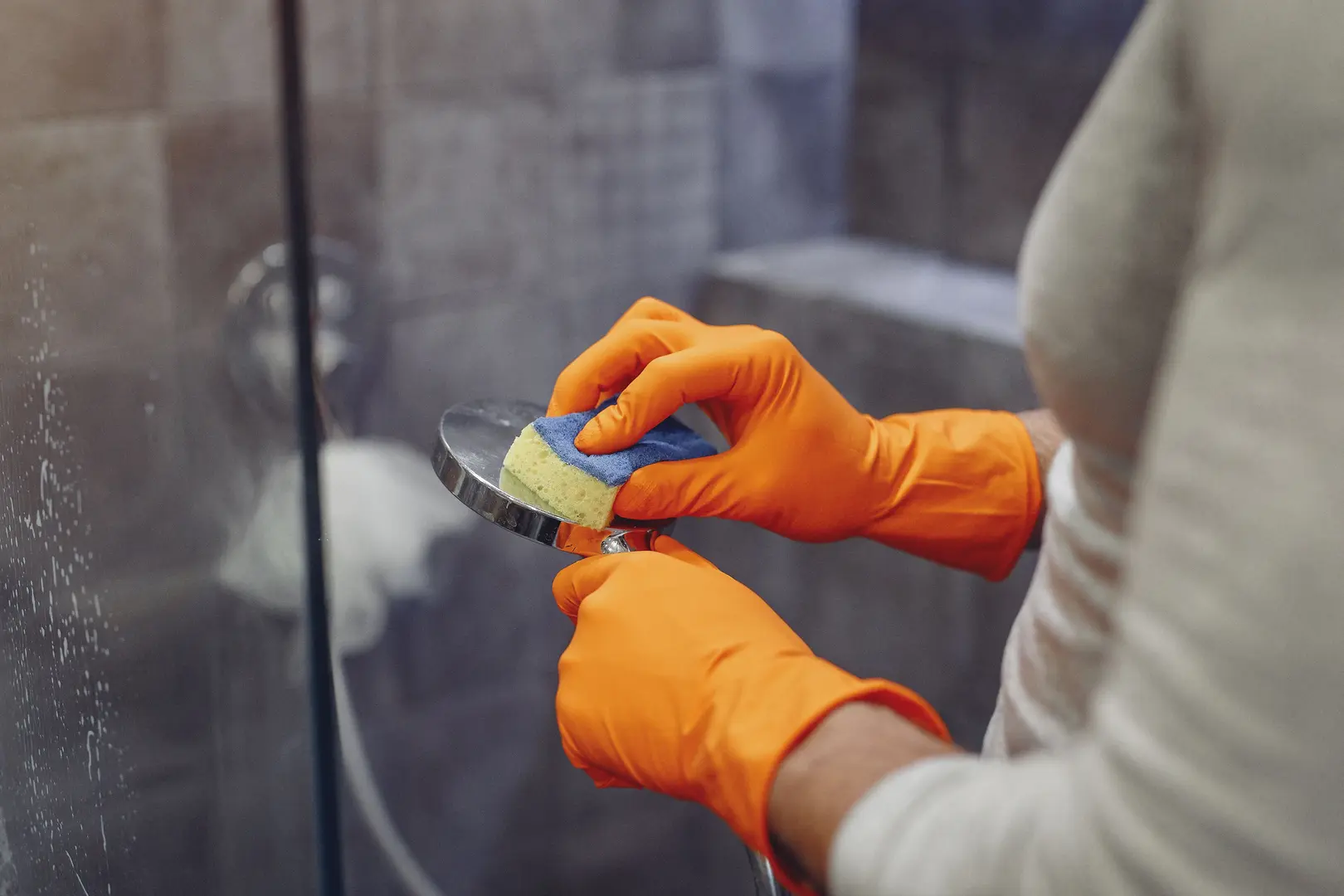
How To Remove Calcium From A Shower Head
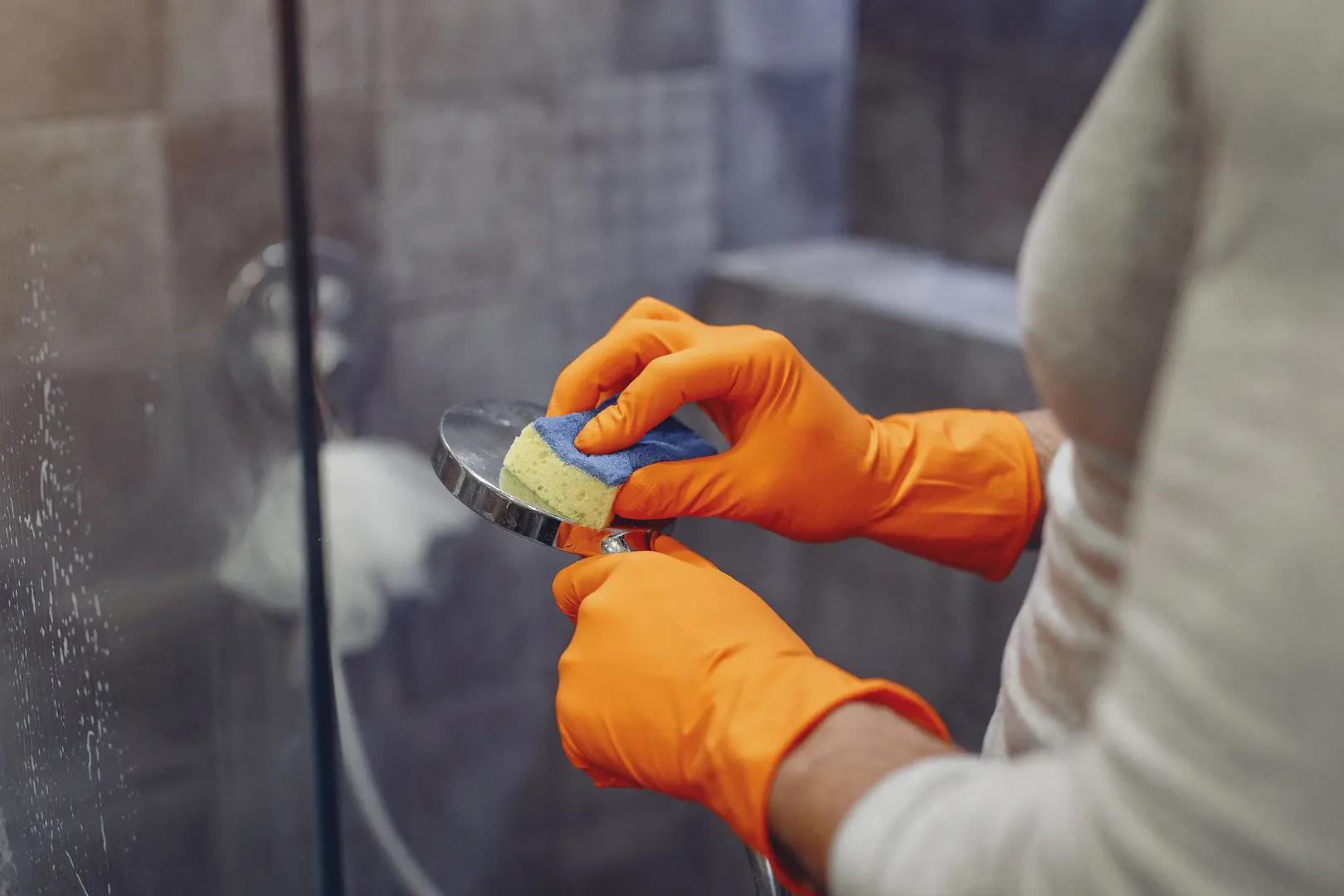
A weak, uneven spray or nozzles that shoot water sideways often point to mineral deposits. To remove calcium from a shower head, you need to soften the buildup, clear the outlets, and flush away loosened material. The best approach depends on whether the shower head is handheld, fixed, or part of a dual-head system.
Why Calcium Buildup Blocks Shower Heads
Hard water contains dissolved minerals. As water repeatedly passes through a shower head and evaporates around its openings, it leaves deposits commonly called calcium buildup or limescale.
These deposits can accumulate:
- Around the spray nozzles
- Across the shower head face
- Inside water channels
- Near the inlet connection or filter screen
- Around the joints of adjustable shower heads
As the openings become narrower, water flow may weaken or become irregular. Some nozzles can become completely blocked, forcing water through the remaining outlets at unusual angles.
Visible scale is not always the full problem. Calcium may also collect inside the head, where it is harder to reach. If internal material breaks loose without being flushed out, it can travel into smaller passages and create a more severe obstruction.
Regular cleaning helps maintain water flow and keeps the shower head free from the conditions that allow bacteria or mould to persist. It is generally easier to remove a light film every few weeks than to deal with a thick, hardened layer after months of neglect.
Before cleaning, check whether the problem is limited to the shower head. If water pressure is weak throughout the home or at several fixtures, descaling the head may not resolve the underlying issue.
Ways To Clean Different Types Of Shower Heads
The correct cleaning method depends on how the shower head is installed.
A handheld shower head is usually the easiest type to descale because it can often be disconnected from the hose and placed in a container. This allows the cleaning solution to reach the face, nozzles, inlet, and some internal passages.
A fixed shower head is more difficult. If it cannot be removed conveniently, a bag of cleaning solution must be secured around it. The bag needs to remain in position without pulling heavily on the shower arm or leaving part of the shower head above the liquid.
Dual-head systems require extra attention. Clean both the fixed and handheld heads, even if only one appears blocked. Also inspect the diverter setting and flush each head separately after descaling. Otherwise, loosened mineral material may remain in one side of the system.
Before starting:
- Turn off the shower controls fully.
- Allow residual water to drain from the head.
- Place a towel or container underneath to catch drips.
- Confirm that the shower is not still producing hot water.
- Check the manufacturer’s cleaning instructions, particularly for decorative finishes.
Some shower heads continue dripping briefly after use because water remains inside the fitting. Let this drain before attaching a soaking bag. If dripping continues throughout cleaning, it can dilute the solution or make the bag overflow. Positioning a towel or container below the head will help manage small amounts of water.
For surface buildup, wiping and soaking may be sufficient. More severe internal calcification usually requires removing the shower head so the inlet and internal channels can be flushed more effectively.
Can Vinegar Remove Calcium From A Shower Head?
Clear vinegar is a low-cost option for routine descaling. Its acidity helps loosen the mineral deposits left by hard water, making them easier to rinse or wipe away.
Use clear vinegar rather than malt or brown vinegar. Coloured and strongly scented varieties are not recommended for this cleaning task. Before soaking any shower head, confirm that vinegar is suitable for its finish and materials.
Vinegar works best when it has direct contact with the deposits. Simply wiping the outside of the head may improve its appearance but will not necessarily clear obstructed nozzles or internal scale. Soaking allows the liquid to reach more of the affected area.
A basic vinegar-cleaning process involves:
- Exposing the scaled surfaces to clear vinegar
- Allowing time for the deposits to loosen
- Gently wiping away softened residue
- Rinsing the head thoroughly
- Running water through every spray setting
Avoid forcing sharp tools into the nozzles. This can damage small outlets or push loosened material farther inside. A soft cloth or non-abrasive brush is a safer choice for accessible residue.
Vinegar is useful for regular maintenance, but it may not remove a heavy layer in one treatment. Repeating a gentle cleaning process is often preferable to aggressive scraping. If buildup remains stubborn, use a specialist product that is approved for the shower head’s materials.
Removing Calcium From A Handheld Shower Head With Vinegar
A removable handheld unit provides the best access for soaking and flushing. Take care not to lose any washer, seal, or small filter component when disconnecting it.
Follow these steps:
Turn off the shower. Make sure no water is flowing and allow the hose and head to cool and drain.
Detach the handheld head. Unscrew it from the hose by hand if possible. Support the hose so it does not twist. If the fitting does not move easily, consult the manufacturer’s instructions rather than forcing it.
Check the connection. Note the position of any washer, seal, or inlet screen. Put loose components somewhere safe.
Place the head in a container. Position it so the scaled face and inlet can be exposed to the cleaning liquid.
Add clear vinegar. Use enough to contact the affected areas. Let the head soak while checking it periodically. Follow any time limits provided by the shower manufacturer.
Clean accessible residue. Once the scale has softened, wipe the face and connection with a soft cloth or gently brush accessible areas. Do not insert metal objects into the nozzles.
Rinse thoroughly. Run clean water over the shower head and through the inlet. The goal is to remove both vinegar and loosened mineral particles.
Reattach the head. Replace any washer or screen in its original position and reconnect the head without overtightening it.
Flush every spray mode. Run the shower and switch through all available settings. Watch for particles, uneven spray, or continuing blockage.
Polish the exterior. Dry the head with a soft cloth to remove water marks and restore its appearance.
If the flow becomes worse after soaking, loosened internal calcium may have shifted into a narrower channel. Disconnect the head again and flush it from the inlet where possible. Persistent internal obstruction may require a specialist cleaner, further disassembly permitted by the manufacturer, or replacement of the blocked component.
Descaling A Fixed Shower Head With A Vinegar Soak
A fixed shower head can be cleaned without removing it by securing a bag of vinegar around the head. This method is convenient, but it mainly works where the liquid can make contact. Deep internal deposits may remain.
To prepare a fixed-head soak:
- Turn off the shower and let remaining water drip out.
- Pour clear vinegar into a strong, leak-free bag.
- Lift the bag over the shower head so the scaled face is immersed.
- Secure the bag with an elastic band or string.
- Check that the fastening is stable and is not placing unnecessary strain on the fitting.
- Leave the head to soak, checking it periodically and following the manufacturer’s guidance.
- Carefully remove the bag and discard or store the used solution appropriately.
- Wipe the shower head with a soft cloth.
- Turn on the shower and flush it thoroughly.
Make sure the bag contains enough vinegar to cover the affected nozzles, but avoid using more liquid than necessary. A heavy bag can pull on the shower head or shower arm.
After removing the bag, begin flushing cautiously. Calcium loosened from internal surfaces can move toward the spray outlets and worsen a blockage. Run water through all available spray patterns and observe whether the flow becomes clearer or more restricted.
If the fixed head can be unscrewed safely, removing it may provide better results. You can then rinse through the inlet and inspect accessible areas rather than relying only on an external soak. Do not force a corroded or tightly fitted connection, as this may damage the shower fitting.
For dual-head showers, repeat the process for both heads. Flush them separately using the diverter so loosened material is cleared from each water path.
How Frequently Should You Remove Calcium From A Shower Head?
Monthly descaling is a useful general maintenance schedule. It prevents a thin mineral film from developing into a thick layer that obstructs the spray openings.
More frequent cleaning may be needed when:
- The property has particularly hard water
- White or chalky deposits return quickly
- Spray outlets begin changing direction
- Water flow drops soon after cleaning
- The shower is used frequently
- The shower head has numerous small outlets
The ideal schedule should reflect how quickly buildup appears. A quick visual check during normal bathroom cleaning can help. Look at the face and nozzles, then run the shower to identify weak or irregular areas.
Routine maintenance does not always require a lengthy soak. Wiping the face and dealing with early deposits can reduce the need for more intensive descaling. However, a shower head with recurring internal blockages may need to be detached and flushed rather than repeatedly cleaned only on the outside.
Choosing The Right Method For Cleaning A Shower Head
Vinegar is generally the practical choice for routine cleaning because it is affordable, widely available, and simple to use. It suits removable soaking and the bag method for fixed heads.
Choose a method based on the condition and design of the fixture:
| Situation | Suitable approach |
|---|---|
| Light surface deposits | Wipe and rinse, followed by a short soak if needed |
| Handheld shower head | Detach, soak, rinse through the inlet, and reconnect |
| Fixed shower head | Secure a vinegar-filled bag around the head |
| Dual-head system | Clean and flush both heads separately |
| Heavy, stubborn calcium | Use a compatible specialist descaler |
| Suspected internal blockage | Remove the head where possible and flush it thoroughly |
Specialist calcium or limescale cleaners may be more appropriate for deposits that do not respond to routine vinegar cleaning. Only use a product that is compatible with the fixture’s finish and internal materials.
When using a chemical cleaner:
- Read and follow the product label.
- Use any protective equipment specified by the manufacturer.
- Keep the room ventilated as directed.
- Do not combine cleaning products.
- Rinse the shower head thoroughly after treatment.
- Keep the product away from children and pets.
- Protect surrounding surfaces when instructed.
Stronger is not automatically better. An unsuitable product may affect the finish or components without resolving an internal obstruction. If the shower head is under warranty, follow its approved cleaning method.
Alternative Cleaning Solutions Beyond Vinegar
If you do not want to use vinegar or baking soda, a manufacturer-approved specialist descaler is the most direct alternative. Choose one intended for removing mineral or limescale deposits and verify that it is safe for the shower head’s finish.
Where the head can be removed, it may be soaked in hot or warm water with a compatible acidic descaling product. Follow the product instructions for preparation, temperature, contact time, handling, and rinsing. Do not improvise by mixing different acids or cleaners.
The general process is:
- Detach the shower head.
- Remove and retain any loose washer or screen.
- Prepare the chosen descaling solution as directed.
- Place the shower head in the solution.
- Check it during soaking.
- Gently remove accessible softened buildup.
- Rinse through both the face and inlet.
- Reassemble and flush every spray setting.
This approach provides better access than cleaning a fixed head in place, but it requires manual effort and a shower head that can be reached and removed safely. It may also be inconvenient if the connection is tight or the unit has delicate internal parts.
Whichever method you choose, finish by flushing thoroughly. Descaling is not complete until the loosened calcium has left the shower head rather than moving into another internal passage. Regular cleaning and careful rinsing provide the best chance of restoring an even spray while preventing minor buildup from becoming a difficult blockage.