How to Save Water and Energy in the Bathroom: 5 Practical Ways
Saving water in the bathroom also reduces the energy needed to heat, pump, and deliver it. Small changes to showers, toilets, taps, baths, and plumbing can therefore lower household consumption without making daily routines inconvenient. The most effective approach combines efficient fixtures with sensible habits and regular maintenance.
Practical Ways to Cut Bathroom Water Waste
Household water-use statistics vary by country, property type, family size, and the efficiency of installed fixtures. However, household-use studies consistently identify toilets, showers, taps, and baths as major sources of indoor consumption. Much of that water use happens automatically: flushing the toilet, waiting for a shower to warm up, leaving a tap running, or filling a bath without considering its capacity.
This makes personal consumption easy to underestimate. A shower may seem brief, but its total water use depends on both flow rate and duration. A dripping tap may appear insignificant, yet it continues wasting water throughout the day. Even a toilet that seems to work normally may allow water to leak slowly into the bowl.
If you want to understand your own consumption, focus on repeat activities rather than isolated events. Consider:
- How many showers and baths the household takes each week
- How long showers normally last
- Whether taps run during shaving, brushing, or washing
- How often each person flushes the toilet
- Whether any fixtures drip, run, or take excessive time to shut off
- How much hot water is used unnecessarily
The link between water and energy is especially important. Reducing cold-water waste is valuable, but saving hot water can have an additional effect because less energy is required for heating. Efficient showers and taps can therefore help reduce both water and energy bills.
Regular plumbing maintenance is part of the solution as well. Efficient fixtures cannot deliver their full benefit if pipes, valves, taps, or toilet components are leaking. The following five practical measures address both visible daily use and less obvious waste.
Use Flow Regulators and Efficient Showerheads
Showers can consume a substantial amount of water because they maintain a continuous flow for as long as the user remains underneath them. Total consumption is determined by a simple relationship: the shower’s flow rate multiplied by the length of the shower. A high-flow shower used for a long time will consume considerably more than an efficient shower used briefly.
A flow regulator limits the volume of water passing through the shower. A water-efficient showerhead works in a similar way, using its design to create a useful spray while allowing less water through than a conventional high-flow model. Depending on the fixture and plumbing system, this can reduce consumption without making the shower feel uncomfortably weak.
Reducing shower flow offers two potential savings:
- Less water is used. Every minute of showering requires a lower volume.
- Less water needs to be heated. When the shower uses hot or mixed water, lower consumption can reduce the energy required from the household water heater.
Before buying a regulator or replacement showerhead, check its compatibility with your shower system. Some homes have lower water pressure, while others use systems that require particular fittings or flow characteristics. Choosing a fixture designed for the existing setup helps maintain a comfortable spray.
An efficient showerhead should be combined with sensible habits. It will not prevent waste if shower times increase significantly after installation. For better results:
- Keep showers purposeful rather than leaving the water running while doing something else.
- Turn off the shower while applying products if it is practical and comfortable to do so.
- Deal with showerheads or controls that continue dripping after use.
- Avoid using extra flow simply to make the water feel warmer; adjust the temperature correctly instead.
- Check hoses and connections for slow leaks.
You can estimate the water used during a shower if you know the fixture’s flow rate. Multiply that rate by the number of minutes the shower runs. This helps compare an existing showerhead with a more efficient option and shows why shaving even a few minutes from repeated showers can make a meaningful difference over time.
Efficiency does not have to mean accepting an unpleasant shower. The goal is to avoid unnecessary volume while preserving adequate pressure and coverage.
Upgrade to a Dual-Flush Toilet
Toilets are another significant source of bathroom water use. Unlike showers and baths, their consumption is not mainly affected by how long they operate. It depends on how much water is released with every flush and how often the toilet is used.
A traditional single-flush toilet uses the same volume each time. A dual-flush toilet provides two options: a lower-volume flush for liquid waste and a higher-volume flush for solid waste. This allows the user to match the water volume to the task instead of using the maximum amount for every visit.
The saving from one flush may appear small, but toilets are used repeatedly by every member of the household. The cumulative effect can therefore be important, particularly in larger homes.
To get the intended benefit:
- Make sure everyone understands which button or lever provides each flush.
- Use the lower-volume setting only when it clears the bowl effectively.
- Avoid unnecessary repeat flushing.
- Do not treat the toilet as a waste bin for tissues or other bathroom rubbish.
- Watch for water continuously entering the bowl after the cistern has filled.
A toilet can waste water even when there is no puddle on the floor. Worn or incorrectly positioned components inside the cistern may allow a slow, continuous flow into the bowl. Other warning signs include the cistern refilling unexpectedly, a faint running sound, or a flush mechanism that sticks.
Upgrading to a dual-flush model may be worthwhile when replacing an old toilet, but installation quality matters. An incorrectly fitted toilet can leak around connections or perform poorly, leading to repeated flushing. If the installation requires changes to pipework or you are uncertain about the connections, use a qualified plumber rather than relying on trial and error.
For households that are not ready to replace the toilet, maintenance should come first. Repairing a running cistern and keeping the flushing mechanism in working order can prevent avoidable waste immediately.
Add Aerators to Bathroom Taps
Bathroom taps are often left running during routines that do not require a constant stream. Brushing teeth, shaving, washing the face, and waiting for hot water can all use more than necessary when the tap remains fully open.
A tap aerator is a small fitting installed at the outlet of a compatible tap. It mixes air into the stream or otherwise restricts flow, allowing the tap to provide a practical washing stream while using less water. Because the water still feels well distributed, the reduction may be less noticeable than simply turning the tap down.
Aerators are especially useful at handwashing basins, where users usually need enough water to rinse rather than a large, fast flow. If the tap supplies warm water, reducing the flow may also reduce the volume that must be heated.
Installation alone is not enough, however. Good habits remain essential:
- Turn off the tap while brushing your teeth.
- Fill the basin with only the amount needed rather than letting water run continuously.
- Use moderate flow for handwashing instead of opening the tap fully.
- Repair taps that drip after being closed.
- Make sure handles close smoothly and completely.
A dripping tap should not be dismissed because each drop is small. The fixture can continue leaking for hours or days, turning a minor fault into ongoing waste. Drips may indicate worn internal components, damaged seals, or a tap that no longer closes correctly.
Aerators also require occasional attention. Mineral deposits and debris can restrict the outlet unevenly, affecting the shape and strength of the stream. Clean removable components according to the fixture manufacturer’s guidance, and replace damaged aerators rather than compensating by opening the tap further.
Choose an aerator that matches the tap’s thread and the household’s water-pressure conditions. If the tap is unusual, damaged, or does not have a compatible outlet, replacing the whole fixture may be more practical than forcing an unsuitable attachment.
Identify and Prevent Common Bathroom Plumbing Problems
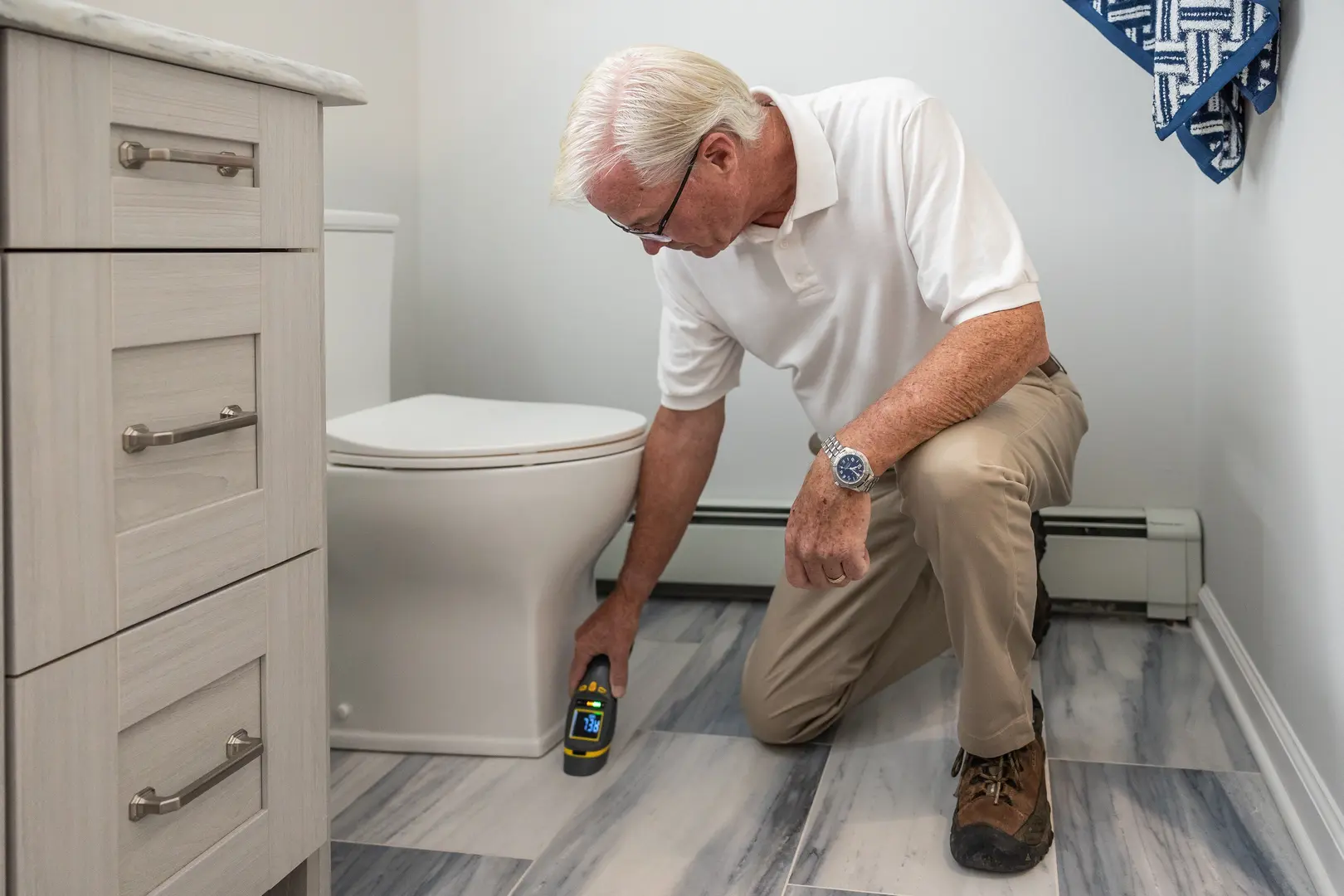
Regular inspections can catch minor plumbing problems before they lead to extensive water waste, property damage, or expensive repairs. You do not need to dismantle the plumbing to carry out a basic check. Simply pay attention to changes in how bathroom fixtures look, sound, and perform.
Useful warning signs include:
- Dripping taps or showerheads
- A toilet that runs after the cistern should be full
- Dampness around pipe joints, valves, or the base of fixtures
- Stains, swelling, or peeling finishes near water connections
- Unexplained reductions in water pressure
- Slow drainage or recurring blockages
- Valves that are difficult to turn
- Unexpected increases in water use
Inspect visible pipes and connections periodically, including areas inside vanity units or behind accessible panels. If you find moisture, determine whether it is condensation, splashed water, or a plumbing leak rather than assuming the area will dry by itself.
The age and material of the plumbing also matter. Old galvanized pipes can corrode internally, restricting water flow and contributing to pressure problems. Older clay pipework, where present in drainage systems, can deteriorate or become vulnerable to blockages. Low pressure is not always solved by changing the tap or showerhead; it may indicate a wider pipework problem that needs professional assessment.
Every household should also know where the main water shutoff is and whether it works. Being able to stop the supply quickly can limit damage if a pipe or fitting fails. Older gate valves may become unreliable, difficult to operate, or unable to provide a complete shutoff. A valve that has not been used for years should not automatically be assumed to work during an emergency.
Replacing an old spigot or gate-style shutoff with a suitable ball valve can provide a more reliable, complete shutoff. Ball valves generally operate with a straightforward quarter-turn action, making their open or closed position easier to identify. However, replacing a main valve involves opening the water-supply system and requires appropriate plumbing knowledge. The valve must be correctly sized, positioned, connected, and permitted for the application.
Avoid uninformed DIY plumbing. Incorrect installations can introduce leaks, damage pipes, prevent valves from closing, or create a larger problem than the original fault. A repair that initially looks inexpensive may cost more if a plumber must later correct damaged fittings or improperly altered pipework.
A sensible maintenance routine is simple:
- Check taps, showers, toilets, and visible joints for leaks.
- Listen for running water when no fixture should be operating.
- Monitor changes in pressure or drainage.
- Locate and label the main shutoff.
- Arrange prompt repairs for persistent faults.
- Ask a qualified plumber to assess old or corroded pipework.
Preventative maintenance supports both water and energy efficiency. A hot-water leak wastes treated water and the energy used to heat it, while poor pressure or blockages may encourage longer fixture use.
Choose a Lower-Capacity Bathtub
A bath uses a largely fixed amount of water based on the tub’s usable capacity and how high it is filled. A shower’s consumption depends on flow rate and duration. As a result, neither option is automatically more efficient in every situation.
A short shower with an efficient showerhead will generally use less water than filling a large bathtub. A long shower with a high flow, however, may use as much as or more than a partially filled bath. The right comparison depends on actual habits and fixture performance.
Standard bathtubs can hold a substantial volume, although the amount used in practice is lower than the maximum capacity because the bather displaces water and the tub is rarely filled to the rim. Even so, a large tub encourages higher consumption each time it is used.
If you regularly take baths and are planning a bathroom renovation, a lower-capacity model can reduce the amount required for a comfortable water depth. Options may include shorter tubs, shallower designs, or shapes that provide bathing space without requiring the full volume of a larger model.
Before choosing one, consider:
- The internal bathing area rather than only the external dimensions
- The position of the overflow
- The comfortable fill depth
- The needs and mobility of household members
- Whether the tub will be used mainly by adults, children, or both
- The amount of hot water the household system can supply efficiently
Daily habits can reduce bath water use even without replacing the tub. Insert the plug before running the water, adjust the temperature as it fills, and stop at a comfortable depth rather than automatically filling to the overflow. Avoid repeatedly draining and refilling water to correct the temperature.
When deciding how to save water and energy in the bathroom, look at the room as a connected system. A lower-capacity bath reduces the volume used per fill, an efficient showerhead lowers continuous flow, aerators limit tap waste, and a dual-flush toilet matches water use to need. Regular plumbing inspections ensure those improvements are not undermined by leaks, corrosion, or unreliable valves. Together, these practical changes can make the bathroom more efficient without sacrificing comfort or everyday usability.