Semi Frameless Shower Enclosure Explained: Features, Styles, and Care
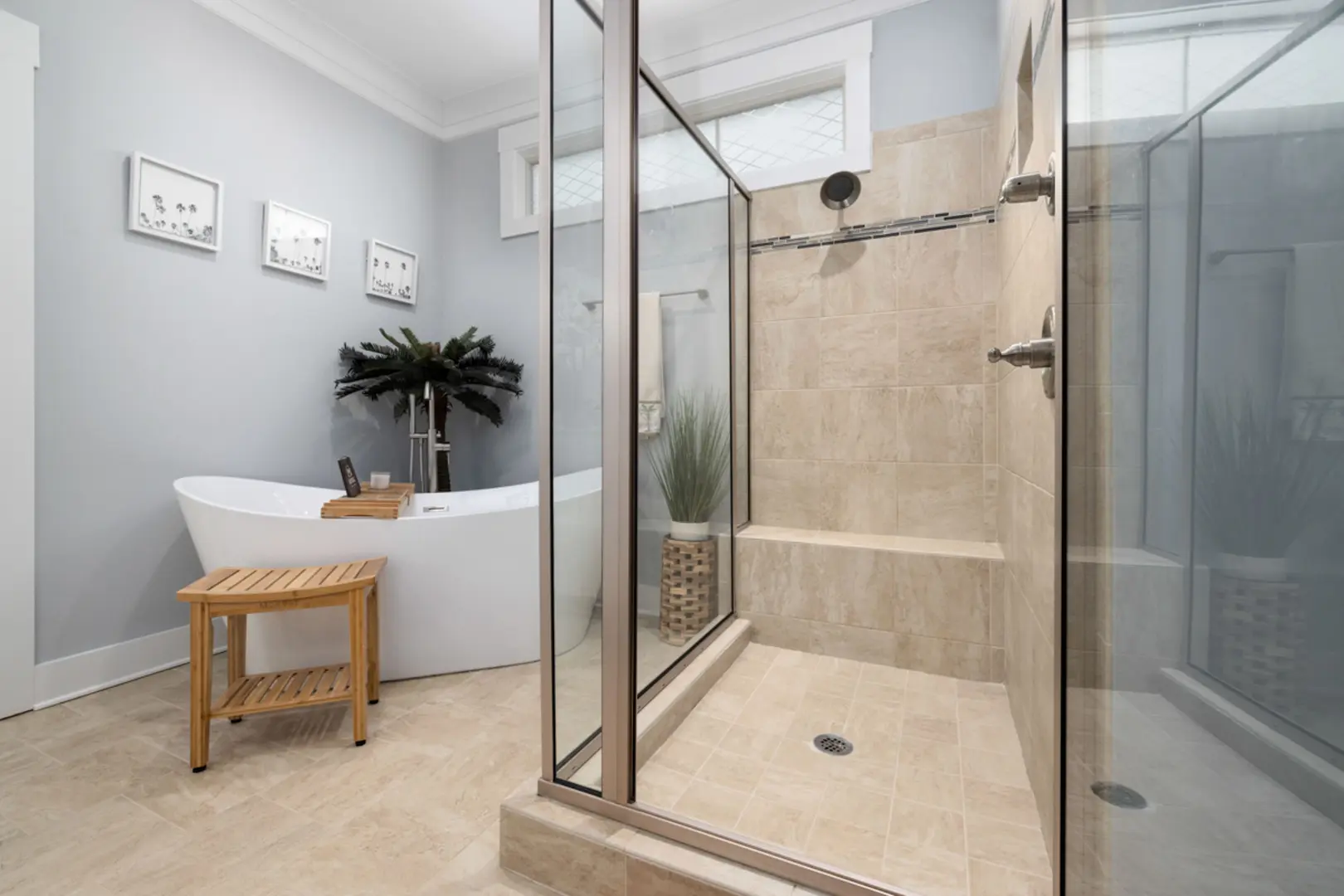
A semi-frameless shower enclosure combines the support of a framed system with the cleaner appearance of frameless glass. Some edges are held by metal framing, while others remain visually open or use discreet hinges and fittings. This semi frameless shower enclosure explained guide covers the structure, benefits, available styles, installation concerns, and routine care needed to keep an enclosure looking its best.
Understanding the Structure of a Semi-Frameless Shower Enclosure
A semi-frameless enclosure uses both framed and frameless construction. Metal channels or profiles support selected parts of the glass, but the enclosure does not surround every panel and door edge with a full frame.
The exact structure varies by model. For example, fixed panels may sit inside metal channels while the door has little or no framing around its perimeter. Other designs may use framing around the outside of the enclosure but leave the meeting edges of the doors or panels exposed.
This combination serves two purposes:
- Structural support: Framed sections help stabilize and position the glass.
- Visual simplicity: Reduced framing allows more of the glass to remain visible.
- Practical operation: The supported components help the doors and fixed panels function as intended.
- Modern styling: Fewer metal lines create a more open appearance than a fully framed enclosure.
Because some framing remains, a semi-frameless enclosure does not look identical to a completely frameless design. However, it offers a useful middle ground for homeowners who want contemporary glasswork without eliminating supportive framing altogether.
Why Choose a Semi-Frameless Shower Enclosure?
The main attraction of a semi-frameless enclosure is its balance. It has a lighter visual effect than a traditional framed model while retaining practical structural elements. It can also be a more accessible option for projects where a fully frameless enclosure does not suit the budget.
A Contemporary Look with Less Visible Framing
Traditional framed enclosures place metal around most or all glass edges. A semi-frameless model reduces those visible borders, helping the shower area appear less enclosed.
This minimalist effect makes semi-frameless designs popular in modern bathrooms. The uninterrupted areas of glass can also allow surrounding finishes—such as wall tile and shower fixtures—to remain more visible.
The result is not completely frame-free. Instead, the metal is used selectively, creating a cleaner outline without removing the functional benefits of framed sections. The finish and profile of that metal will influence how subtle or prominent it appears.
Combining Practical Performance with Modern Style
A semi-frameless enclosure brings together characteristics of both major enclosure types. Like a framed model, it uses metal components to support and position parts of the system. Like a frameless design, it limits framing to produce a simpler appearance.
This balance can work well in frequently used bathrooms where practical operation is as important as appearance. It is also suitable for homeowners who like frameless styling but prefer an enclosure with more visible structural support.
Performance still depends on correct selection and installation. The glass, framing, hinges, door configuration, and surrounding walls must work as a complete system. A semi-frameless label alone does not guarantee that every enclosure will fit every bathroom.
A More Accessible Alternative to Fully Frameless Designs
Semi-frameless enclosures are generally more affordable than fully frameless options. This makes them worth considering when the desired style is modern but project costs need to remain controlled.
The final price will depend on factors such as:
- Enclosure dimensions
- Glass thickness
- Door configuration
- Hardware and frame finish
- Installation requirements
- The amount of customization needed
Rather than choosing solely by the initial price, compare what is included in each design. A correctly sized, professionally fitted semi-frameless enclosure may provide the desired visual upgrade without the cost associated with a fully frameless system.
Important Features to Evaluate Before Buying
Glass thickness, metal finish, and door configuration are three of the most important selection criteria. Each affects how the enclosure looks and how well it suits the room.
Selecting a Semi-Frameless Shower Enclosure
Start with the bathroom layout rather than choosing an enclosure based only on appearance. The shower opening, available floor area, wall positions, and planned door movement should guide the decision.
Consider the following questions:
- How wide and tall is the available shower area?
- Is the enclosure being fitted into a recess, corner, or another layout?
- Is there enough clear space for the selected door to operate?
- Which side provides the most convenient entry?
- Do the walls offer adequate support for the enclosure and door?
- Will the glass and hardware coordinate with the rest of the bathroom?
- Does the model’s design help keep water within the intended shower area?
Water leakage is a common concern with both frameless and semi-frameless doors. Reduced framing can mean that precise panel positioning and door alignment are especially important. Follow the enclosure manufacturer’s requirements and have the installer assess the opening rather than assuming a standard model will fit correctly.
How Glass Thickness Affects the Enclosure
Glass thickness varies between semi-frameless products, with 8mm commonly offered as a standard thickness. However, the suitable thickness depends on the complete enclosure design, including panel dimensions, framing, hardware, and door type.
Do not assess the glass in isolation. An enclosure is designed as a system, and its components are intended to work together. The manufacturer’s stated specifications should therefore guide the decision.
When comparing models, check:
- The specified glass thickness
- Whether the thickness differs between doors and fixed panels
- The hardware supplied for that glass
- The installation and wall-support requirements
Thicker should not automatically be treated as better for every application. The appropriate choice is the one engineered for the selected enclosure and properly supported by the bathroom structure.
Choosing a Finish for the Hardware and Frame
Semi-frameless enclosures are available with a range of metal finishes. Because some framing remains visible, the finish has a noticeable effect on the room’s overall appearance.
A finish can either coordinate with nearby fittings or create a deliberate contrast. Consider its relationship with:
- Shower controls and fixtures
- Taps and other bathroom fittings
- Cabinet handles
- Mirrors and lighting
- Tile colors and patterns
Also look at how much framing the enclosure uses. A bold finish will have greater visual impact on a model with larger metal profiles, while a more restrained finish may help those components blend into the room.
For practical care, follow the finish manufacturer’s cleaning instructions. Harsh chemicals can damage or alter some metal surfaces.
Selecting the Most Suitable Door Configuration
Semi-frameless enclosures come with different door arrangements, and the configuration changes both appearance and everyday use. The best option depends on the available entry space and bathroom layout.
When comparing door styles, think about:
- The amount of open space around the enclosure
- The preferred entry width and location
- Nearby walls, fixtures, or furniture
- Whether the door movement suits the room
- How the moving and fixed panels affect the visual balance
A door that looks attractive in a showroom may be inconvenient if its movement conflicts with the bathroom layout. Review the manufacturer’s diagrams and confirm the planned handing or opening direction before purchase.
How Semi-Frameless Enclosures Compare with Other Styles
Frameless, semi-frameless, and fully framed enclosures differ mainly in how they support and visually outline the glass. No single type is automatically right for every bathroom.
| Enclosure type | Typical support approach | Overall appearance |
|---|---|---|
| Frameless | Discreet brackets and hinges with minimal framing | Most visually open |
| Semi-frameless | Framing on selected edges or panels | Modern with some visible structure |
| Fully framed | More complete framing around glass and doors | Clearly defined and traditional |
Semi-Frameless and Frameless Enclosures Compared
A semi-frameless enclosure includes some metal framing, often around fixed panels or the outer perimeter. A frameless enclosure relies more heavily on brackets, hinges, and other discreet fittings rather than continuous profiles.
The visual difference is straightforward: frameless models expose more glass, while semi-frameless models retain some visible metal lines. The structural and installation requirements also differ because the two systems support the glass in different ways.
A fully frameless design may provide the most minimal appearance. A semi-frameless model, however, can deliver much of that visual openness while retaining framed support where the enclosure design requires it. It is also generally the more budget-accessible of the two.
Semi-Frameless Compared with Fully Framed Enclosures
In a fully framed enclosure, metal profiles surround more of the glass and door edges. These profiles form a prominent part of the enclosure’s appearance.
A semi-frameless system removes framing from selected areas. This exposes more glass and reduces the number of visible borders, giving it a more minimalist character.
The choice often comes down to three priorities:
- Appearance: Semi-frameless designs look lighter and more contemporary.
- Structure: Fully framed systems use more continuous framing.
- Budget and project needs: Costs and suitability vary with the model, dimensions, and installation conditions.
Neither construction should be selected without checking the opening and wall structure. The best choice is the one that fits the room and can be installed according to its specifications.
Planning and Installing a Semi-Frameless Shower Enclosure
Accurate planning is essential. Small measurement or support problems can affect panel alignment, door movement, and the enclosure’s ability to manage water properly.
Professional installation is strongly recommended, particularly where heavy moving glass must be attached to a wall.
Practical Installation Guidance for Semi-Frameless Shower Doors
Begin by reviewing the enclosure’s installation requirements before ordering. The installer should know where the fixed panels, wall channels, hinges, and door supports will be located.
Wall support deserves particular attention. A heavy shower door should not be installed on the assumption that the finished wall surface alone will provide enough strength. Where the design calls for attachment to studs or other structural support, those requirements should be addressed before fitting begins.
Some people use molly-type hollow-wall anchors when studs are unavailable, including in walls finished with cement board. However, anchors are not automatically an equivalent substitute for structural framing. Movement may contribute to problems such as cracked grout joints, and an anchor may not meet the enclosure manufacturer’s support requirements.
For that reason:
- Do not select anchors based only on convenience.
- Confirm the wall construction and support locations.
- Follow the door manufacturer’s fastening instructions.
- Ask a qualified installer to assess walls without usable studs.
- Do not hang a heavy door until adequate support has been verified.
Installation planning should also consider water leakage. Correct alignment and fitting are important, but the surrounding shower layout and the manufacturer’s installation details must also be respected.
Measure the Space and Plan the Installation Carefully
Measure the shower opening accurately and check it in more than one location. Walls and openings should not be assumed to have identical dimensions from top to bottom.
Record all measurements using the method required by the enclosure supplier or installer. Before ordering, confirm:
- The opening dimensions
- The position and size of fixed panels
- The door location and direction of movement
- The required wall attachments
- The location of studs or other structural support
- Any manufacturer-specified installation clearances
- How the enclosure relates to the shower base and surrounding walls
Careful measurement reduces the likelihood of discovering fit or support problems after the enclosure has arrived. If measurements are unclear, let the installer or supplier verify them before the order is finalized.
How to Select a Dependable Installation Professional
Look for an installer with relevant experience fitting semi-frameless shower enclosures. The professional should be prepared to review the site, confirm measurements, and discuss wall support before installation starts.
Ask whether the installer will:
- Check the opening against the product specifications
- Assess the existing wall construction
- Verify attachment points for the door and panels
- Follow the manufacturer’s installation instructions
- Test door movement and alignment after fitting
- Explain cleaning and care requirements
Professional fitting supports proper operation and installation quality. It is especially valuable when the walls lack obvious studs, the opening is irregular, or the enclosure uses a heavy door.
Keeping a Semi-Frameless Enclosure in Good Condition
Regular care helps preserve the appearance of both the glass and metal components. It can also prevent residue from becoming harder to remove over time.
The safest approach is frequent, gentle cleaning rather than occasional use of aggressive chemicals.
Cleaning and Protecting the Glass Panels
Use a squeegee on the glass after showering. Removing water from the surface helps limit visible residue and keeps the panels looking bright.
For routine cleaning:
- Choose a non-abrasive glass cleaner.
- Use a soft cloth or other non-scratching cleaning material.
- Clean regularly rather than waiting for heavy buildup.
- Follow any care instructions supplied with the enclosure.
- Avoid abrasive tools that could mark the glass or nearby finishes.
Pay attention to panel edges and areas close to the hardware, where moisture may remain after the main glass surface has been cleared.
Caring for the Metal Frame Components
Wipe the frame, channels, hinges, and other metal fittings after use when practical. This simple step reduces lingering moisture and helps maintain the selected finish.
Avoid harsh chemicals and abrasive cleaners. A product that is suitable for glass may not be appropriate for coated or finished metal, so check the enclosure manufacturer’s guidance before applying it to every component.
Routine care should include gently cleaning accessible metal surfaces and watching for changes in door operation. If a door becomes difficult to move or appears misaligned, arrange for it to be assessed rather than forcing it. With careful cleaning and appropriate professional attention when needed, a semi-frameless shower enclosure can retain its clean, contemporary appearance for years.