Should a Bathroom Bin Have a Lid?
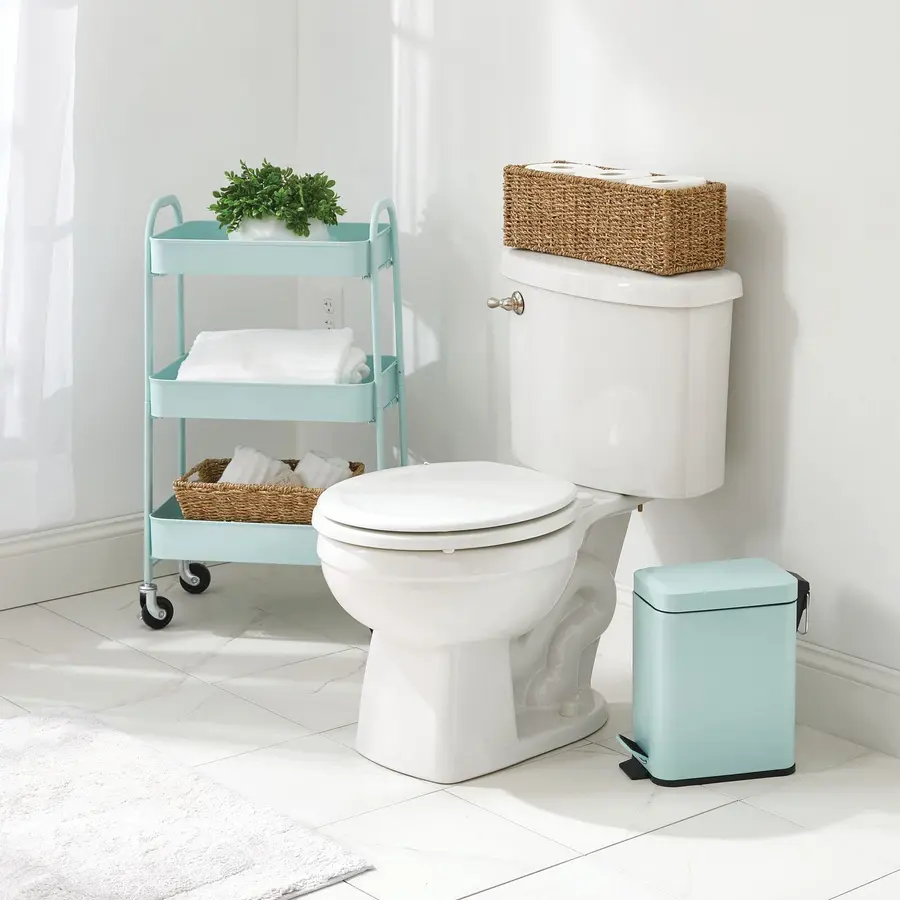
A bathroom bin does not always need a lid, but a lid is usually useful when the bin holds sanitary products, damp waste, or anything that may create an odor. It also keeps waste out of sight. The tradeoff is that lidded bins can be less convenient to use and may require more frequent cleaning around the lid and opening.
For a low-traffic guest bathroom containing mostly dry tissues, an open bin may be the simplest choice. For a main bathroom, a small pedal bin with a removable inner bucket is often the best balance between odor control, accessibility, and easy emptying.
Bathroom bin with lid or without: the main difference
The choice comes down to what you put in the bin and how often it is emptied. A lid creates a barrier between the waste and the room, but it does not remove the need to use a liner, empty the bin regularly, or clean the container.
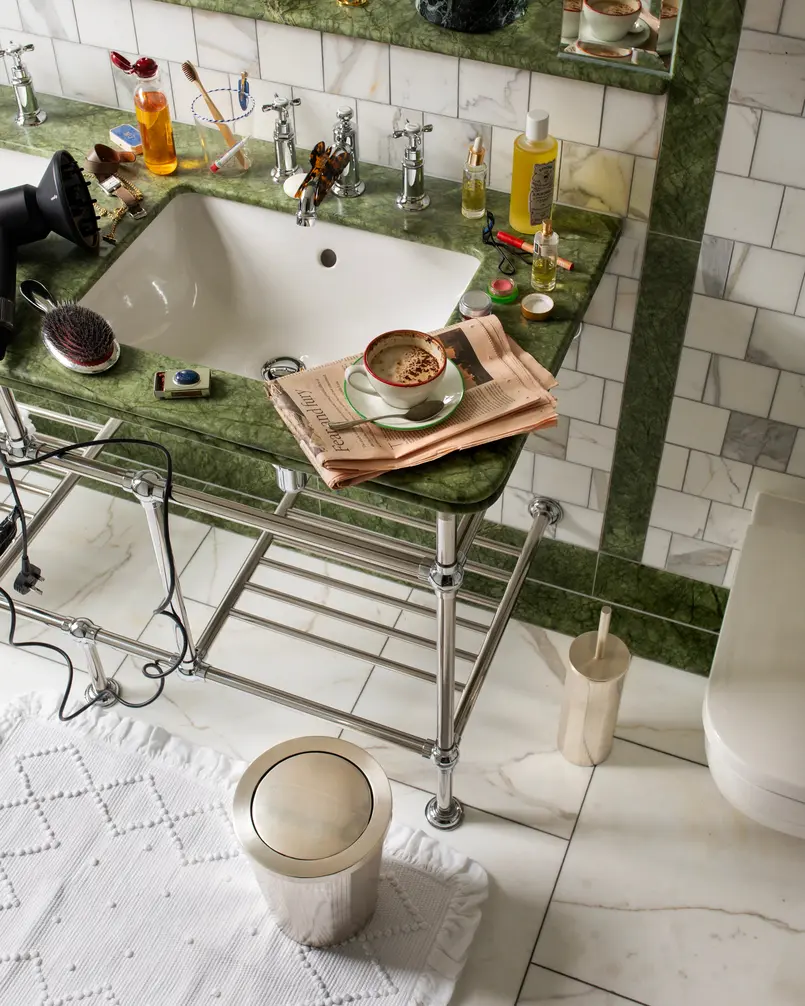
An open bin is quick to use and easy to see when it needs emptying. A lidded bin looks neater and can help contain odors, but its lid becomes another surface that can collect dust, moisture, and residue.
Source: mgco
| Bin style | Main advantages | Main drawbacks | Best suited to |
|---|---|---|---|
| Open bin | Fast access, good ventilation, easy to clean | Waste is visible and odors escape more easily | Dry tissues and low-traffic bathrooms |
| Swing-lid bin | Keeps waste mostly concealed and needs no pedal | The lid is touched by the waste or hand and can be awkward to clean | Guest bathrooms and everyday general waste |
| Pedal bin | Hands-free opening, concealed waste, good odor control | Takes floor space and has more moving parts to clean | Main bathrooms and sanitary waste |
| Touch-top bin | Neat appearance and simple one-hand operation | Requires touching the lid and may open less easily in tight spaces | Bathrooms where compact styling matters |
When an open bathroom bin makes sense
An open bin is a practical option when the bathroom produces mostly dry, low-odor waste such as tissues, cotton swabs, or packaging. There is no lid to lift, push, or wipe, so it is convenient for children, guests, and anyone who wants the quickest possible disposal.
Open bins also ventilate better. That can be helpful when damp items are placed inside, although ventilation does not make wet waste harmless or eliminate odors. A damp liner or wet waste can still make the bin unpleasant if it is left for too long.
The main disadvantage is visibility. Waste remains exposed, and smells can spread more easily through the room. An open bin is therefore less suitable if it will hold sanitary products or if the bathroom is used frequently by several people.
If you choose an open bin, look for a smooth, washable interior and a stable base. A removable liner makes emptying easier, while a wide opening reduces contact with the sides of the bin.
When a lidded bathroom bin is better
A lid is useful when discretion and odor control matter more than instant access. It conceals the contents and provides a physical barrier between the waste and the bathroom. This is especially helpful for a main bathroom, a shared bathroom, or a bin used for sanitary waste.
However, “with a lid” does not describe one single experience. The opening mechanism affects how hygienic and convenient the bin feels in daily use.
Swing-lid bins
A swing-lid bin opens when waste pushes against the top, then swings back into place. It keeps most contents out of sight without requiring a pedal or a button.
This style can work well in a guest bathroom because it looks tidy and is straightforward to operate. The lid is also usually removable or wipeable, which helps with routine cleaning. Its limitations are that waste may touch the lid, and the mechanism can become dirty around the pivot points. It is not completely hands-free.
Pedal bins
A pedal bin is often the strongest all-around choice for a bathroom. You open it with your foot, so you do not need to touch the lid after handling waste. The lid conceals the contents and can help keep odors contained between emptying.
Pedal bins need enough clear floor space for the pedal to move and for the lid to open. In a very small bathroom, check that the bin will not block a cabinet door, toilet access, or the shower area. A removable inner bucket is a useful feature because it allows the liner to be lifted out without dragging it against the outer shell.
Touch-top bins
A touch-top bin opens when you press the lid. It can be compact and visually simple, but you still need to touch the top each time you use it. That makes it less convenient than a pedal bin when hands-free disposal is a priority.
This style may suit a bathroom where the bin is used mainly for dry tissues and the lid is easy to wipe. Avoid placing it where the opening mechanism will be obstructed by a vanity or wall.
Does a lid improve bathroom hygiene?
A lid can improve cleanliness in practical ways, but it is not a substitute for good bin care. It conceals waste, limits the spread of odors, and reduces the chance of contents being disturbed. Those benefits are most noticeable when the bin contains damp or personal waste.
The lid itself can also become a contact surface. A swing-lid or touch-top bin may collect residue around the opening, while a pedal bin can accumulate dust on the pedal and dirt around the hinge. A bin is easier to keep hygienic when it has smooth surfaces, few narrow crevices, and a removable inner container.
For everyday care:
- Use a liner that fits the bin without leaving large folds inside.
- Empty the bin before it becomes overfilled.
- Wipe the lid, rim, pedal, and exterior regularly.
- Clean the inner container if a liner leaks or waste touches the inside.
- Let damp parts dry before fitting a fresh liner.
Do not rely on fragrance products to solve an overflowing or dirty bin. Odor control starts with choosing the right capacity and emptying it often enough for the waste it contains.
What to consider in a small bathroom
A lidded bin can make a small bathroom look less cluttered because the waste is hidden, but the opening and lid need room to operate. Measure the available floor area and consider the clearance beside the toilet, under a vanity, and near the bathroom door.
Slim pedal bins are useful where width is limited, provided the pedal remains accessible. A swing-lid bin may need less forward clearance than a pedal bin, depending on how far its lid moves. An open bin can fit under a vanity, but placing it too far back may make it awkward to reach and empty.
Do not choose capacity based only on the outer height. A lid, inner bucket, or thick outer shell can reduce usable space. The best size is one that can be emptied regularly without taking over the room.
Which bathroom bin should you choose?
Choose an open bin if you want the easiest access, the simplest cleaning routine, and mainly dispose of dry, low-odor waste.
Choose a swing-lid bin if you want concealed waste without adding a pedal, and the bin will be used in a guest bathroom or for general dry waste.
Choose a pedal bin if the bathroom is used frequently, the bin will hold sanitary products, or hands-free operation is important. Look for a removable inner bucket and a lid that closes reliably.
Choose a touch-top bin if appearance and compact operation matter more than hands-free use, and you are comfortable wiping the lid and opening area regularly.
Bottom line
The answer to “should a bathroom bin have a lid?” is usually yes for a busy or shared bathroom, particularly when the bin will hold sanitary or damp waste. A pedal bin is generally the most practical lidded option for hands-free use, while a swing-lid bin offers a simpler alternative.
An open bin is still a sensible choice for a small guest bathroom with mostly dry waste. Whatever style you choose, a well-fitting liner, regular emptying, and easy-to-clean surfaces matter as much as the lid itself.
References
- The Essential Guide to Choosing and Using a Bathroom Bin - Templatestock. (n.d.). https://templatestock.co/the-essential-guide-to-choosing-and-using-a-bathroom-bin
- How Touchless Trash Cans Improve Hygiene at Home – NINESTARS. (n.d.). https://ninestarsusa.com/blogs/ninestars-orbit/how-touchless-trash-cans-improve-hygiene-at-home
- Metal Bathroom Bin with Bamboo Lid White Pedal Bin Dustbin for Bathroom Removable Bucket Soft Close Compact Design - 3L. (n.d.). https://www.diy.com/departments/metal-bathroom-bin-with-bamboo-lid-white-pedal-bin-dustbin-for-bathroom-removable-bucket-soft-close-compact-design-3l/5065019076823_BQ.prd
- Odor Sealed Bathroom Trash Cans | Airtight & Odor Proof. (n.d.). https://www.wayfair.com/bed-bath/sb1/odor-sealed-bathroom-trash-cans-c1862825-a75648~342770.html
- SONGMICS Slim Bathroom Pedal Bin, Small Steel Waste Bin with Soft-Close Lid for Compact Areas, Sand Beige. (n.d.). https://diy.com/departments/songmics-slim-bathroom-pedal-bin-small-steel-waste-bin-with-soft-close-lid-for-compact-areas-sand-beige/7323304678462_BQ.prd
- Elite Bathroom Waste Bin - Swing Lid, 6 Litre | Showerdrape. (n.d.). https://www.showerdrape.co.uk/sd/bathroom-accessories/bathroom-bins/plastic-swing-lid-waste-bin-elite
- Bathroom Trash Can With Lid And Deodorizer. (n.d.). https://www.amazon.com/bathroom-trash-can-lid-deodorizer/s?k=bathroom+trash+can+with+lid+and+deodorizer
- Heka - Bathroom Lid - Beige (EXPO) – Magic. (n.d.). https://magicbabyproducts.com.au/products/heka-bathroom-lid-beige-expo