Should Toilet Paper Hang Over or Under?
The short answer
If you are choosing between the two, hanging toilet paper over the top is usually the more practical default. The loose end is easier to see and reach, and it is less likely to sit close to the wall behind the roll. Hanging it underneath is also perfectly usable, especially if you prefer a neater appearance or want to make the loose end less accessible to a young child or pet.
There is no universal hygiene rule that makes one direction correct. In a normal home bathroom, the bigger factors are how often the holder and surrounding surfaces are cleaned, whether the paper stays dry, and whether people touch the roll with clean hands. The over-or-under choice is mainly about access, visibility, and household habits.
Over versus under at a glance
| Paper direction | Main practical advantage | Possible drawback |
|---|---|---|
| Over | The loose end is visible and easy to grasp | May be easier for children or pets to pull |
| Under | Can look less prominent and may be harder for a child or pet to reach | The loose end is less visible and can be less convenient to find |
Neither position makes the roll dispense paper in a fundamentally different way. The holder, the distance from the toilet, the size of the roll, and the space around it often have a greater effect on everyday convenience.
Why many people prefer the over position
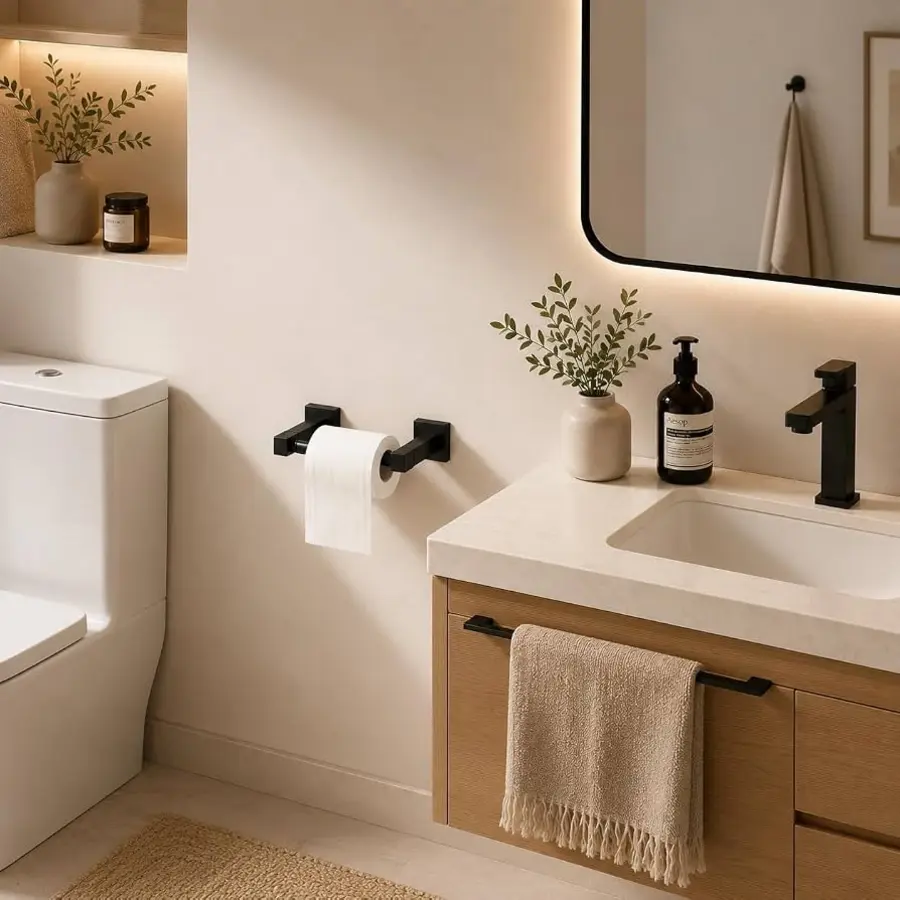
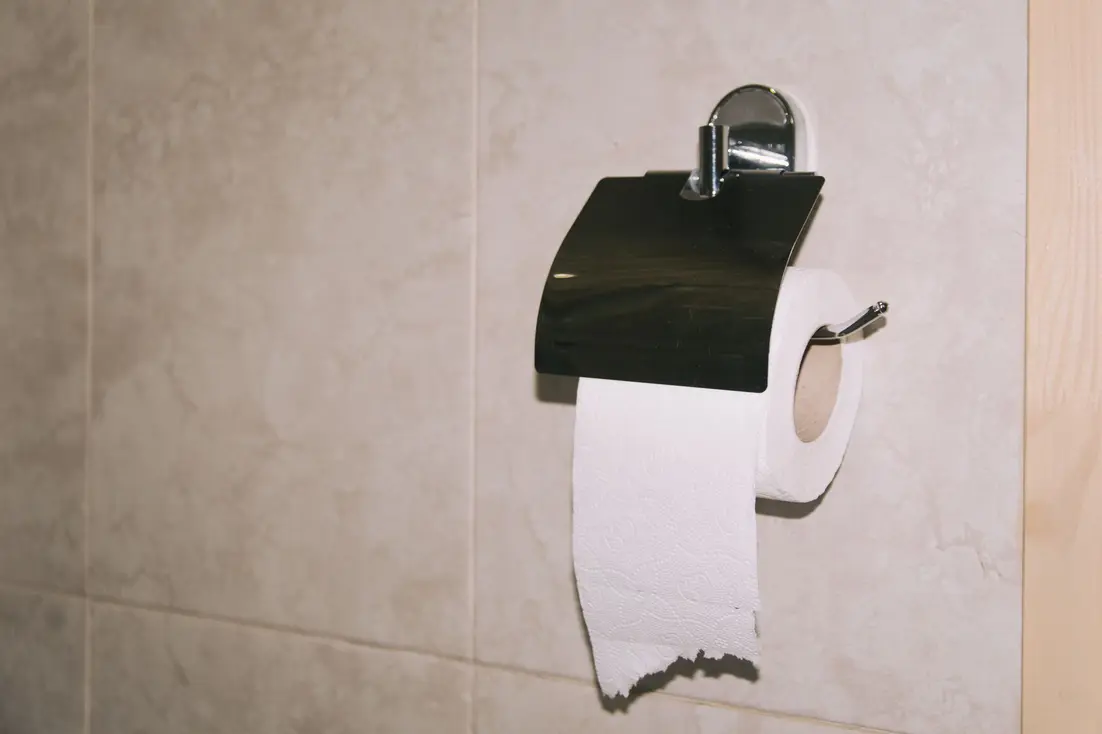
With the paper hanging over the top, the loose edge is in front of the roll. You can identify it quickly without feeling around the holder, which is useful in a small or dim bathroom. It is also easier to pull a controlled amount with one hand when the roll is positioned within comfortable reach.
The over position can make the roll easier to monitor as it gets low. You can see the remaining paper and notice when it needs replacing. This is a small benefit, but it can matter in a shared bathroom where an empty roll is easy to overlook.
The loose end also generally hangs away from the wall. That gives it more separation from painted walls, tile, or the back plate of the holder. If the holder is mounted close to a wall or the roll is unusually large, this spacing may help prevent the paper from brushing the surface as it is pulled.
The main disadvantage is access. A child, cat, or dog that likes to play with loose paper may find an overhanging roll easier to grab and unwind. If that is a recurring problem, changing the direction may help, although it will not replace a more secure storage or supervision solution.
Why some households choose the under position
When the paper hangs underneath, the loose end is tucked behind the roll. This can make the holder look less visually busy, particularly when the bathroom has a compact, simple arrangement. It may also make the paper slightly less inviting to a child or pet that pulls at anything hanging down.
Under can be a useful preference when the holder is close to a vanity, cabinet, or other surface and the overhanging edge looks awkward against it. It may also suit a bathroom where people prefer the paper to be less noticeable rather than immediately visible.
The tradeoff is that the loose end can be harder to locate. You may need to look behind the roll or turn it slightly to find the edge. Pulling paper can also feel less direct, especially if the holder has a tight spring bar, a narrow side clearance, or a large roll that nearly touches the wall.
An under-hanging roll is not automatically cleaner. The direction alone does not prevent germs from reaching the paper or holder, and it does not compensate for a damp or dirty bathroom surface.
Does one direction improve hygiene?
The toilet paper over-or-under debate is often presented as a hygiene question, but there is no simple direction that guarantees a cleaner result. Both positions leave part of the roll available to be touched, and both can be used hygienically when the holder and surrounding area are kept clean and dry.
Over may offer a small practical advantage when the loose end remains clearly separated from the wall or holder. Under may keep the loose edge less exposed to casual contact in some setups. Those differences depend on the particular holder, mounting position, bathroom traffic, and who uses the room. They are not a universal rule.
For better everyday hygiene:
- Keep the holder and its mounting plate free of dust, residue, and moisture.
- Avoid storing spare rolls where they can become damp or contaminated by splashes.
- Replace a roll if it has become wet or visibly dirty.
- Wash hands properly rather than relying on the paper direction to solve a hygiene concern.
- Check whether the holder is loose, damaged, or difficult to clean around.
The surface behind the holder also matters. If the roll repeatedly rubs against a wall, clean the contact area and consider whether the holder is mounted too close to the wall or is not holding the roll securely.
Which direction is better for children and pets?
Under is often the first direction to try if a child or pet keeps pulling toilet paper from the roll. With less paper hanging visibly in front, the roll may be less tempting and harder to start unwinding. However, a determined child or pet can still reach the roll, so the change may only reduce the problem rather than eliminate it.
Over can be more convenient in a household where quick, obvious access matters more than preventing unrolling. If the holder is high enough, securely mounted, and out of reach, the over position may provide the simplest experience for everyone.
If unrolling continues, consider the holder’s location and the roll’s accessibility. A more secure holder, a better placement, or keeping pets away from the bathroom may be more effective than repeatedly changing direction.
Does over or under make changing the roll easier?
The direction has little effect on the actual roll-change process. You still remove the empty roll, place the new roll on the holder, and pull the loose end into position. The holder design matters more.
A spring-loaded bar, pivoting arm, or enclosed holder can each require a slightly different motion. If the roll is difficult to replace, look for problems such as limited side clearance, a stiff mechanism, a roll that is too wide for the holder, or a holder mounted too close to a wall or cabinet.
When installing a new roll, pull out a short, manageable length rather than leaving a long tail. This makes the direction clear and reduces the chance of the paper touching the floor or nearby surfaces.
How to choose the correct toilet paper direction for your bathroom
Use the following simple decision guide:
- Choose over if you value quick visibility, easy one-handed access, and a loose end that hangs away from the wall.
- Choose under if you want a less noticeable edge or are trying to make the roll less accessible to a child or pet.
- Check the wall clearance if the paper brushes the wall in either position. The holder may need a different location or adjustment.
- Prioritize the holder’s condition if the roll slips, spins too freely, or is difficult to change.
- Keep the direction consistent in shared bathrooms so everyone knows where to find the loose end.
Bottom line
For most households, over is the easiest default because the paper edge is visible, reachable, and usually held away from the wall. Under is a reasonable alternative when you prefer a more discreet look or want to reduce easy access for children or pets.
The correct toilet paper direction is ultimately the one that works with your holder, bathroom layout, and household routine. Neither position is inherently hygienic or universally superior; practical fit matters more than the debate suggests.