Can You Hang a Shower Caddy Over a Glass Shower Door?
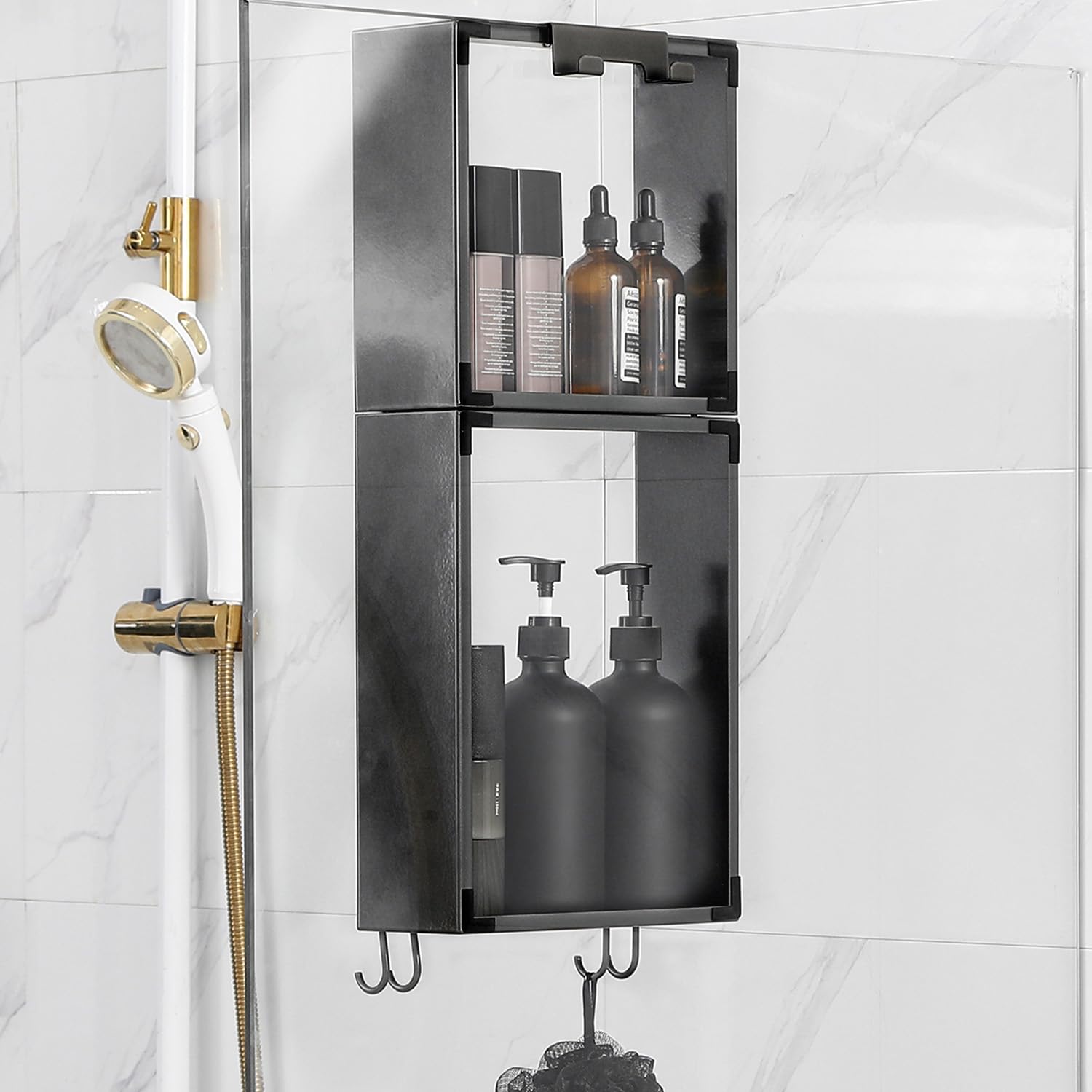
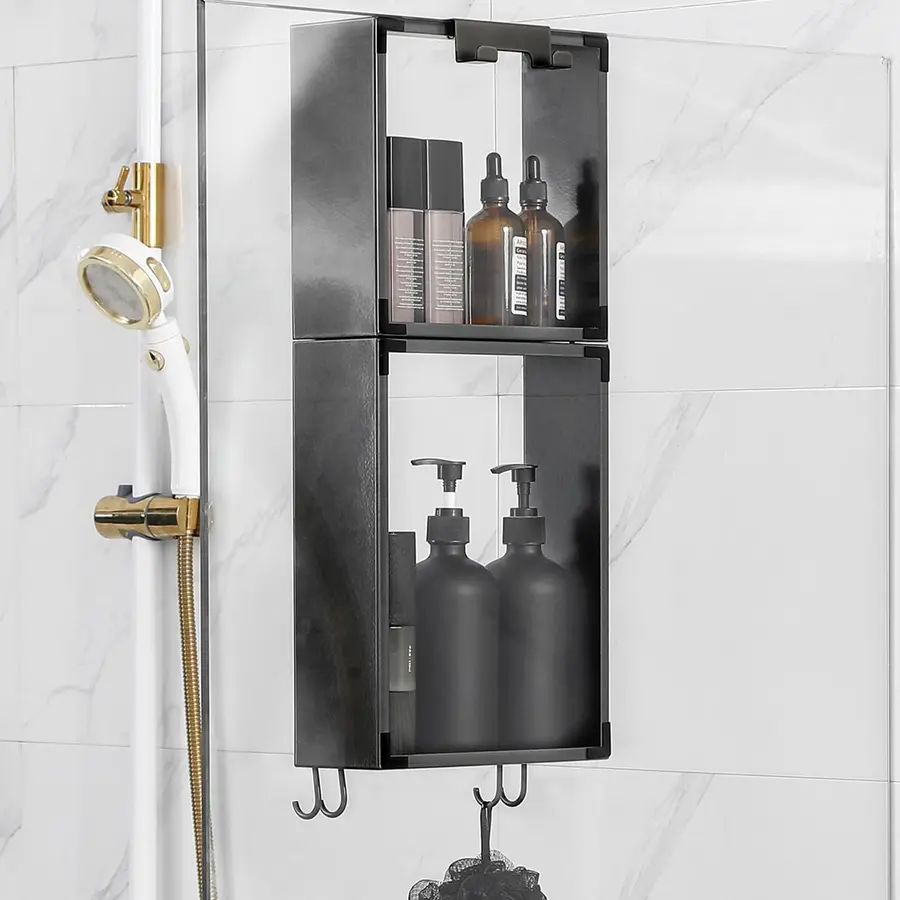
An over-door shower caddy can work on some glass shower doors, but it is not automatically safe for every enclosure. The caddy must fit the door’s top edge, stay clear of hinges and seals, and remain within the door and caddy manufacturers’ weight and compatibility requirements.
Use extra caution with a frameless glass door. If you cannot confirm the glass thickness, mounting method, loaded weight, and clearance during opening and closing, choose storage that does not hang from the glass.
When an over-door shower caddy may be suitable
An over-door caddy is most likely to work when it is specifically designed for a shower enclosure and the door has a compatible top profile. A framed door may offer a more defined surface for the hanger, but a frame alone does not guarantee a fit. The caddy still needs to sit securely without pressing on the glass, catching a seal, or interfering with the door hardware.
Some products are intended for a glass panel, while others are designed for a framed hinged or sliding door. “Over door” describes how the caddy hangs; it does not prove that the product fits every glass shower door.
Before buying, check the product instructions for:
- Compatible door or panel types
- The required door thickness or thickness range
- Whether the caddy is approved for framed, frameless, hinged, or sliding enclosures
- The maximum loaded weight
- Any required protective pads, liners, brackets, or adjustments
- Clearance requirements around seals, hinges, rollers, and handles
Source: cdn.shopify
Why frameless glass doors need more caution
A frameless shower door depends on its hinges, clamps, seals, and other hardware for alignment and movement. Adding a caddy changes the load on the moving door and adds another object to the space around the enclosure.
That matters because the door must still open, close, and meet its seals normally. A hanger that appears to fit over the top may press against an edge, rub during movement, catch on a seal, or come close to a hinge. Repeated contact or a door that no longer moves correctly is a reason to remove the caddy rather than adjust it by force.
A frameless shower caddy should be used only when the enclosure manufacturer and caddy manufacturer support that type of installation. If the manufacturer’s information is unclear, storage mounted to the wall, placed on the shower floor, or positioned outside the door is the safer choice.
Do not drill an installed tempered shower door to add a caddy. Holes and other fabrication for tempered glass must be completed before tempering, so a no-drill hanger is not a reason to modify the glass yourself.
Check the shower caddy door thickness
Door thickness is one of the most important fit details. Measure the glass or framed section where the caddy will sit, then compare that measurement with the caddy’s stated requirements. Do not rely on appearance or assume that all shower glass has the same thickness.
If the door has a frame, determine what the hanger actually rests on. It may need to fit over the frame rather than over the glass itself. Note the frame’s outside width, shape, and any raised lip. If the caddy is meant for bare glass, a frame can make the opening too narrow or change how the weight is transferred.
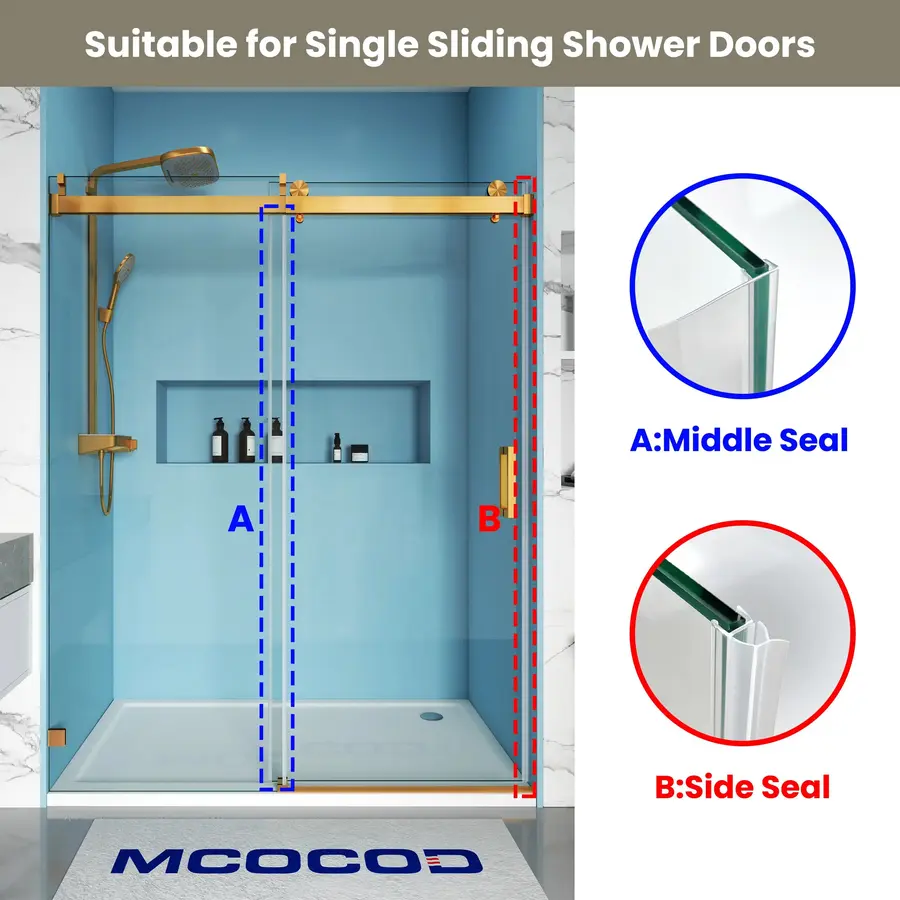
Also inspect the top edge from the side. Look for:
- A thick or rounded frame
- A narrow glass edge
- A sliding-door track or guide
- A rubber seal or sweep that reaches the top area
- Hinges, clamps, or stop hardware near the intended hanging position
If the listed fit range does not include your measured door or frame, do not force the caddy into place. A tight fit can be just as problematic as a loose one if it puts pressure on the glass or prevents normal door movement.
Check clearance before loading it
Test the empty caddy first. Hang it in the proposed position and slowly open and close the door. Watch the full path rather than checking only the closed position.
The caddy should not:
- Touch the wall, shower curb, or another panel
- Catch on the door seal
- Strike a hinge, handle, roller, or guide
- Prevent the door from closing fully
- Push the door out of alignment
- Rub against the glass during movement
- Make the door feel unusually heavy or difficult to operate
Leave enough room for the caddy itself and for the bottles that will sit in it. Tall bottles can hit a wall or fixed panel even when the hanger clears the top edge. Pumps and hooks can also project farther than the shelves.
If the door is hinged, consider whether the caddy sits on the inside or outside of the enclosure. If it is on the moving door, its position and contents travel through the door’s arc. If it is placed over a fixed panel, confirm that the panel and its supporting hardware are intended to carry the added load.
How much weight should a shower caddy hold?
Follow the caddy’s stated maximum loaded weight, and do not treat a general product description such as “holds multiple bottles” as a precise limit. Count the weight of the caddy, bottles, soap, razors, and any accessories together.
Keep the load modest even when the caddy appears sturdy. Large bottles and full pump containers place more weight on the hanger than a few small toiletries. Concentrate heavier items low and close to the support rather than loading one shelf heavily or allowing bottles to swing.
The enclosure manufacturer may have a separate restriction or may not approve hanging storage at all. When the caddy and enclosure instructions differ, follow the more restrictive guidance. If neither manufacturer provides clear approval, do not use the glass door as the storage support.
Signs the caddy should come off
Remove the caddy and reassess the installation if you notice any of the following:
- The door no longer closes or seals as it did before
- The hanger shifts when the door moves
- Pads or liners slide out of position
- Metal or hard plastic touches the glass
- The caddy contacts a hinge, frame, or wall
- The glass shows chips, cracks, or damage near the hardware
- The door feels loose, stiff, or misaligned
- Bottles swing into the door or enclosure
Do not try to correct a questionable fit by tightening hardware against the glass or adding improvised wedges. Stop using the caddy until the manufacturer or a qualified shower-door professional confirms the setup.
Safer alternatives for a glass shower enclosure
If an over-door shower caddy does not have a confirmed fit, you still have several practical storage options:
Hanging caddy from the showerhead
A showerhead caddy hangs from the pipe or showerhead connection rather than the glass. It can be useful when the showerhead and wall connection are solid and the product is designed for that support. Keep it clear of the spray and do not overload it.
Suction-mounted storage
Suction caddies can work on a smooth, clean, nonporous surface when the product instructions allow that surface. They are generally easier to reposition than adhesive storage, but their hold can change if the surface is textured, dirty, wet, or unsuitable for the cups. Check the caddy regularly rather than treating suction as permanent.
Adhesive shower shelves
Adhesive shelves avoid hanging weight from the door, but they require a compatible wall surface and careful installation. Confirm that the adhesive is intended for a wet shower environment and that the shelf can support the planned load. Avoid placing it where it could interfere with the door or existing fixtures.
Freestanding or floor caddies
A freestanding caddy keeps storage independent of the glass and hardware. It is a useful option when the walls are unsuitable for adhesive or suction products, although it takes up floor space and should not block the door or drain.
Source: m.media-amazon
Bottom line
You can hang a shower caddy over a glass shower door only when the caddy and enclosure are compatible and the complete, loaded setup clears the door’s movement. Check the shower caddy door thickness, top-edge shape, seals, hinges, and weight limit before using it.
For a frameless glass shower door, require clear manufacturer approval. When that information is unavailable—or when the caddy shifts, rubs, or changes how the door operates—choose wall-mounted, suction, hanging-from-the-showerhead, or freestanding storage instead.
References
- Shower Caddy Frameless Glass Door: Safe Setup 2026 - Century Shower Door. (n.d.). https://showerdoor.com/blogs/news/how-to-connect-a-shower-caddy-to-a-frameless-glass-door
- Shower Caddy Over Door: Importer Fit and Sample Checks. (n.d.). https://koitorhardware.com/over-door-shower-caddy-glass-door-fit-importer-guide
- Keep Your Bathroom Organized with a Glass Shower Door Shower Caddy — Casa Living. (n.d.). https://casaliving.com.au/blogs/news/keep-your-bathroom-organized-with-a-glass-shower-door-shower-caddy
- Safe + Beautiful + Frameless | Glass Magazine. (n.d.). https://www.glassmagazine.com/article/safe-beautiful-frameless
- shower door installation instructions (for single door). (n.d.). https://customglass.dreamline.com/media/manuals/UNIDOOR_STYLE_A_Single_Shower_Door_Manual_Ver_3_Rev_2_122021.pdf
- Over the Door Shower Caddy - Etsy Türkiye. (n.d.). https://www.etsy.com/market/over_the_door_shower_caddy
- Over Door Shower Caddy - Etsy Slovakia. (n.d.). https://www.etsy.com/market/over_door_shower_caddy
- Frameless Glass Installation | Basco Shower Doors. (n.d.). https://bascoshowerdoor.com/installation/frameless-glass-installation