How to Choose a Shower Curtain Liner Material
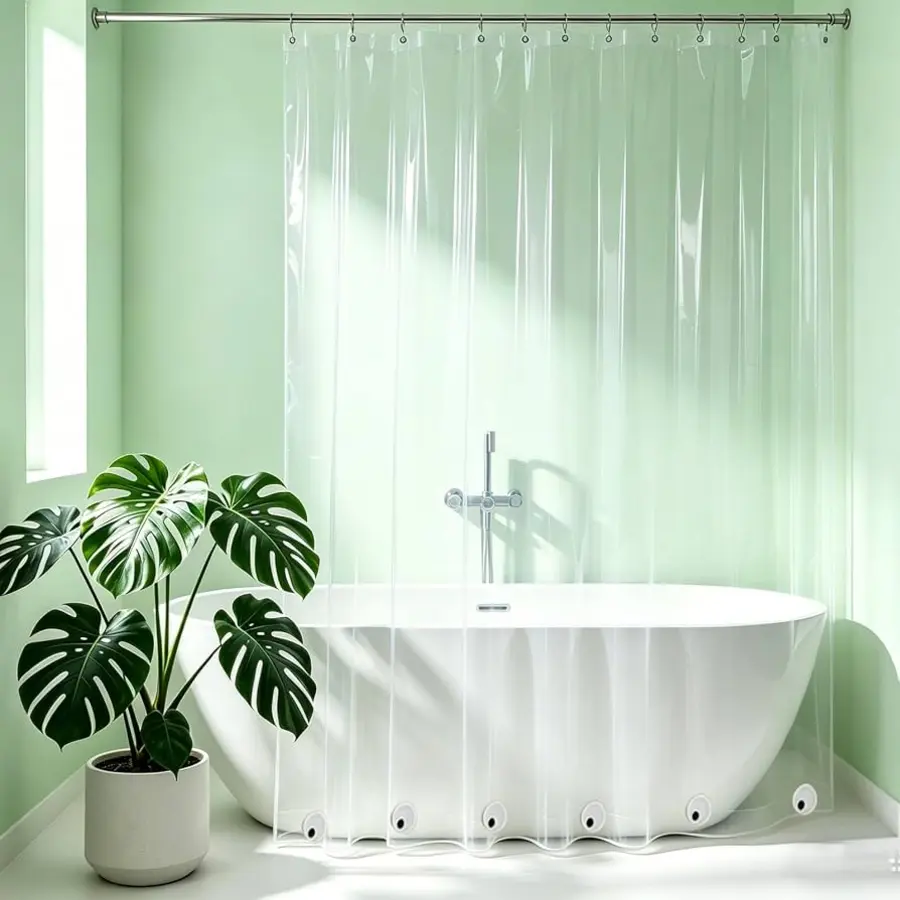
The best shower curtain liner material depends on what matters most in your bathroom. PEVA is usually the simplest choice for strong water resistance, low odor, and easy wipe-down care. A fabric liner is better if you want softer drape, a quieter appearance, or a liner that can usually be washed. Vinyl is water-resistant and inexpensive, but it can have a stronger plastic odor and is less appealing if you want to avoid PVC.
No liner is automatically mildew-proof. Drying, ventilation, correct coverage, and regular cleaning matter as much as the material itself. Choose the liner that matches your shower’s water exposure and the amount of maintenance you are willing to do.
Shower curtain liner materials at a glance
| Material | Water resistance | Odor | Mildew care | Cleaning | Best fit |
|---|---|---|---|---|---|
| PEVA | High | Usually low | Wipe and dry regularly | Often easy to wipe; follow the label for washing | Simple, rental-friendly setups |
| Vinyl or PVC | High | May be noticeable when new | Wipe and dry regularly | Usually wipe-clean | Low-cost, highly water-resistant use |
| Fabric, often polyester | Moderate to high, depending on weave and treatment | Usually low | Needs regular washing and drying | Often machine washable | Softer drape and easier laundering |
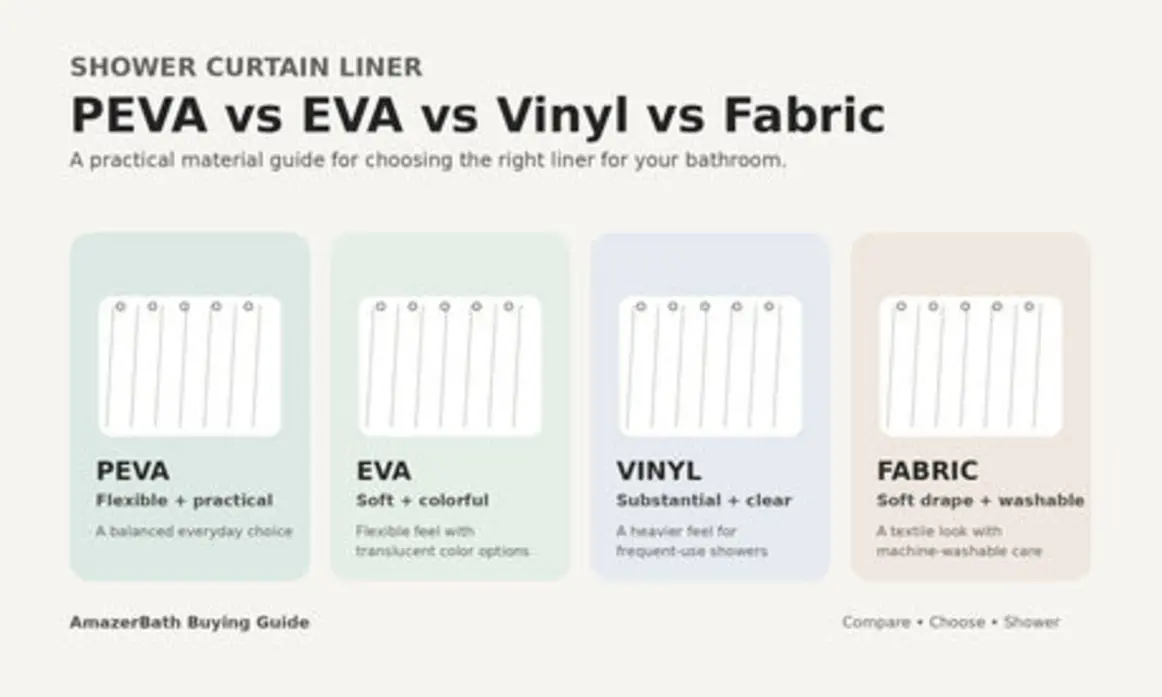
Source: amazerbath
PEVA shower curtain liners
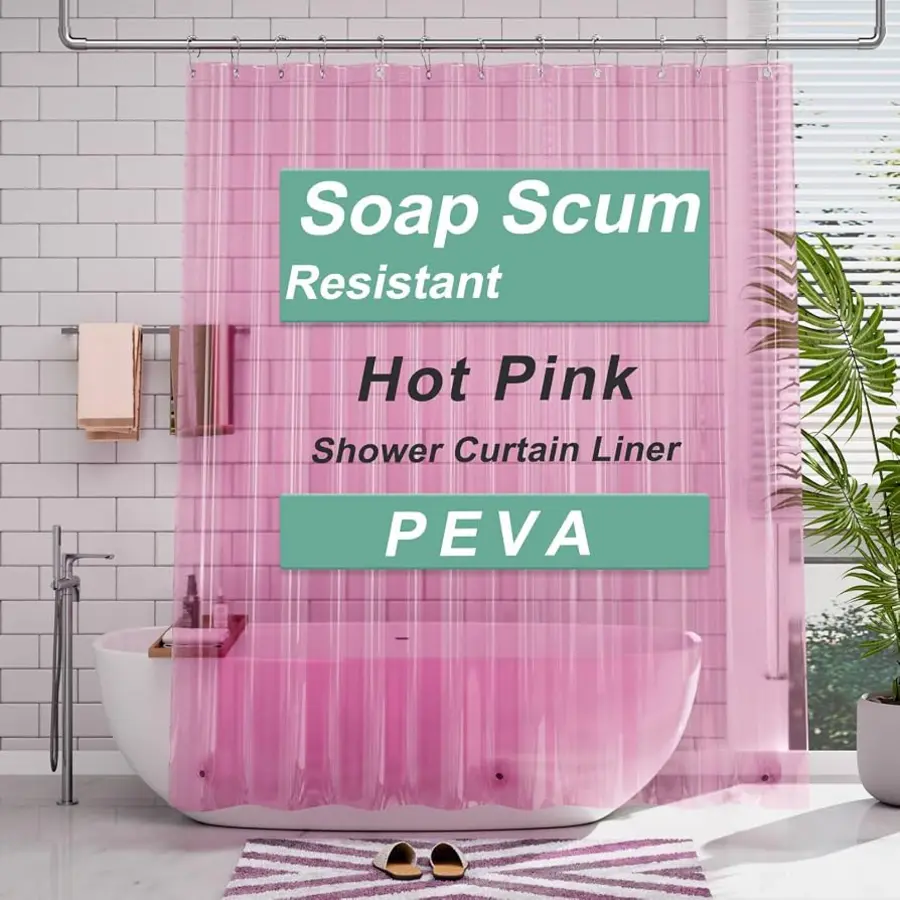
PEVA stands for polyethylene vinyl acetate. It is a sheet-like plastic material used as an alternative to traditional PVC vinyl in many shower liners. PEVA is naturally water-resistant, so it does not absorb shower water in the way a woven fabric can. That makes it useful when your main goal is keeping water inside the tub or shower.
PEVA liners are also popular because they are generally easy to wipe down and tend to have less noticeable odor than some vinyl products. They are available in clear, frosted, and opaque finishes, which can work well in small bathrooms where a visually light liner is helpful.
The tradeoff is drape. A PEVA liner can look and feel more like a plastic sheet than a textile, and it may move or cling if the bathroom has strong airflow. It can also crease, tear, or become brittle over time, especially if it is handled roughly or exposed to repeated stress at the holes.
PEVA is a practical choice when you want:
- Strong water containment
- A low-maintenance liner
- Less concern about fabric staying damp
- A clean, minimal appearance
- A renter-friendly replacement that does not require installation changes
“Mildew resistant” on a PEVA liner should not be read as “mildew cannot grow.” Soap film, dust, and trapped moisture can still collect on the surface or along the bottom edge. Let the liner spread out after a shower, keep the bathroom ventilated, and clean it before buildup becomes heavy.
Vinyl shower curtain liners
Vinyl liners are commonly made from PVC, or polyvinyl chloride. Like PEVA, vinyl forms a water-resistant barrier rather than absorbing water. It is often inexpensive and can provide dependable protection for the decorative curtain, bathroom floor, and nearby walls.
Vinyl is a reasonable option when water containment is the priority and the liner will receive frequent use. It is especially straightforward in a basic rental bathroom where you want a functional replacement without changing the rest of the setup.
The main drawback is odor. Some vinyl liners have a noticeable plastic smell when new, although the intensity varies by product and ventilation. If you are sensitive to smells, PEVA or fabric may be more comfortable choices. Vinyl can also feel stiffer than fabric and may not provide the soft, quiet drape some people prefer.
Vinyl liners are best considered when you want:
- A strongly water-resistant barrier
- A low purchase cost
- A simple wipe-clean surface
- A liner for a shower that receives frequent splashing
Do not assume that a thicker or heavier vinyl liner will always last longer. Construction around the header, grommets, and bottom edge also affects durability. Follow the care instructions, and replace the liner if it becomes cracked, stiff, torn, or difficult to clean.
Fabric shower curtain liners
Fabric liners are commonly made from polyester, although other textiles may also be used. Polyester liners are often water-repellent rather than completely waterproof. They can allow some moisture to pass or absorb a small amount of water, depending on the fabric’s weave, weight, and treatment.
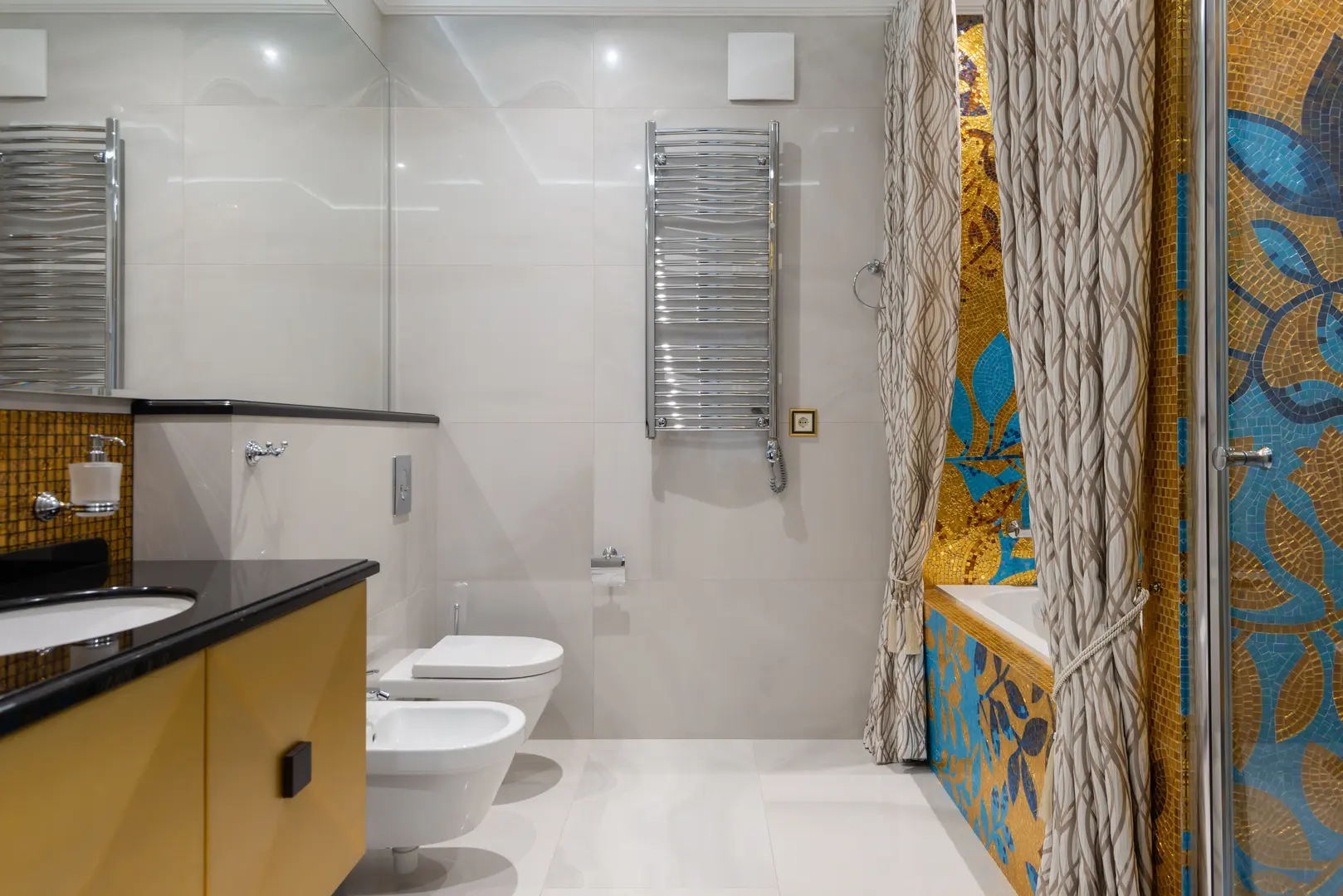
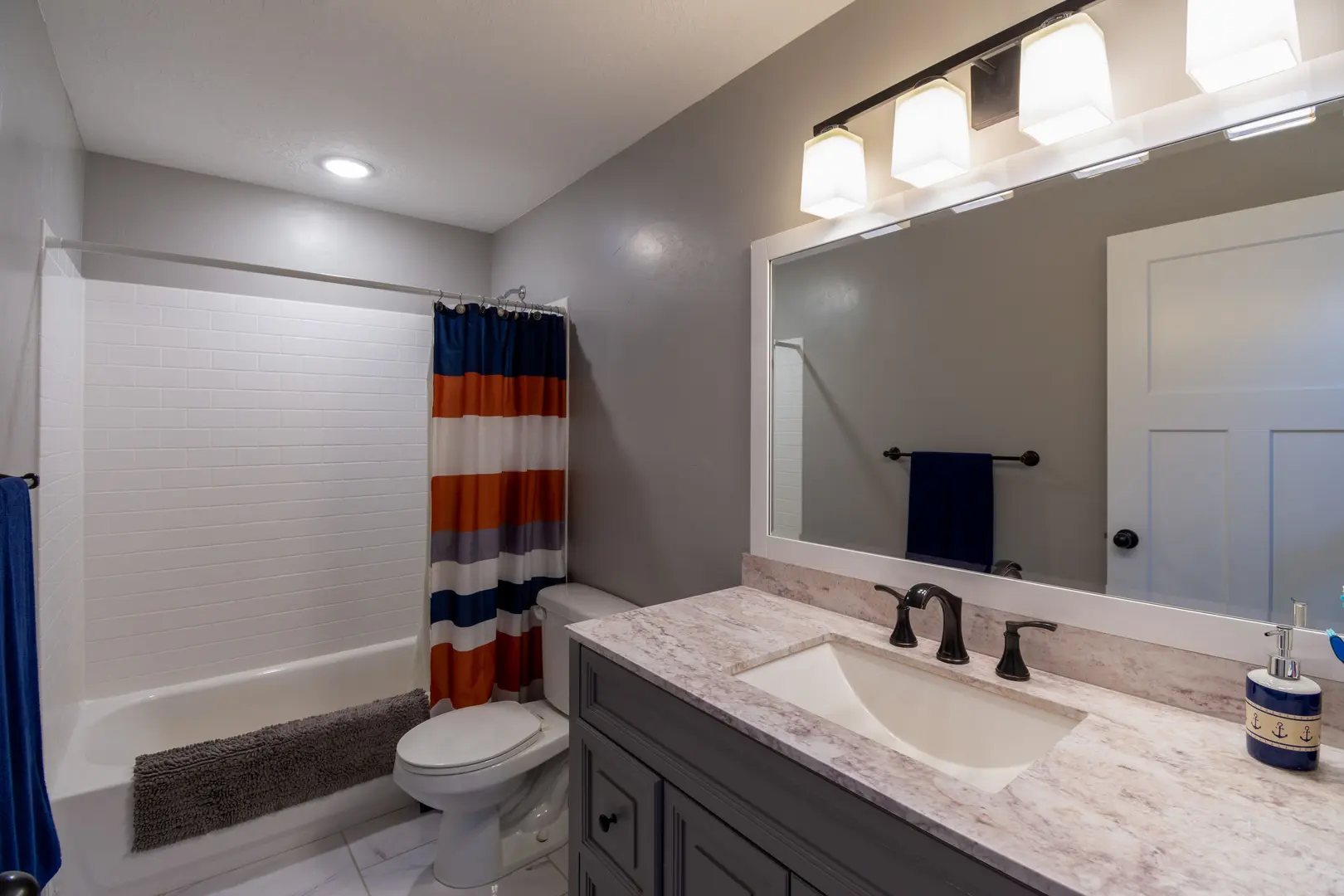
Their main advantages are appearance and maintenance. Fabric hangs with a softer drape, usually makes less noise than plastic, and can sometimes serve as both the liner and the visible shower curtain. Many fabric liners can be machine washed, which makes it possible to remove soap residue and mildew staining more thoroughly than with a liner that is only wiped.
The tradeoff is that fabric needs more attention after use. A liner that stays bunched at the bottom of the tub can remain damp for too long. It may also need more frequent washing than a plastic liner, particularly in a bathroom with limited ventilation.
Fabric is a good fit when you want:
- A soft, less utilitarian appearance
- A liner that may be machine washable
- A quieter curtain while showering
- A decorative curtain and liner in one piece
- Less reliance on a plastic sheet
Check the label before washing. Some fabric liners can be machine washed, while others have coatings or construction details that require gentler care. Avoid assuming that every fabric liner is waterproof simply because it is marketed as a shower liner.
Which material controls water best?
Plastic-based liners—PEVA and vinyl—usually provide the most direct water barrier. They are the safer starting point when the shower sprays toward the curtain, the tub edge is narrow, or water containment is a recurring problem.
Fabric can work well when it is sized correctly and kept inside the tub or shower area. Its performance depends more on the fabric, construction, and placement. A fabric liner that is too short, too narrow, or left outside the tub will not control water well regardless of its material claim.
The liner should overlap the shower opening, reach far enough down to direct water into the tub or shower base, and hang inside the wet area while the shower is running. A decorative curtain outside the liner can improve appearance, but it cannot replace a properly positioned water barrier.
Which material is easiest to keep mildew-free?
There is no universal winner because mildew depends on moisture, residue, air movement, and cleaning habits. PEVA and vinyl do not absorb water, so they can dry quickly when spread open. Fabric can also stay fresh, but it generally needs laundering and thorough drying.
Treat “mildew resistant” as a helpful product feature, not a guarantee. Some liners receive an antimicrobial or mildew-resistant treatment, but that treatment does not remove the need for cleaning. Product claims also vary, so read the care label and do not rely on a generic material name alone.
A basic routine helps any liner last longer:
- Pull the liner closed or spread it across the tub after showering so it can dry.
- Use the bathroom fan or improve ventilation when possible.
- Rinse or wipe away visible soap residue before it builds up.
- Wash fabric liners according to their care instructions.
- Replace plastic liners when cracking, staining, or persistent mildew makes cleaning impractical.
Is a liner better than a decorative shower curtain?
A liner is preferable when water containment is the main job. It provides a washable or replaceable layer between the shower spray and the decorative curtain. This can help keep a fabric curtain from becoming constantly damp and gives you a less expensive part to replace when buildup appears.
A decorative curtain may be enough on its own when it is specifically designed to function as a water-resistant shower curtain and the bathroom has good coverage. Even then, a separate liner can make cleaning and replacement simpler.
For a small bathroom or rental, a plain PEVA liner is often the least complicated setup. For a softer look, use a fabric liner or pair a washable fabric liner with a separate decorative curtain. Vinyl remains functional when cost and water resistance matter more than odor or drape.
How to make the final choice
Choose PEVA if you want the best balance of water resistance, low odor, simple cleaning, and rental-friendly practicality. Choose vinyl if you want a low-cost plastic barrier and do not mind the possibility of a stronger new-plastic smell. Choose fabric if you value softer drape, a quieter appearance, and the ability to launder the liner.
Whichever shower curtain liner material you choose, check the actual care instructions, measure for adequate coverage, and plan for regular drying. Those details often matter more to daily performance than the material label alone.
References
- Mildew Resistant Shower Curtain Materials Explained: PEVA, Fabric, and Vinyl | ABNewswire. (n.d.). http://www.abnewswire.com/pressreleases/mildew-resistant-shower-curtain-materials-explained-peva-fabric-and-vinyl_782746.html
- 10 Amazing Benefits: ‘What is PEVA Shower Curtain’ Revealed!. (n.d.). https://cottoncat.com/blogs/shower-curtain-tips/what-is-peva-shower-curtain
- What Is The Best Material For A Shower Curtain? (you Might Be Surprised!) - HouseFixMaster. (n.d.). https://housefixmaster.com/what-is-shower-curtain-material
- 5 Best Shower Curtain Liners To Avoid Mildew And Moldac – Home Decor Bliss. (n.d.). https://homedecorbliss.com/best-shower-curtain-liner-to-avoid-mildew-and-mold
- 5 Best Shower Curtain Liners To Avoid Mildew And Moldac. (n.d.). https://homedecorbliss.com?p=31730
- The Ultimate Guide to PEVA Material: Benefits, Safety, and Comparison for Shower Curtains. (n.d.). https://www.alphatextilehome.com/the-ultimate-guide-to-peva-shower-curtain.html
- Understanding the Differences in Shower Curtain Liner Materials | Clean Healthy Living. (n.d.). https://cleanhealthyliving.net/blogs/learn/the-difference-in-shower-curtain-liner-material
- SlipX Solutions. (n.d.). https://slipxsolutions.com/choosing-a-shower-liner