Shower Curtain Track vs Rod: Which Should You Choose?

A shower curtain track is usually the better choice when the curtain must turn a corner, hang from the ceiling, span an unusual opening, or stay firmly in place under daily use. A conventional shower curtain rod is usually better for a standard tub-shower opening, especially if you want a simpler and more rental-friendly installation.
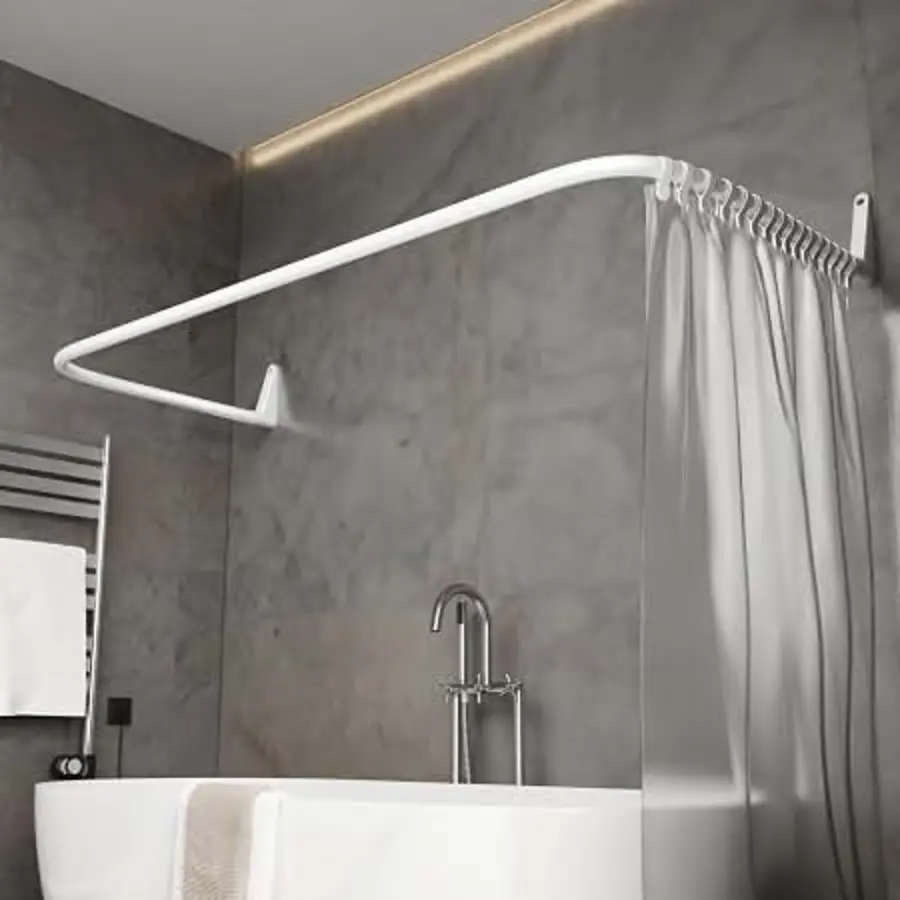
The key difference in shower curtain track vs rod is how the curtain moves and where the support comes from. A rod is a visible bar, and the curtain hangs from rings or hooks that slide over it. A track is a rail with an internal channel and gliders, usually mounted to the wall or ceiling. Tracks can be straight, curved, L-shaped, or U-shaped.
Neither option is automatically best. The right choice depends on the shape of the shower, the coverage you need, how permanent the installation can be, and how much visual hardware you want in the room.
Shower curtain track vs rod at a glance
| Feature | Shower curtain rod | Shower curtain track |
|---|---|---|
| Best for | Standard straight tub or shower openings | Corners, wide openings, freestanding tubs, and ceiling mounting |
| Curtain movement | Rings or hooks slide over an exposed bar | Gliders move inside an enclosed channel |
| Installation | Often simpler, especially with tension models | Usually requires fixed wall or ceiling mounting |
| Rental-friendliness | Strong, particularly with a tension rod | Limited unless an existing track is already installed |
| Shape options | Straight, curved, L-shaped, or U-shaped | Straight, curved, L-shaped, or U-shaped |
| Visual effect | More noticeable and familiar | Often slimmer and less prominent |
| Load and support | Depends heavily on brackets and wall support | Multiple mounting points can improve stability |
| Cleaning | Exposed rod and rings are easy to reach | Track channels and gliders may need more detailed cleaning |
When a shower curtain rod is the better choice
A shower curtain rod is a practical fit for a typical bathtub-shower combination or a straight shower opening between two opposing walls. It is familiar, widely available, and usually easier to replace or adjust than a built-in track.
A tension rod can work well when you do not want to drill into tile, plaster, or painted walls. It is also useful in a rental or in a bathroom where the final layout may change. However, a tension rod depends on firm contact with both opposing walls. It is not the right assumption for every surface or opening, so check the product instructions and the condition of the walls before relying on one.
A fixed rod, attached with wall brackets, is a better option when you want more dependable support than a tension model provides. The brackets and fasteners must be suitable for the wall surface, and the rod should be installed according to the manufacturer’s instructions.
A rod also makes curtain replacement straightforward. You can normally remove the rings or hooks, slide them off the bar, and install a new liner or curtain without dismantling the mounting hardware.
Source: i5.walmartimages
When a curved shower rod is enough
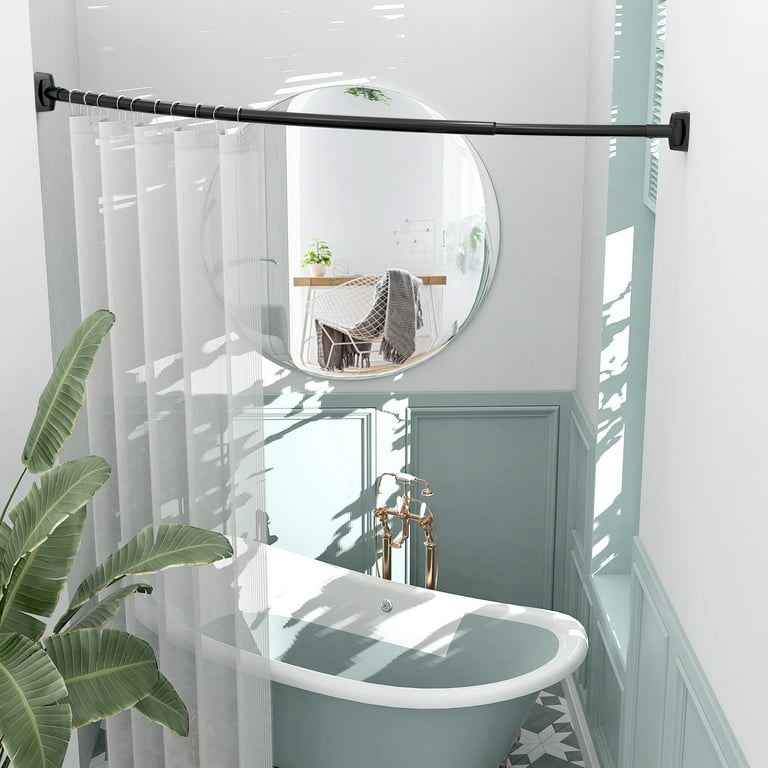
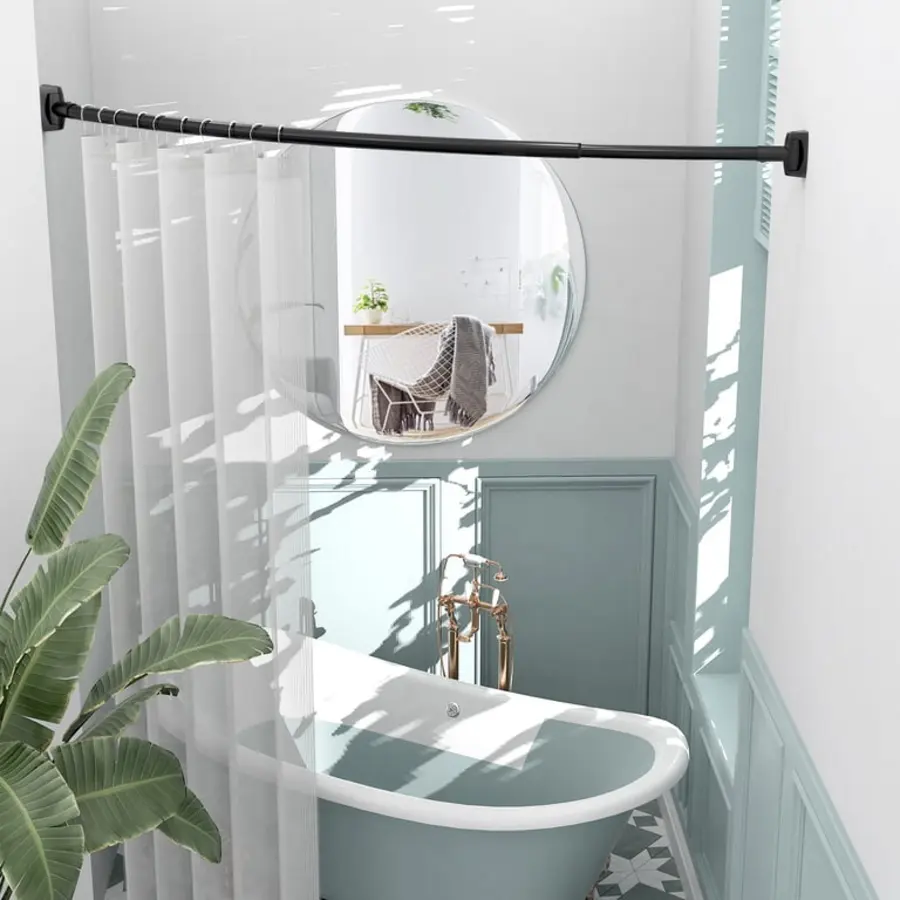
A curved shower rod is a useful middle option between a basic straight rod and a more involved track system. Its main benefit is that it moves the curtain farther away from the person using the shower, creating a little more elbow room inside the tub or shower area.
Choose a curved rod when:
- The opening is still basically straight.
- You want more interior space without changing the whole enclosure.
- The curtain does not need to turn a corner.
- You prefer visible rod hardware over a ceiling-mounted rail.
- You want a relatively simple wall-mounted upgrade.
A curved rod does not solve every coverage problem. It may pull the curtain away from the wall at the ends, so check that the curtain still overlaps the side areas adequately. The brackets also need to support the rod’s shape and the weight of the curtain or liner.
An L-shaped or U-shaped rod may be more appropriate if the curtain needs to cover two or three sides. These layouts require more careful support than a basic straight rod. Follow the installation instructions for bracket placement and any required ceiling supports rather than treating the system like a simple tension rod.
When a shower curtain track is worth the extra work
A shower curtain track becomes more useful when the room’s geometry makes a single straight rod awkward. It can follow a corner, wrap around a freestanding or claw-foot tub, or run across a wide opening where a conventional rod would need too much span.
A ceiling-mounted shower track is particularly useful when there is no convenient pair of opposing walls for a rod. It can also create a clean, continuous curtain line around a walk-in shower or an open bathing area. In these layouts, the track can place the curtain where splash control is needed rather than forcing the curtain to follow a standard tub-wall arrangement.
Tracks can also feel less visually prominent. Because the gliders run inside the channel, there is no row of large rings sitting on top of the rail. This can give the curtain a simpler appearance, especially when the track is mounted close to the ceiling or finished in a color that blends with the room.
The tradeoff is installation. A fixed track usually requires drilling into the wall or ceiling, and the mounting surface must be able to accept the specified fasteners. For a ceiling-mounted system, verify the manufacturer’s mounting requirements, the location of suitable structural support, and whether additional brackets or ceiling drops are required. If you cannot confirm that the surface can support the system, stop and get appropriate installation help instead of guessing.
Curtain movement: rings versus gliders
On a rod, shower curtain rings or hooks travel over the exposed bar. Movement can be smooth when the rod is straight, clean, and properly aligned, but rings may catch at joints, brackets, or bends. A curved or multi-sided rod can make movement more complicated, depending on the design.
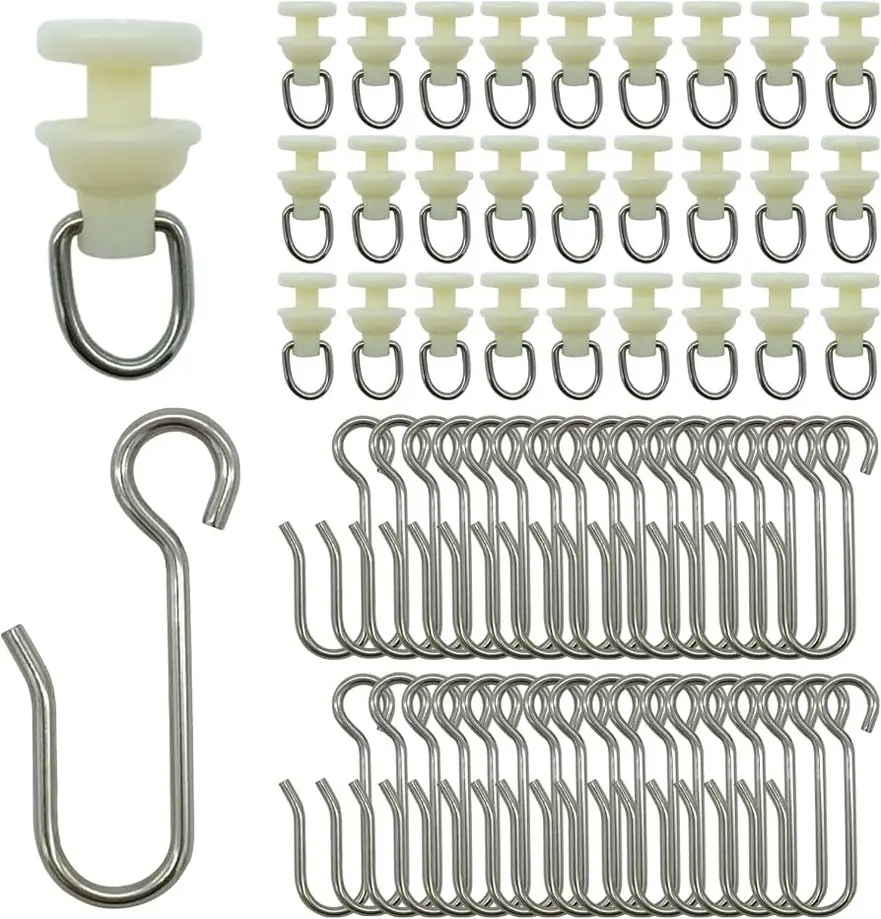
A track uses small gliders or rollers inside a channel. This keeps the moving parts less visible and can make it easier to pull the curtain around a curve or corner. The track still needs to be installed accurately. A misaligned rail, damaged glider, or buildup inside the channel can make the curtain harder to move.
Whichever system you choose, avoid forcing the curtain when it catches. First look for a twisted curtain, an overloaded set of hooks, a joint or bracket in the path, or dirt in the moving parts. Replace worn rings or gliders rather than pulling harder on the fabric.
Source: m.media-amazon
Coverage and water containment
Coverage depends more on the layout and curtain size than on the word “track” or “rod” alone. A straight rod can contain water effectively in a standard tub-shower setup when the curtain reaches the appropriate side areas and the liner sits inside the tub.
A track has an advantage when the curtain must follow an unusual path. An L-shaped, U-shaped, or curved track can reduce open gaps around corners and around freestanding tubs. This does not guarantee a dry bathroom by itself. The curtain still needs enough width, the liner must be positioned correctly, and the bottom edge should remain where it can contain water effectively.
Before buying either system, look at the showerhead position, the tub or shower edges, nearby walls, and any areas where water already escapes. A track is worth considering when the mounting path can improve coverage. It is unnecessary if the existing opening is straight and a correctly sized rod already keeps water inside.
Cleaning and long-term upkeep
Rods are easy to inspect because the bar, rings, and brackets are exposed. Wipe the rod and brackets as part of normal bathroom cleaning, and check for corrosion or loose hardware. If rings drag or catch, clean or replace them.
Tracks have fewer exposed moving parts, but the channel can collect dust, residue, or moisture. Clean the accessible surfaces according to the track manufacturer’s instructions, and inspect the gliders when curtain movement becomes rough. Do not assume that every track material or finish can be treated with the same cleaner.
For both systems, the curtain and liner need their own care. Keep the curtain spread after showering so it can dry more readily, and follow the care instructions for the fabric or liner. The mounting system cannot compensate for a curtain that stays bunched and damp.
Rental-friendliness and installation difficulty
For most renters, a tension rod is the least permanent option, provided the opening and wall surfaces are suitable. A fixed rod leaves mounting holes, while a ceiling track usually involves more visible and difficult alterations.
For homeowners, the decision is less about avoiding every hole and more about matching the hardware to the room. A fixed rod is often enough for a standard opening. A track may justify the added work when it solves a corner, wide-span, ceiling-mounting, or freestanding-tub problem that a rod cannot handle cleanly.
Do not drill into tile, plaster, or a ceiling without confirming the correct hardware and mounting method. Check for hidden services where relevant, and use the instructions supplied with the specific system. If the layout needs structural support that you cannot identify, use a qualified installer.
A simple decision checklist
Choose a shower curtain rod if:
- You have a straight opening between two walls.
- You want the simplest installation and replacement process.
- You are renting or want a reversible solution.
- A straight or curved rod provides enough coverage.
- You prefer traditional, visible hardware.
Choose a shower curtain track if:
- The curtain must turn a corner or wrap around a tub.
- You need a ceiling-mounted solution.
- The opening is unusually wide or does not offer two suitable opposing walls.
- You want gliders hidden inside a rail.
- You are prepared for a more permanent installation.
Bottom line
For a conventional tub-shower combination, start with a suitable shower curtain rod. A curved shower rod is often the best upgrade when you want more elbow room without a complex installation.
Choose a shower curtain track when the bathroom’s shape, required coverage, or mounting position makes a rod limiting. Tracks are especially useful for corners, freestanding tubs, wide openings, and ceiling-mounted curtains—but they require more careful planning and installation. The best system is the one that fits the room’s geometry, keeps the curtain moving easily, and provides the coverage you actually need.
References
- the right shower curtain rail or rod for your | DHgate. (n.d.). https://homegarden.dhgate.com/how-to-choose-the-right-shower-curtain-rail-or-rod-for-your-bathroom
- Curtains for Showers and Claw Foot Tubs | Curtain-Tracks.com. (n.d.). https://www.curtain-tracks.com/blog/category/curtains-for-showers-and-claw-foot-tubs.html
- Blog - Mariella’s Custom Drapery. (n.d.). https://mariellascustomdrapery.com/blog
- Curtain Track as a Ceiling Mounted Shower Curtain Rod - Erin Zubot Design. (n.d.). https://erinzubotdesign.com/curtain-track-as-a-ceiling-mounted-shower-curtain-rod
- Curved vs. Straight Shower Rod: Which One Is Better for …. (n.d.). https://vanityart.com/blogs/bathroom-basics/curved-vs-straight-shower-rod
- How to Choose the Best Shower Curtain For You. (n.d.). https://www.peacockalley.com/pages/shower-curtain-guide
- How to install shower curtain rod? - IKSUN Curtain Track. (n.d.). https://iksuncurtaintrack.com/how-to-install-shower-curtain-rod
- How High to Hang Your Shower Curtain. (n.d.). https://mariellascustomdrapery.com/how-high-to-hang-your-shower-curtain-rod