How Wide Should a Shower Curtain Be?

For most tub-and-shower combinations, a 72-inch-wide shower curtain fits a rod around 60 inches wide. That extra width gives the curtain enough overlap at the ends to close the opening without being stretched flat. The right shower curtain width, however, is based on the length of the rod, not the width of the tub.
Measure from one end of the installed rod to the other, following the rod’s path. Then choose a curtain that is wider than that measurement—usually by at least 10 to 12 inches for a standard setup. If you prefer more visible folds, have a curved rod, or need stronger side coverage, allow more.
The simple shower curtain width rule
Start with this practical guideline:
Curtain width = shower rod width + 10 to 20 inches minimum
That range works for many ordinary bathroom setups because the added fabric creates overlap at the wall ends and prevents the curtain from looking taut when it is pulled shut.
For a more gathered look, a curtain can be about 1.25 to 1.5 times the rod width. This is not necessary for every bathroom, especially when a liner is doing most of the water-containment work. But it can help a decorative fabric curtain look less flat.
| Shower rod measurement | Practical curtain width to look for | Notes |
|---|---|---|
| About 36 inches | 48 to 54 inches or wider | Often used for narrow shower stalls; verify the actual rod length. |
| About 48 inches | 60 to 72 inches | A 72-inch curtain gives more overlap and softer folds. |
| About 60 inches | 72 inches or wider | A common tub setup; 72 inches is the familiar standard size. |
| About 72 inches | 84 to 96 inches or wider | An extra-wide curtain may be needed. |
| More than 72 inches | Measure carefully; consider multiple panels | A single standard curtain is usually too narrow. |
Many retail curtains are sold in a 72-by-72-inch standard size. That width often works well over a typical 60-inch tub rod, but the label alone should not replace measuring your own setup.
Measure the rod, not the tub
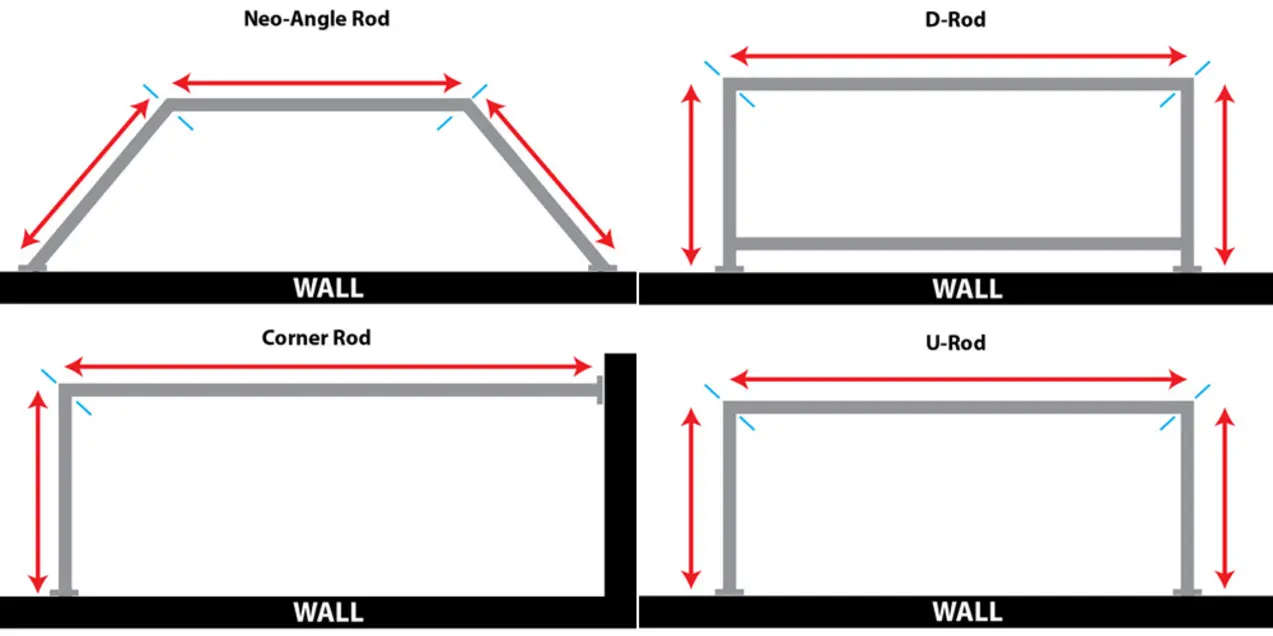
A tub may be nominally 60 inches long, while its shower rod is installed slightly wider, farther out from the wall, or on an adjustable tension rod. The curtain hangs from the rod, so the rod determines how much width you need.
Source: 2.bp.blogspot
Use a tape measure and measure the full usable span of the rod from wall to wall. If the rod has large end caps, measure where the hooks or rings actually travel rather than including a section the curtain cannot reach.
For an adjustable rod, measure it after it is installed at its final length. Do not rely on the adjustment range printed on the packaging.
Account for the curtain’s usable width
The width on a product label is the flat width of the fabric or vinyl panel. Once it is hung, several details can slightly reduce its effective coverage:
- Hooks, rings, or grommets create spacing between attachment points.
- Pleated, tab-top, or buttonhole headings use some fabric width in the folds.
- Clip rings can pull the top edge into small gathers.
- A decorative outer curtain may be intentionally fuller than a plain liner.
This does not mean you need to calculate every inch of fabric loss. It does mean a curtain that only barely matches the rod width is likely to look skimpy and may leave gaps when closed.
How much shower curtain fullness do you need?
Shower curtain fullness is the amount of extra fabric beyond the rod width. It affects both appearance and everyday use.
Minimal fullness: functional coverage
A curtain that is roughly 10 to 12 inches wider than the rod can work well when you want a simple, low-bulk setup. This is the usual logic behind using a 72-inch-wide curtain on a roughly 60-inch rod.
Choose minimal fullness when:
- The bathroom is small and you want less fabric gathered at the sides.
- You use a lightweight liner and want it to slide easily.
- The curtain is plain, vinyl, or intended mainly for splash control.
- The rod is not unusually wide or curved.
Moderate fullness: the most flexible option
A curtain about 1.25 times the rod width tends to look more relaxed while still opening and closing easily. For example, a 60-inch rod paired with a curtain in the 72- to 84-inch range usually has workable coverage.
This is often the best choice for a fabric curtain used with a separate liner.
Extra fullness: a softer decorative look
A curtain closer to 1.5 times the rod width has more visible folds. It can make lightweight fabric look fuller, especially in a simple bathroom where the curtain is a major visual element.
More width is not always better, though. Excess fabric can bunch near the walls, dry more slowly, and make a narrow bath feel crowded. It may also be harder to pull open if the rings catch or the rod has limited clearance near a vanity or shelving.
Curved shower curtain rod width needs special attention
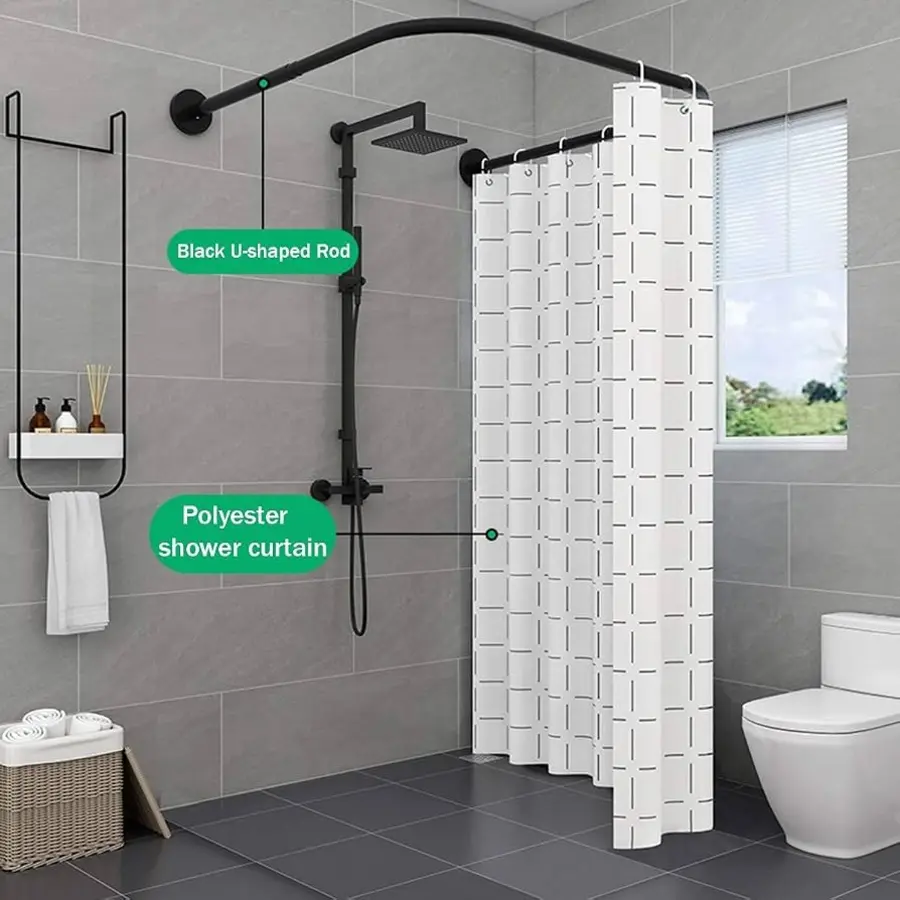
A curved shower curtain rod projects outward into the room, creating more elbow room inside the shower. Because the rod follows an arc, its actual travel length is longer than the straight wall-to-wall distance.
Source: m.media-amazon
Do not measure straight across from one wall mount to the other. Instead, measure along the curve of the rod. A flexible tape measure is useful for this. If you only have a rigid tape measure, run a string along the rod, mark the endpoints, then measure the string flat.
A 72-inch-wide curtain may still work on many curved rods, particularly if the rod is installed over a standard tub. But it can look tighter than it did on a straight rod of the same wall-to-wall span. If your current 72-inch curtain barely reaches both walls, does not overlap at the ends, or pulls open during showers, move up to an extra-wide option.
What width should a shower liner be?
If you use a separate shower liner, size it by the same rod measurement. The liner needs to reach both walls and stay inside the tub or shower base while in use.
A liner does not need the same decorative fullness as the outer curtain, but it should not be taut. A too-narrow liner is more likely to pull away from the side walls, leave an opening near the ends, or shift toward the outside of the tub.
For a standard tub rod, a 72-inch liner is commonly paired with a 72-inch decorative curtain. For a wider or curved setup, check both pieces separately. Do not assume that an outer curtain and liner sold in different sizes will close to the same points.
Keep the liner inside the tub
Width alone will not contain every splash. For daily use, the liner should hang inside the tub or shower pan, while the decorative curtain stays outside. This arrangement helps direct water back into the bathing area instead of onto the floor.
If the liner repeatedly drifts inward or outward, check whether it is too narrow, too lightweight, or being held too far from the tub edge by a curved rod. A wider liner may help, but it should still be able to move freely.
Extra-wide showers, stalls, and unusual layouts
Standard sizing is less reliable when the shower is not a typical tub-and-shower combination.
Shower stalls
A narrow stall may need a narrower curtain than a tub, but stall rods vary widely. Measure the installed rod and add overlap rather than buying based only on the word “stall.” A curtain that is too wide may bunch heavily in a compact shower; one that is too narrow can leave exposed side gaps.
Extra-wide tub openings
If the rod is around 72 inches wide, an 84-inch curtain may offer basic extra coverage, while a wider option can provide more practical fullness. The 84-by-72-inch size is commonly sold as an extra-wide shower curtain size.
For very wide openings, two coordinated curtain panels can be easier to manage than forcing one undersized panel across the span. Make sure the panels overlap generously at the center when closed.
Corner, clawfoot, and wraparound rods
These setups require measuring the entire route the curtain follows. A curtain intended for a straight rod will usually not be wide enough for a rod that turns a corner or surrounds a freestanding tub. Wide wraparound installations often need specialty curtains designed for that shape and rod length.
Check hook spacing before deciding the curtain is too narrow
Sometimes a curtain appears too narrow because the hooks are spread too far apart or the end hooks are positioned away from the walls.
Before replacing it, check these details:
- Place the first and last hook as close to the wall ends as the rod allows.
- Make sure the curtain has not slipped off an end ring.
- Confirm that all buttonholes, tabs, or grommets are being used.
- Look for rings that are catching and preventing the curtain from closing fully.
- Check whether the liner and outer curtain are attached to the same hooks in a way that adds too much bulk.
If the panel still just reaches the edges with no overlap, it is too narrow for the rod.
Common shower curtain width mistakes
Buying for the tub’s length
The tub is only a rough clue. A tension rod, curved rod, or wide wall-to-wall installation may be substantially different from the tub measurement.
Choosing a curtain exactly as wide as the rod
A 60-inch curtain on a 60-inch rod will hang nearly flat and has no allowance for end overlap. It is likely to leave gaps when moved or pulled.
Forgetting the curved section of a rod
Measuring a curved rod in a straight line underestimates the curtain width needed.
Using a decorative curtain as the only water barrier
Some fabric curtains are suitable for shower use, but many work best with a separate liner. Even a correctly sized outer curtain cannot make up for a liner that is too narrow or left outside the tub.
Choosing more fabric than the space can handle
A very wide curtain can look attractive, but it may crowd a tight bathroom, interfere with nearby storage, or collect in a bulky bundle when open.
A quick buying checklist
Before ordering a shower curtain, confirm:
- The full installed rod length, measured along any curve.
- Whether you need basic coverage or a fuller fabric look.
- The listed flat width of the curtain, not just its size name.
- Whether a separate liner also needs to be wider.
- Whether the end hooks can sit close enough to the walls for good side coverage.
- Whether extra fabric will fit comfortably when the curtain is open.
For most standard tub setups, 72 inches remains a practical shower curtain width. Measure first, though: the best curtain is wide enough to overlap the opening, move easily on the rod, and keep the liner positioned inside the tub without making the bathroom feel overfilled.
References
- Understanding Standard Shower Curtain Dimensions. (n.d.). https://joeyzshopping.com/blogs/product-care-and-installation-guides/understanding-standard-shower-curtain-dimensions-for-your-bathroom
- Shower Curtain Size Chart. (n.d.). https://beanproducts.com/blogs/news/shower-curtain-size-chart
- Shower Curtain Size Guide. (n.d.). https://pepper-home.com/blogs/the-thread/shower-curtain-size-guide
- Average Shower Curtain Size. (n.d.). https://www.wayfair.com/sca/ideas-and-advice/guides/average-shower-curtain-size-T11919
- What Size is a Standard Shower Curtain? - ownkoti. (n.d.). https://www.ownkoti.com/blogs/news/what-size-is-a-standard-shower-curtain
- Standard Shower Curtain Sizes for Clawfoot and Corner Tubs. (n.d.). https://www.sandsnowlinen.com/blogs/blog/shower-curtain-sizes-the-complete-guide-for-clawfoot-and-corner-tubs
- L-shaped shower curtain and rod recommendations needed. (n.d.). https://www.facebook.com/groups/1706748102970911/posts/2954335291545513
- Shower Curtain Sizes: Guide to Choosing the Perfect Fit – ZigZagZurich. (n.d.). https://zigzagzurich.com/en-us/blogs/tips-tricks/shower-curtain-size-guide