Your Shower Doors Buying Guide: How to Choose the Right Door
Choosing a shower door is about more than appearance. The right design must suit your bathroom’s size, the position of nearby fixtures, and the shape of the shower enclosure. It also needs to provide a comfortable entrance without creating clearance problems.
This shower doors buying guide compares the main door styles, explains how enclosure shape affects your options, and covers the practical checks to make before purchasing.
Explore the Main Shower Door Styles
Shower doors are available in several configurations, each designed for different bathroom shapes and day-to-day needs. Some slide along the enclosure, while others fold or swing open. The best option depends largely on the space around the shower and how wide you want the entrance to be.
Here is a quick comparison:
| Door style | Main advantage | Space consideration |
|---|---|---|
| Sliding | Space-saving operation with a wide opening | Does not need outward swing space |
| Bifold | Maximizes entrance space | Needs clearance for the panels to fold |
| Pivot | Can open inward and outward | Requires room for the door’s swing |
| Hinged | Wide, straightforward access | Can be difficult to accommodate in small bathrooms |
| Quadrant | Works well with compact curved enclosures | Offers fewer door-style alternatives |
| Frameless | Clean, minimalist appearance | Available in several operating styles |
When comparing designs, consider both the size of the bathroom and the shower’s position. A door that works well in an open room may be inconvenient when placed next to a sink, toilet, cabinet, or other fixture.
Sliding Doors for Space-Saving Shower Areas
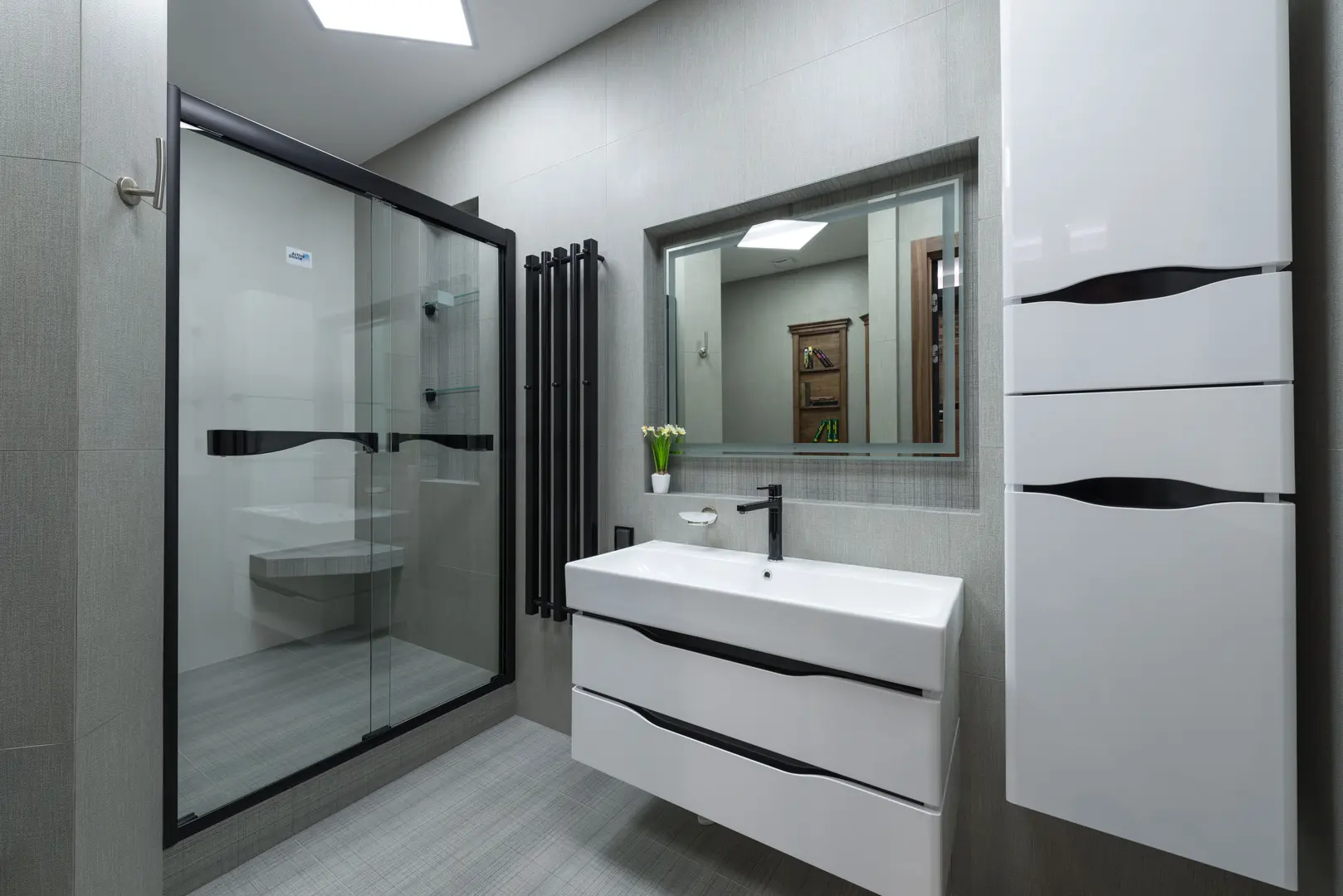
Sliding shower doors are particularly useful in smaller bathrooms because the panels move along the enclosure rather than swinging into the room. This makes them easier to fit where floor space and clearance are limited.
Despite their space-saving operation, sliding doors can still provide a wide entrance. They are available in single- and double-door configurations:
- Single sliding doors use one moving door panel.
- Double sliding doors allow access through either side, depending on the design.
The lack of a swinging panel is the main practical benefit. You do not have to reserve open floor space in front of the shower, so nearby bathroom fixtures are less likely to interfere with entry.
Sliding designs may also suit bathrooms where the shower is positioned along a busy walkway. Because the door stays within the enclosure’s footprint as it moves, it does not project into the path through the room.
Before purchasing, check which panel or panels move and where the entrance will be positioned when the door is open. A wide opening is only helpful if it is accessible from the part of the bathroom where you naturally approach the shower.
Bifold Doors for a Wider Entry
Bifold shower doors use connected panels that fold together as the door opens. This arrangement helps maximize the available entrance space and can be a practical choice when easy access is a priority.
The folding action does, however, need clearance. The panels must have enough room to move without hitting a basin, toilet, cabinet, towel rail, or other nearby feature. Do not assume a bifold design will fit simply because it takes up less space than a full swinging door.
When assessing a bifold door:
- Measure the shower entrance accurately.
- Identify the direction in which the panels fold.
- Check the path of the folding mechanism.
- Measure the distance to surrounding fixtures.
- Confirm that the folded panels will not obstruct entry.
A bifold door can balance a generous entrance with efficient use of space, but only when the bathroom layout allows the panels to fold freely. Pay attention to the door’s complete movement rather than measuring only the closed enclosure.
Pivot Doors for Larger Bathrooms
Pivot shower doors rotate around pivot points and may open both inward and outward. This flexibility can make entering and leaving the enclosure feel straightforward, especially when the shower area and surrounding bathroom are spacious.
The main consideration is swing space. If the door opens outward, it needs a clear path across the bathroom floor. If it opens inward, the enclosure must have enough room to accommodate the panel without making the shower feel difficult to use.
For this reason, pivot doors are generally better suited to larger bathrooms. They work best where nearby fixtures do not restrict the movement of the door and where users can approach the enclosure comfortably.
Map out the entire swing before choosing this style. Consider whether the door could meet a vanity, toilet, wall, or storage unit at any point. You should also check that the outward swing does not block the main route through the bathroom.
The ability to open in either direction can be convenient, but it does not eliminate the need for careful planning. Both sides of the doorway must be considered.
Hinged Doors for Easy Wide Access
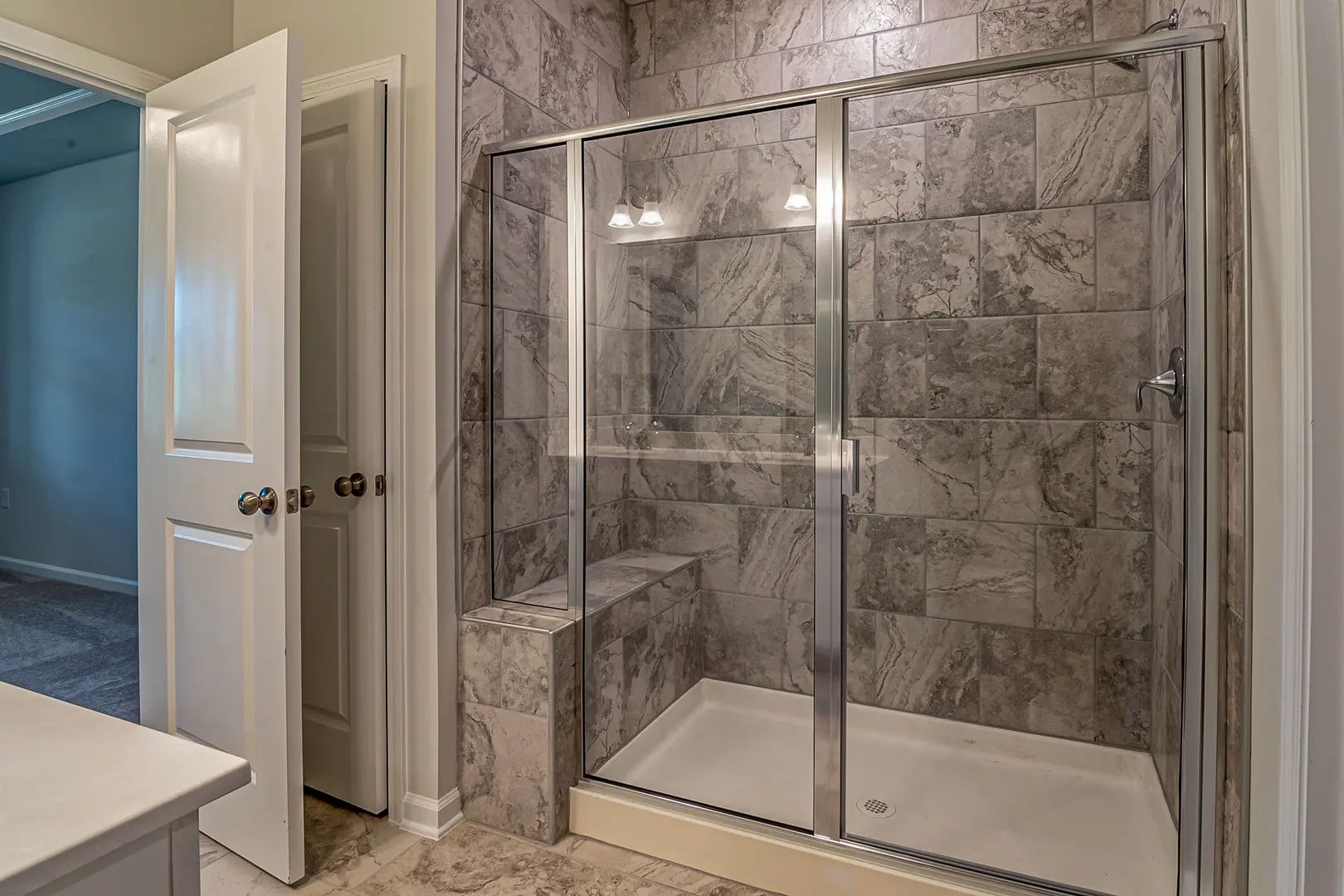
A hinged shower door operates in much the same way as a standard household door. It swings open from hinges positioned along one side and generally provides wide, direct access to the shower.
This familiar movement is simple to understand and can be convenient in bathrooms with enough open space. There are no folding panels to navigate, and the entrance is not dependent on one panel sliding behind another.
However, the door’s swing can be hard to accommodate in a small bathroom. The open panel may compete with:
- A toilet or basin
- Bathroom cabinets
- Wall-mounted accessories
- The route between the shower and bathroom entrance
- Other doors or moving fixtures
A hinged model should therefore be selected according to the usable space around the enclosure, not just the width of the shower entrance. Measure from the hinge side across the full swing path and confirm that the door can open as intended.
In a larger or less crowded layout, a hinged door can deliver the wide access many homeowners want. In a compact room, a sliding or folding alternative may make better use of the available space.
Quadrant Doors for Compact Enclosures
Quadrant shower enclosures have a curved front and are commonly chosen when a compact footprint is important. Their doors usually use a sliding mechanism, allowing them to open without a large panel swinging into the bathroom.
Depending on the enclosure, quadrant doors may come in single- or double-door configurations. A single-door model creates access from one part of the curved front, while a double-door design allows two sections to move and create the entrance.
The key advantage is the limited opening space required outside the enclosure. Because the door moves along the curved structure, it can work where a hinged or pivot door would conflict with surrounding fixtures.
Quadrant enclosures do restrict your choices, however. Their shape requires a compatible door rather than a general-purpose straight design. When replacing an existing door or choosing a new enclosure, make sure the door is intended for that enclosure shape and configuration.
Consider the position of the entrance as well as the overall footprint. A compact enclosure should still be easy to approach, and the open door should create a practical route into the shower.
Frameless Doors for a Minimalist Look
Frameless shower doors are chosen primarily for their clean, minimalist appearance. With less visible framing around the glass, they can give the shower area a simple, uncluttered look.
“Frameless” describes the construction and visual style rather than one specific opening method. Frameless options are available in various door styles, allowing homeowners to combine the pared-back appearance with an operating design that suits the bathroom.
A frameless door can be just as robust as a framed alternative when it is suitable for the enclosure and correctly fitted. The decision between framed and frameless should therefore take into account appearance, door movement, enclosure compatibility, and the available installation space.
Do not let aesthetics override practical requirements. A frameless hinged or pivot door still needs sufficient swing clearance, while a frameless sliding model must suit the entrance and enclosure layout. Start by selecting an appropriate opening style, then decide whether a frameless version delivers the look you want.
How Your Shower Enclosure Shapes Door Selection
The enclosure is one of the most important factors in shower door selection. Its dimensions and shape determine which doors can fit and how they can open.
Begin by measuring the space available for the complete enclosure. If an enclosure is already installed, measure the relevant opening carefully rather than relying on an estimate or an old product description. The door must correspond to the actual space.
Enclosure types affect your options in different ways:
- Straight enclosures may support several styles, depending on their layout and available clearance.
- Enclosures in tight spaces often benefit from doors that slide or fold instead of swinging outward.
- Larger shower areas may have enough room for hinged or pivot designs.
- Quadrant enclosures require doors designed around their curved shape, so the selection is more limited.
The location of the enclosure within the room is equally important. Two bathrooms may have shower openings of a similar size but require different doors because one is surrounded by open floor space while the other sits beside several fixtures.
Think about how you enter the shower. A door may technically fit the enclosure but place the opening on an inconvenient side. Consider the relationship between the entrance, the bathroom doorway, the basin, the toilet, and any cabinets.
Door choice and enclosure choice should be treated as one decision whenever possible. If you select an enclosure first without considering how its door operates, you may end up with a restricted entrance or an opening path that does not work well in the room.
What to Check Before Buying a Shower Door
Accurate measurement is essential before purchasing. A small measuring error can result in a door that does not suit the opening or cannot operate correctly in the available space.
Use this checklist before making your final choice:
- Measure the shower opening. Record the actual space where the door will be fitted.
- Confirm the enclosure shape. Establish whether the front is straight, curved, or part of a quadrant configuration.
- Identify the opening mechanism. Decide whether sliding, folding, hinged, or pivoting movement best suits the room.
- Measure opening clearance. For doors that swing or fold, check the full distance needed for movement.
- Check nearby fixtures. Include toilets, basins, cabinets, walls, and bathroom doors in your assessment.
- Consider the entrance position. Make sure the open doorway is on a practical side of the enclosure.
- Check single- or double-door operation. For sliding and quadrant models, decide which configuration works better with your layout.
- Review compatibility. Confirm that the chosen door is intended for the enclosure type and opening.
When measuring clearance, consider the full door rather than only its outer edge when closed. A hinged or pivot door moves through an arc, while a bifold design needs room for its panels and folding mechanism. Walk through the movement mentally—or mark out the path in the room—before committing to a style.
It is also worth considering everyday use. The entrance should be easy to approach, and the open door should not make it awkward to move around the bathroom. The best shower door is not necessarily the one with the most dramatic appearance; it is the one that fits the enclosure and works naturally within the room.
Troubleshooting Common Glass Shower Door Problems
A shattered glass shower door can be difficult to replace individually. Homeowners sometimes find that a matching single panel is no longer available, particularly when the enclosure or its hardware is older. In that situation, buying a complete new door assembly may be the only straightforward option.
Before replacing the entire assembly, gather any information you have about the existing enclosure and ask whether a compatible individual door or component is available. Older hardware stores may carry parts that are no longer stocked by major retailers. This is worth exploring, but there is no guarantee that a matching component will be found. Sourcing older parts can remain difficult and may be costly.
Do not install a panel simply because its approximate dimensions appear similar. The replacement must be compatible with the enclosure and its operating hardware. If you cannot identify a suitable match, professional guidance can help determine whether an individual replacement is realistic or whether the assembly should be replaced.
Fitting challenges can also result from inaccurate measurements, restricted clearance, or a door style that does not match the enclosure. Recheck the opening, enclosure shape, operating direction, and surrounding space before assuming that a door or component will fit.
Finally, avoid turning a door problem into a wider shower-area problem. Plumbing repairs near the enclosure should not be treated as trial-and-error DIY work if you do not have the appropriate skills. Incorrect repairs can create additional issues and increase the eventual cost of putting them right. If the problem involves leaks, pipework, or other plumbing components rather than the door alone, seek qualified help.
Careful measurement, realistic replacement expectations, and attention to the entire shower layout will make it easier to choose a door that looks appropriate and works properly in the available space.