Single-Flush Toilet vs. Dual-Flush Toilet: Which Is Better?
Choosing between a Single-Flush Toilet vs Dual-Flush Toilet involves more than comparing one button with two. The better option depends on household use, water-saving goals, budget, maintenance preferences, and whether users consistently choose the correct flush.
A single-flush toilet delivers the same volume of water for every use. A dual-flush model offers separate flushing levels for liquid and solid waste. That flexibility can reduce water consumption, but the expected savings depend on proper operation and reliable performance.
How Does a Dual-Flush Toilet Work?
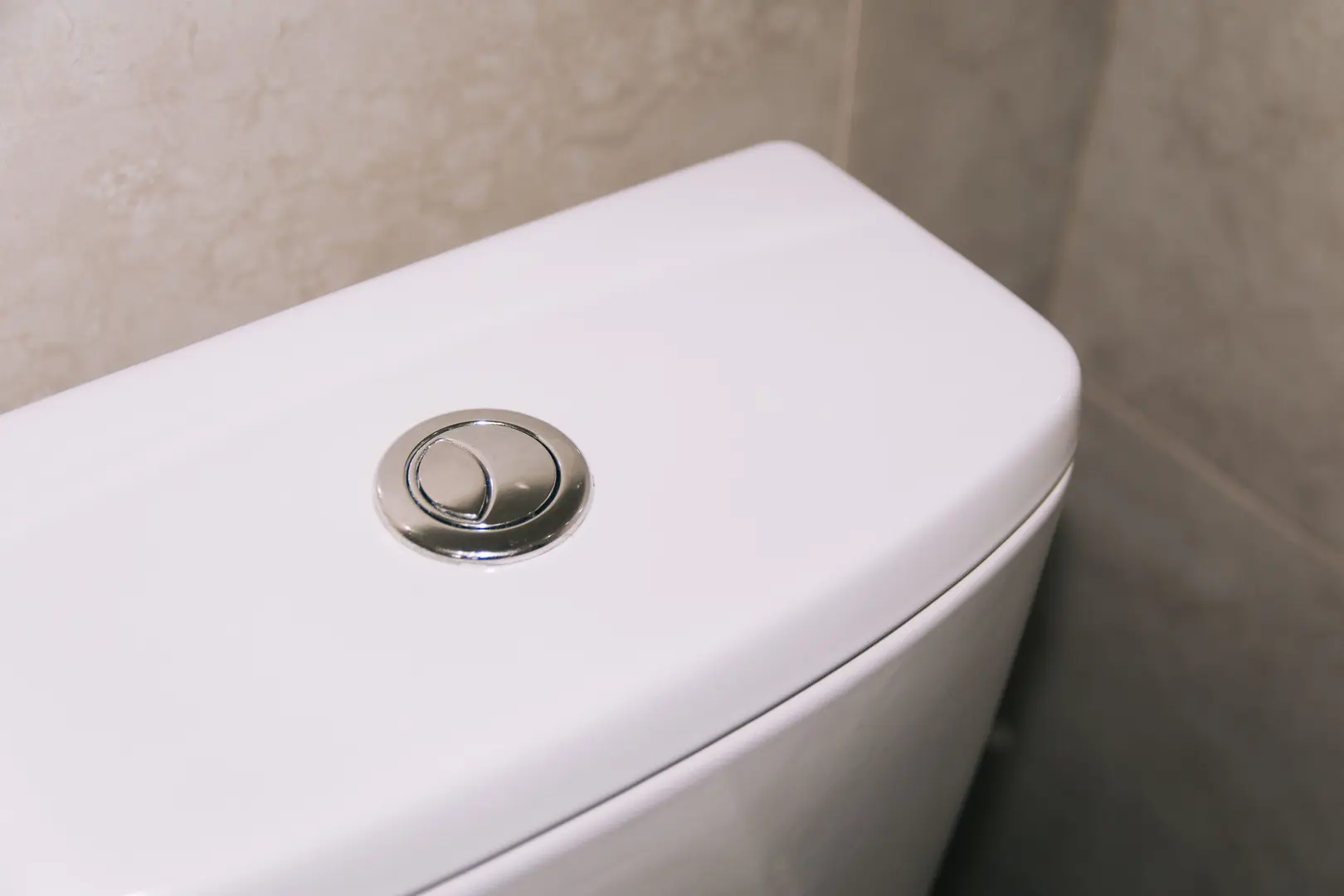
A dual-flush toilet provides two flushing options:
- Partial flush: Uses less water and is intended for liquid waste.
- Full flush: Uses more water and is designed to remove solid waste.
The controls are commonly presented as two buttons, although the exact design varies. One button activates the lower-volume flush, while the other activates the full flush. This differs from a single-flush toilet, which uses the same flush volume regardless of the type of waste.
The main purpose of the dual-flush design is water conservation. Liquid waste generally does not require the same flushing power as solid waste, so using a full flush every time can consume more water than necessary. A dual-flush toilet allows users to match water use to the task.
This approach has become increasingly popular as homeowners pay more attention to environmental impact and utility costs. Its effectiveness, however, is not automatic. If household members regularly press the full-flush button for every use—or use the partial flush when a full flush is needed—the toilet may not provide the expected combination of efficiency and performance.
Single-Flush and Dual-Flush Toilets: Main Differences
The central difference between the two systems is control over water use. A single-flush toilet offers simplicity, while a dual-flush toilet offers flexibility.
| Consideration | Single-Flush Toilet | Dual-Flush Toilet |
|---|---|---|
| Flush options | One flush volume | Partial and full flush |
| Water consumption | Same amount per flush | Varies according to the selected flush |
| Controls | Usually one lever or button | Commonly two buttons or a divided control |
| Initial expense | Often simpler and less costly | May have a higher purchase and installation cost |
| Maintenance | Familiar, straightforward mechanism | More involved mechanism with additional components |
| Environmental effect | Cannot adjust water use by waste type | Can reduce unnecessary water use |
| User experience | Simple and consistent | Requires users to select the appropriate flush |
A single-flush toilet may be preferable for people who value familiar controls and straightforward upkeep. There is no decision to make during use, which can be helpful in guest bathrooms, shared spaces, or homes where ease of operation is the priority.
A dual-flush toilet is usually more appealing to water-conscious households. Because the partial flush uses less water, repeated use throughout the day can create meaningful savings—especially when several people share the home. Those savings depend on how often the partial flush is appropriate and whether users select it correctly.
Installation expenses can also differ. A new dual-flush toilet may cost more to purchase and install than a basic single-flush model. Costs will depend on the toilet, the existing bathroom setup, and whether professional work is needed. A conversion kit may provide a less extensive upgrade, but it is not suitable for every toilet.
Environmental impact follows the same pattern as water consumption. A dual-flush toilet has greater conservation potential because it does not require a full-volume flush for liquid waste. If users always choose the full flush or need to flush again after an unsuccessful partial flush, the real-world advantage becomes smaller.
Control design is another practical consideration. A familiar lever can be easier for children, visitors, or anyone who does not understand which dual-flush button to press. Clear markings and consistent household use help a dual-flush system achieve its intended benefits.
How to Upgrade a Single-Flush Toilet to Dual Flush
Some single-flush toilets can be upgraded with a dual-flush conversion kit. The kit replaces or modifies the existing flushing mechanism so the toilet can provide separate partial- and full-flush functions.
A conversion can be less disruptive than replacing the entire toilet and may reduce water bills over time. However, compatibility should be confirmed before purchasing a kit. Toilet tank designs and internal mechanisms vary, and not every conversion system will fit or work effectively in every toilet.
Use the following planning process:
Identify the existing toilet and flush mechanism. Look inside the tank and note how the current control, valve, and flushing parts operate. If model information is available, use it when checking compatibility.
Review the conversion kit requirements. Follow the manufacturer’s compatibility guidance rather than assuming a universal kit will fit. Confirm that the controls will work with the tank and lid.
Consider the toilet’s current performance. A conversion changes the flush options, but it does not guarantee that a lower-volume flush will clear every type of waste effectively. A toilet that already struggles to flush reliably may not become more effective after conversion.
Follow the installation instructions carefully. Turn off the water supply, empty the tank, and install the components according to the kit instructions. Avoid forcing parts that do not align correctly.
Test both flush settings. After restoring the water supply, check that the partial and full flushes activate correctly. Also inspect the tank and connections for leaks.
Explain the controls to household members. Make sure users understand that the partial flush is for liquid waste and the full flush is for solid waste.
A successful conversion can reduce unnecessary water use, but results vary. The partial flush may not perform equally well with all waste types, and a second flush can offset some of the intended savings. If compatibility or installation is unclear, professional guidance may be more practical than risking an unreliable setup.
Advantages and Drawbacks of Dual-Flush Toilets
A dual-flush toilet offers a clear conservation advantage: it allows the household to use less water when a full flush is unnecessary. This can support lower utility bills and environmental goals.
The tradeoff is added cost and complexity. A dual-flush model may cost more initially, and its internal mechanism can require more involved troubleshooting than a standard single-flush toilet. Users also need to understand which control to select.
For some households, the long-term savings outweigh those concerns. For others, the simplicity and predictable operation of a single-flush toilet remain more valuable. The decision should reflect actual household habits rather than water-saving potential alone.
Benefits of Choosing a Dual-Flush Toilet
The strongest benefits include:
- Potential water savings: A dual-flush toilet can conserve up to 67% of water in suitable circumstances. Actual savings depend on the toilet, frequency of use, and correct selection of the partial flush.
- Lower utility bills: Reducing water use can lower water expenses over time. The effect is likely to be more noticeable in homes with several occupants and frequent toilet use.
- Less unnecessary full flushing: Liquid waste can be cleared without using the same amount of water required for solid waste.
- Environmental value: Lower household water consumption supports conservation efforts.
- Contemporary appearance: Many dual-flush models use streamlined controls and modern styling that can complement an updated bathroom.
- More control: Users can choose the flushing level that matches the task instead of using a fixed volume every time.
These benefits are connected. Correct use of the partial-flush setting reduces water consumption, which may lower bills and lessen environmental impact. If users default to the full flush, much of that advantage can disappear.
Potential Drawbacks of Dual-Flush Toilets
Dual-flush toilets also present several possible disadvantages:
- Higher upfront cost: The toilet itself may be more expensive than a basic single-flush model. Installation or conversion can add to the initial expense.
- Possible user confusion: Visitors and household members may not immediately understand which button controls which flush.
- Incorrect flush selection: A partial flush used for solid waste may not carry the waste out effectively, creating the need for another flush.
- More complex maintenance: Additional or less familiar flushing components can make diagnosis and repair more involved.
- Variable savings: Water conservation depends on how the toilet is used. Repeated full flushes and unsuccessful partial flushes reduce the benefit.
- Performance differences: The lower-volume setting may not handle every situation equally well.
A dual-flush toilet is therefore not necessarily the most convenient choice for every bathroom. A household that prioritizes simple controls and uncomplicated maintenance may be happier with a single-flush toilet, even if it offers less control over water use.
Common Issues with Dual-Flush Toilets
One common frustration is an incomplete partial flush. Users sometimes find that the lower-volume setting does not completely clear the bowl. This can happen when the partial flush is used for waste that requires greater flushing power.
The partial flush should be reserved for liquid waste. Using it for solid waste can leave material in the bowl or fail to carry it through the waste line effectively. A second flush may then be necessary, reducing or eliminating the expected water savings.
Other practical concerns include unclear controls and unfamiliar maintenance. If the two buttons are not clearly marked, users may press the wrong one or press both. In a busy shared bathroom, people may simply choose the full flush every time because it appears more reliable.
When a dual-flush toilet is not working as expected:
- Confirm that users are selecting the partial flush only for liquid waste.
- Test the full-flush setting to determine whether the problem affects both options.
- Check whether the controls activate smoothly and completely.
- Review the toilet or conversion kit instructions before adjusting internal parts.
- Consider professional service if the problem continues or the mechanism is difficult to access.
Dual-flush performance can vary by toilet and waste type. A disappointing partial flush does not always mean the entire toilet is defective; it may indicate that the wrong setting was selected for the task. Still, frequent incomplete flushes can undermine both convenience and conservation.
Is a Dual-Flush Toilet a Smart Investment?
A dual-flush toilet can be a smart investment when it is used frequently and correctly. Homes with multiple occupants have more opportunities to use the lower-volume setting, so their cumulative water savings may be more meaningful than those of a lightly used household.
Potential utility savings should be weighed against the higher initial price, installation needs, and maintenance complexity. A dual-flush toilet that requires repeated repairs—or frequent second flushes—may take longer to justify its cost. A reliable model used correctly is more likely to provide long-term financial and environmental benefits.
Choose a dual-flush toilet when:
- Water conservation is an important household goal.
- Several people use the bathroom regularly.
- Users are willing to learn the two controls.
- The higher upfront expense fits the renovation budget.
- Access to suitable maintenance or replacement parts is available.
A single-flush toilet may be the better option when:
- Simple, familiar operation is the main priority.
- The bathroom receives limited use.
- The budget favors a lower initial cost.
- Users are unlikely to select between flush settings consistently.
- Straightforward maintenance is more important than maximum water-saving potential.
Ultimately, there is no universal winner in the Single-Flush Toilet vs Dual-Flush Toilet comparison. A dual-flush model is generally better for households seeking greater control over water use, particularly when several occupants will use it correctly. A single-flush toilet remains a practical choice for dependable operation, familiar controls, and simpler maintenance. The best toilet is the one that balances conservation, performance, cost, and daily convenience for the household using it.