Soft Lighting Ideas for Spa-Style Bathrooms That Feel Like a Retreat
Soft lighting can turn a practical bathroom into a place that feels calm, warm, and restorative. The best soft lighting ideas for spa style bathrooms do not depend on one decorative fixture or a single bright bulb. Instead, they combine ambient, task, accent, and natural light so the room remains functional while gaining the gentle atmosphere of a retreat.
How Thoughtful Illumination Shapes the Bathroom Experience
Bathroom lighting has to satisfy two very different needs. It must provide enough visibility for grooming, skincare, cleaning, and getting ready, but it should also help the room feel relaxing during a bath or an unhurried evening routine.
When illumination is too bright, cool, or concentrated in one place, the bathroom can feel sterile. If it is too dim, everyday tasks become frustrating and parts of the room may disappear into shadow. Thoughtful lighting finds a balance by considering how the bathroom is used throughout the day.
A layered plan generally includes:
- Ambient light for comfortable overall visibility
- Task light around the mirror and vanity
- Accent light to create depth and highlight key features
- Natural light from windows or skylights
- Adjustable controls to change the mood when needed
These layers should work together rather than compete. In the morning, ambient and mirror lighting can provide clear illumination. In the evening, dimmed ambient light and a warm accent beneath the vanity may be all that is needed.
Alternatives to Overhead Lighting in Spa-Style Bathrooms
A common complaint about bathroom lighting is that overhead fixtures feel harsh. Light coming from directly above can create strong shadows, especially around the face, while making the entire room feel flat and clinical.
The solution is not necessarily to eliminate ceiling lighting altogether. Instead, distribute illumination across several sources so no single fixture has to carry the full load. A combination of wall lights, illuminated mirrors, recessed LEDs, and low-level accent lighting can brighten the room more evenly.
If you prefer not to use an overhead light during quiet evening routines, consider switching on:
- Vertical sconces on either side of the mirror
- A backlit or integrated-LED mirror
- Soft recessed lights placed across the room
- Concealed strips beneath a floating vanity
- A small lamp-style fixture or lantern where appropriate
- Candles paired with dependable practical lighting
Using several gentle sources can illuminate more of the room without producing the glare associated with one intense ceiling bulb. Placement matters, however. Too many unrelated fixtures can make the design feel busy, so choose a restrained group with similar finishes, shapes, or light tones.
Create a Gentle Foundation with Ambient Light
Ambient illumination is the base layer that allows you to move around the bathroom comfortably. It should fill the space without drawing excessive attention to the fixture itself.
Diffused fixtures are particularly effective because they soften the bulb’s output before it reaches the room. Frosted shades and concealed light sources can reduce obvious glare and create a more uniform glow. Recessed LEDs can also provide a clean foundation when they are positioned to spread light rather than create isolated bright spots.
Choose warm white bulbs for a welcoming effect. The aim is to resemble the clarity of daylight without introducing the cold, blue appearance that can make a bathroom feel less restful.
Ambient light should also reach the main functional areas. Look at the room after dark and note whether the shower, bath, vanity, and entrance are comfortably visible. If one area remains much darker than the others, an additional source may be more effective than increasing the brightness of the main fixture.
For a balanced scheme, keep the ambient layer visually simple. It should support the rest of the lighting rather than dominate it.
Add Focused Illumination Around the Mirror
The mirror requires more precise task lighting than the rest of the room. Shaving, applying makeup, styling hair, and completing skincare routines are easier when the face is evenly illuminated.
Vertical sconces placed on both sides of the mirror are a strong choice because they spread light across the face instead of casting it only from above. This arrangement can soften shadows beneath the eyes, nose, and chin.
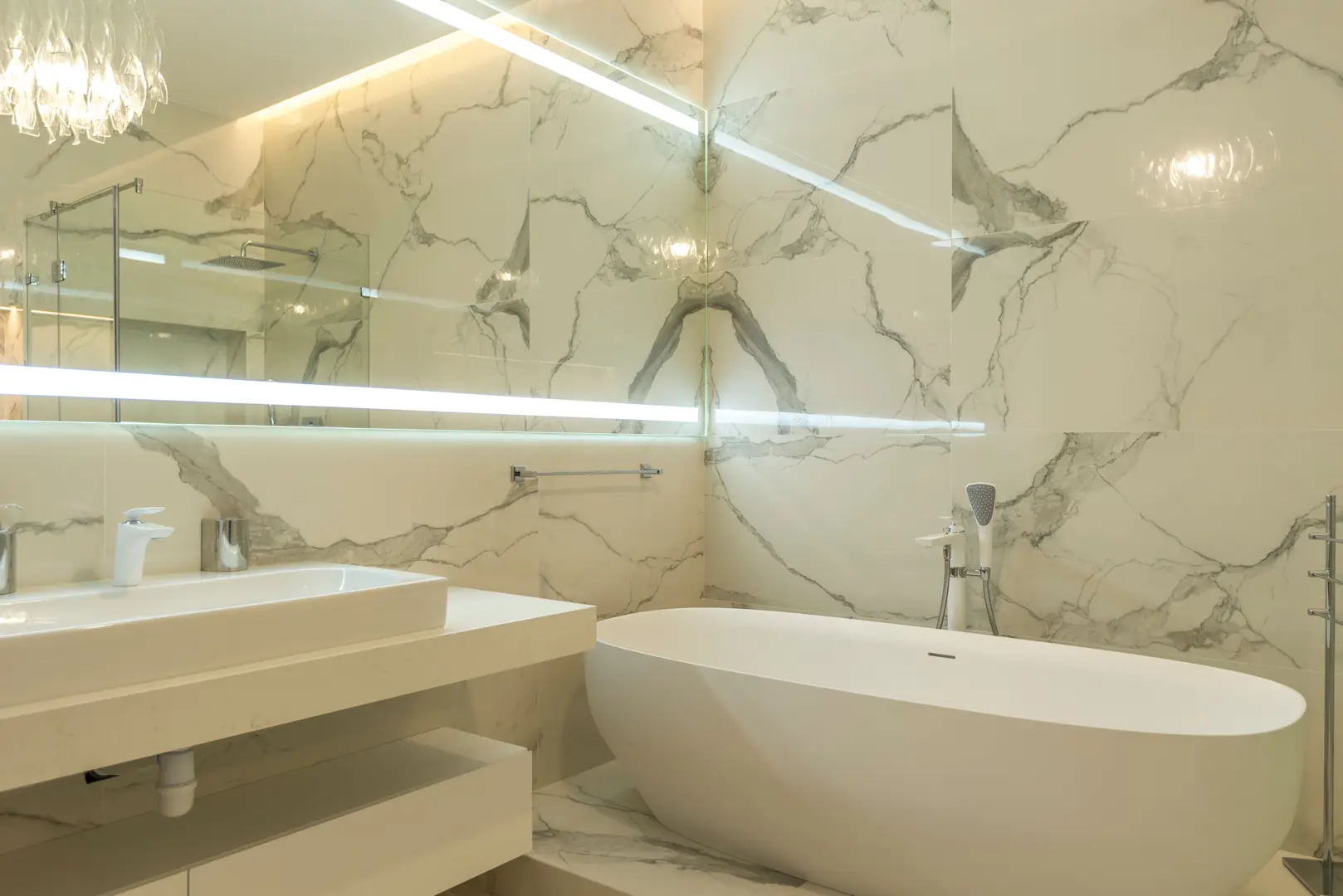
Mirrors with integrated LEDs offer another streamlined option. Depending on the design, light may appear around the edge, behind the mirror, or within its surface. This approach keeps the vanity visually uncluttered while providing a defined task-lighting zone.
Whatever fixture style you choose, avoid bulbs that look intensely blue or overly cool. They may create a sharp, modern impression, but they can undermine the warm atmosphere associated with a spa-style bathroom. A neutral or warm appearance is usually more comfortable while still offering enough clarity for detailed tasks.
Task lighting does not have to illuminate the entire bathroom. Its purpose is to provide focused, dependable visibility at the mirror while the ambient layer supports the surrounding space.
Bring Warmth and Depth with Accent Lighting
Accent lighting adds visual depth. Rather than simply making the room brighter, it creates pockets of warmth and brings attention to architectural features, furniture, or the shape of a bath.
Concealed LED strips work particularly well because the source can remain hidden while the glow becomes part of the design. Useful locations include:
- Beneath a wall-mounted or floating vanity
- Behind a mirror
- Under a shelf or recessed niche
- Along the base of built-in cabinetry
- Below the edge of a freestanding bath
Lighting below a vanity can make the unit appear lighter and create a gentle pool of illumination across the floor. Behind a mirror, it forms a soft halo that separates the mirror from the wall. Beneath a freestanding bath, it can emphasize the bath’s sculptural form and give the room a more luxurious character.
Restraint is important. Accent lighting is most effective when it highlights one or two features rather than tracing every edge in the bathroom. Select placements that complement the room’s layout and keep the effect calm.
Make Daylight Work Harder
Natural light brings openness and freshness to a bathroom. If the room has a large window or skylight, treat it as part of the lighting plan rather than relying solely on artificial sources.
Mirrors can help carry daylight farther into the room. Positioning a mirror where it can receive and reflect sunlight makes the space feel brighter, which is especially useful when light enters from only one direction. Gloss should still be used with care: the goal is to spread illumination, not create distracting glare.
Artificial lighting should coordinate with daylight. During bright hours, mirror or accent lighting may be enough to supplement the sun. On cloudy days or in the evening, ambient fixtures can restore the room’s overall balance.
It is helpful to observe how the space changes over the course of a day. A bathroom that feels bright in the morning may become shadowy later, while another may receive its strongest daylight in the afternoon. Layered artificial lighting fills those gaps without replacing the natural qualities that make daylight so appealing.
Adjust the Mood Easily with Dimmers
A bathroom does not need the same brightness at every hour. Dimmer switches make it possible to adapt one lighting plan to different routines.
Brighter settings are practical when cleaning, getting ready, or using the mirror. Lower levels create a quieter atmosphere for bathing, showering, or preparing for bed. The ability to make this change without switching to an entirely different fixture gives the bathroom a more flexible and luxurious feel.
Dimmers are particularly useful for ambient and accent lighting. For example, the main diffused lights can provide broad visibility in the morning and then be lowered in the evening while the glow behind the mirror remains on.
For simple control, think in terms of three moods:
| Setting | Useful lighting combination |
|---|---|
| Morning preparation | Clear ambient light with full mirror illumination |
| Everyday use | Moderate ambient light with task lighting as needed |
| Evening retreat | Dimmed ambient light with warm, low-level accents |
Separate controls for different layers provide more flexibility than placing every fixture on one switch. They allow the room to shift from functional to restful without changing its overall design.
Choose Fixtures with a Calm, Natural Character
Fixture design affects the mood even when the lights are off. Soft, rounded forms tend to feel calmer than sharp, highly angular designs, while natural-looking or subdued finishes can reinforce the sense of a spa retreat.
Consider frosted glass, textured surfaces, matte metal, or finishes that visually coordinate with wood, stone, and neutral bathroom materials. These options can diffuse reflections and feel less stark than highly polished fixtures.
A cohesive palette is more important than making every fixture identical. Wall sconces, mirror lighting, and ceiling fixtures can have different forms while sharing a similar colour, finish, or visual softness.
Avoid overloading the room with statement pieces. Spa-style interiors often feel restful because individual elements have space to breathe. One distinctive fixture can become a focal point, while the remaining lights quietly support it.
Also consider how the fixture looks next to mirrors and other reflective surfaces. A highly shiny fitting may appear more prominent once repeated in a large mirror. Matte and lightly textured designs usually have a quieter presence.
Reflect Light More Evenly Around the Room
Mirrors do more than support grooming. They can amplify both natural and artificial light, helping it travel across the bathroom and reducing the sense of dark corners.
This is particularly useful in a smaller room, where a well-placed mirror can make the available illumination feel more generous. A broad mirror over the vanity reflects a larger area, while an additional mirror can help redirect light into a shadowed section of the space.
Placement should be intentional. A mirror positioned opposite or near a window can capture daylight. One placed near a wall fixture can repeat its warmth, although direct reflections of exposed bulbs may be distracting.
Lighting behind a mirror offers an especially soft effect. The wall catches and diffuses the light before it enters the room, producing a more even halo. This can make the mirror feel lighter and reduce reliance on a single overhead source. For precision at the vanity, however, backlighting is best combined with dedicated face-level task lighting rather than used as the only source.
Balance Warmth with the Right Colour Temperature
Light colour has a strong influence on the way the bathroom feels. Warm light supports relaxation and complements the quiet atmosphere expected from a spa-style space. Cooler light creates a crisper, more contemporary impression but can feel clinical when used too heavily.
There is no need to choose one tone for every fixture. Combining warm and neutral light can offer greater flexibility:
- Use warm light for accent strips, evening illumination, and decorative fixtures.
- Choose warm-to-neutral light around the mirror when clarity is important.
- Keep neighbouring sources reasonably coordinated so the room does not appear visually fragmented.
Consider the bathroom’s finishes as well. Warm lighting can enrich timber tones, creamy surfaces, and muted natural colours. A more neutral appearance may work well with stone, pale walls, and modern fittings while still avoiding an icy blue cast.
The ideal balance is both flattering and practical. Test the overall effect by viewing the room with all layers on, then with only the evening lights. A successful combination should remain cohesive in both situations.
Finish the Atmosphere with Simple Mood-Setting Details
Small decorative lights can add the final touch without requiring a major renovation. Candles bring warmth and movement to the room, while simple lantern-style pieces can create a cosy focal point beside the bath or on a shelf. These elements are most effective as additions to reliable ambient and task lighting, not substitutes for them.
Keep decorative arrangements controlled. Too many strings, visible wires, or small lights can make the bathroom look cluttered rather than serene. The effect becomes even less polished when individual bulbs fail and leave uneven dark sections.
Dependable illumination matters for appearance as well as function. Replace failed bulbs promptly, and avoid building the design around delicate decorative lighting that frequently leaves parts of the room unlit. A few consistent, well-positioned sources will usually look calmer than a large collection of unreliable ones.
The finished scheme should feel effortless: clear light at the mirror, gentle illumination across the room, warm accents around selected features, and the ability to lower the brightness when it is time to unwind. With these layers in place, an ordinary daily routine can feel more like time spent in a private retreat.