A Guide to Types of Coatings for Shower Glass
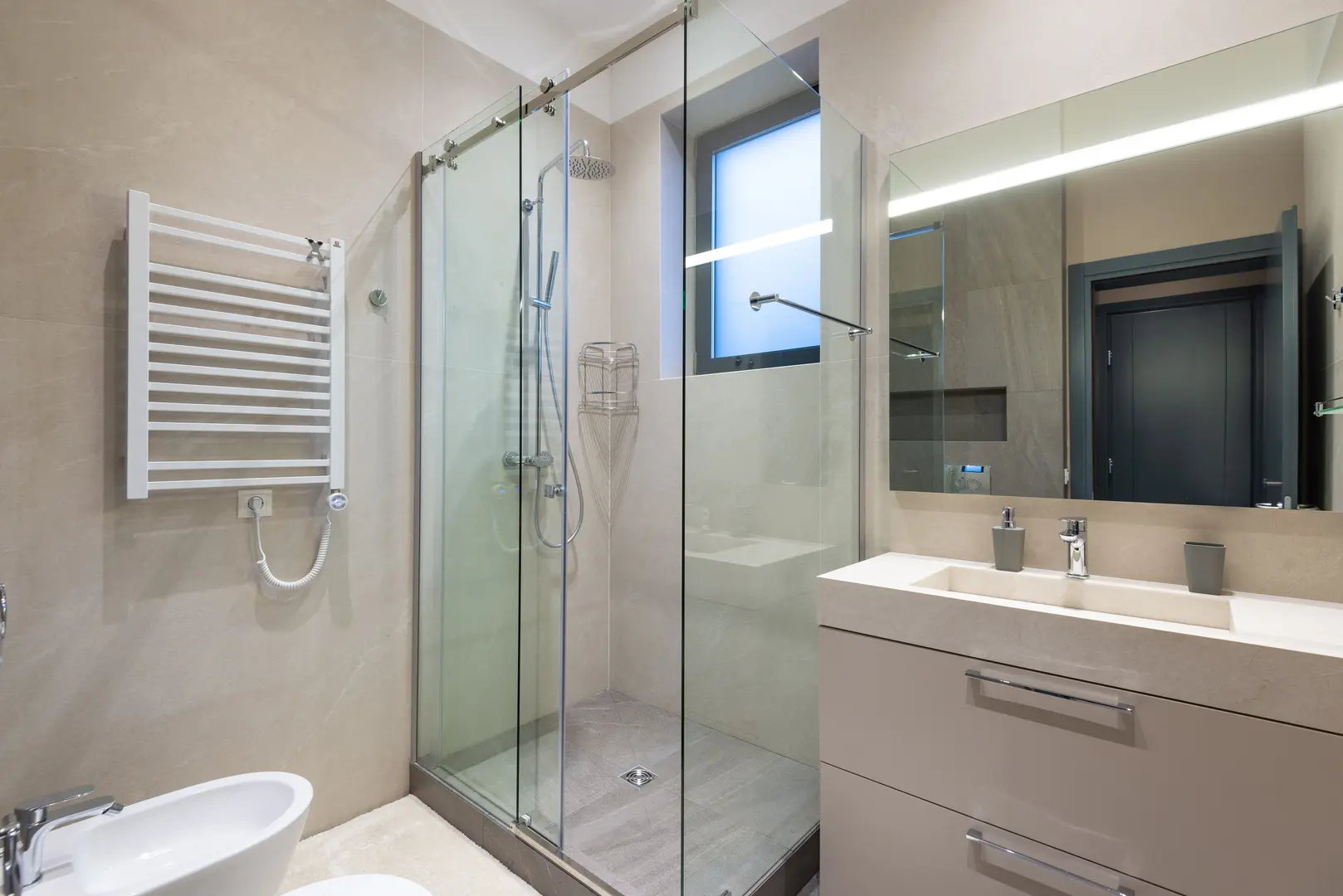
Shower glass looks smooth, but its surface can retain minerals, soap residue, body oils, and other impurities. Over time, these contaminants may create white marks, cloudy patches, and a finish that becomes harder to clean.
Protective treatments can reduce these problems, but the types of coatings for shower glass differ in purpose, durability, price, and maintenance needs. Understanding those differences will help you choose realistic protection for your water conditions and cleaning habits.
The Main Benefits of Coating Shower Glass
A suitable coating creates a protective barrier over the glass. This barrier limits direct contact between the surface and the substances carried by water, soap, and personal-care products.
Although no coating makes shower glass maintenance-free, the right option can reduce staining, preserve a smoother finish, and make routine cleaning less demanding.
Limiting Hard-Water Marks and Soap Residue
Hard water contains dissolved minerals that remain on glass when droplets evaporate. These deposits often appear as white spots or cloudy marks. Soap can also react with water minerals, creating residue that clings to an untreated enclosure.
Hydrophobic and mineral-resistant coatings make it more difficult for water and residue to attach to the surface. Moisture forms droplets and runs off more readily, leaving fewer deposits behind.
However, a water-repellent finish does not prevent every mark. Water that remains on the glass can still evaporate and leave minerals, so wiping or using a squeegee continues to be important.
Supporting Glass Strength and Service Life
Protective coatings help shield the glass surface from mineral etching and everyday wear. By reducing the amount of residue that bonds directly to the glass, they may also limit the need for aggressive scrubbing.
This protection helps retain a clear, smooth finish for longer. It does not change the structural specifications of the glass or make it unbreakable. Instead, it supports surface condition by reducing exposure to contaminants that can gradually dull or mark the enclosure.
Making Routine Cleaning Simpler
On coated glass, water tends to bead rather than spread into a broad film. Droplets can run down the panel or be removed quickly with a squeegee or soft cloth.
This means light, regular wiping may be enough to control much of the daily moisture and residue. Less buildup usually means less scrubbing later. Coatings are not a replacement for cleaning, however. Homeowners who rely on protection alone may still find that hard-water stains and soap deposits develop over time.
Exploring the Main Shower-Glass Coating Options
There is no single coating that suits every shower. Some products focus on repelling water, while others target oils, limescale, or sunlight. Application methods also vary: protection may be added during manufacturing or applied to glass that is already installed.
When comparing options, consider the water supply, the location of the shower, your maintenance preferences, and the amount you are comfortable spending.
Hydrophobic Finishes That Repel Water
Hydrophobic coatings create a water-repellent surface. Instead of spreading across the panel, moisture gathers into droplets that can roll or be wiped away more easily.
This makes hydrophobic protection particularly useful in bathrooms with hard water. Reducing the amount of water left on the surface can limit opportunities for mineral spots to form. It can also make routine cleaning quicker because residue has less direct contact with the glass.
Performance depends on the product and upkeep. Many water-repellent treatments require periodic renewal, and even an effective finish will not eliminate the need to remove standing droplets.
Oleophobic Surfaces for Oil and Fingerprint Resistance
Oleophobic coatings are designed to resist oils and oily residue. On a shower enclosure, this may include fingerprints, body oils, and residue from certain soaps or personal-care products.
By making these substances less likely to cling to the glass, an oleophobic surface can reduce smears and sticky areas. It is especially useful where panels and doors are touched frequently.
Some protective finishes combine water- and oil-repellent characteristics. If oily residue is a recurring concern, check whether the selected coating specifically offers oleophobic performance rather than assuming that any water repellent will provide the same benefit.
Factory-Applied Coatings Designed for Long-Term Use
Factory-applied protection is added during the manufacture or preparation of the shower glass. Because it is professionally incorporated before installation, it generally offers longer-lasting performance with less frequent attention than a basic DIY treatment.
This option suits homeowners who want low-care protection from the beginning. Its initial cost is usually higher, and it is easiest to select when ordering a new shower enclosure.
Long-lasting does not necessarily mean permanent under every condition. The surface may eventually need professional reconditioning or another approved treatment. Follow the glass supplier’s care instructions to avoid shortening the coating’s useful life.
DIY Spray and Wipe-On Treatments
Spray-on and wipe-on products provide an accessible way to protect shower glass that is already installed. They usually cost less upfront and can often be applied without specialist equipment.
These treatments are convenient for testing whether a water-repellent finish suits your bathroom. Users often find that such products keep glass cleaner for longer, but results depend on correct surface preparation and consistent reapplication.
DIY protection generally needs renewal more frequently than a factory-applied coating. Before applying it, confirm that the product is intended for shower glass and is compatible with any existing treatment.
Mineral- and Limescale-Resistant Coatings
Mineral-resistant coatings focus on reducing the attachment of hard-water deposits. They are intended to limit limescale, white spotting, and cloudy patches caused by minerals left behind after evaporation.
This type of coating is a practical choice where hard water is the main source of staining. It can reduce accumulation, but it cannot remove minerals from the water itself. Droplets that remain on the panel may still leave residue.
For stronger control, combine the coating with prompt water removal and, where practical, water-softening measures.
UV-Blocking Coatings for Sunlit Bathrooms
Some showers receive strong sunlight from nearby windows or skylights. In these settings, a UV-protective coating can help limit discolouration and surface degradation associated with repeated ultraviolet exposure.
UV protection addresses a different issue from water repellency or limescale. A sunlit bathroom may therefore benefit from a coating that offers more than one type of protection.
Before choosing this feature, consider how much direct sunlight reaches the enclosure. In bathrooms with little natural light, hard-water or residue resistance may be a more relevant priority.
Comparing Coatings by Cost, Durability, and Cleaning Effort
The most suitable option depends on whether you prioritise low upfront cost, lasting performance, or reduced maintenance.
| Coating option | Upfront cost | Expected durability | Typical maintenance |
|---|---|---|---|
| Hydrophobic finish | Varies by product | Varies; DIY versions need renewal | Squeegeeing, gentle cleaning, and periodic reapplication |
| Oleophobic surface | Varies | Depends on application type | Regular gentle wiping to remove oils and residue |
| Factory-applied coating | Higher | Generally longer-lasting | Routine light cleaning; possible later reconditioning |
| DIY spray or wipe-on treatment | Lower | Usually shorter-term | More frequent touch-ups or reapplication |
| Mineral-resistant coating | Moderate to higher, depending on system | Product-dependent | Water removal remains important in hard-water areas |
| UV-blocking coating | Product-dependent | Product-dependent | Clean according to manufacturer guidance |
Factory-applied protection can offer better long-term convenience, while DIY products provide a budget-friendly starting point. Mineral-focused finishes are valuable where limescale is the main concern, and oleophobic coatings may be preferable where fingerprints and oily residue are common.
Whatever the choice, set realistic expectations. A coating can reduce attachment and cleaning effort, but it may not stop every stain. Water quality, ventilation, product use, and cleaning habits all affect the result.
Choosing a Coating That Fits Your Shower
Begin by identifying the problem you most want to control. Heavy mineral spotting, frequent fingerprints, strong sunlight, and limited cleaning time may point towards different solutions. Product compatibility also matters, particularly if the glass already has a protective finish.
Start with the Quality of Your Water
If white marks quickly appear on taps, tiles, and shower glass, hard water is likely a major maintenance concern. A hydrophobic or anti-limescale coating can help reduce mineral accumulation by limiting how readily water and deposits remain on the panel.
In softer-water areas, fingerprint resistance or general ease of cleaning may be more important. Remember that a coating treats the surface rather than the water, so severe mineral conditions may also justify considering a water softener.
Match the Coating to Your Cleaning Routine
A factory-applied coating is appealing if you prefer lasting protection with fewer touch-ups. It still requires gentle care, but renewal is generally less frequent than with a basic spray-on treatment.
DIY products suit people who do not mind scheduled reapplication. They offer flexibility and a lower entry cost but are less appropriate if regular touch-ups are likely to be forgotten.
Be honest about your routine. A modest coating supported by consistent squeegeeing may perform better in practice than a premium treatment that is cleaned incorrectly.
Weigh the Initial Price Against Long-Term Value
Factory-applied coatings cost more at the outset, but their longer service period and lower reapplication demands may offer value over time. They are especially convenient when purchasing new shower glass.
DIY treatments cost less initially and work well for existing enclosures. Their ongoing value depends on how often the product must be renewed and how much time application requires.
Compare more than the purchase price. Consider expected longevity, approved cleaning products, reconditioning requirements, and whether the coating meaningfully addresses your bathroom’s main source of residue.
Habits That Help Coated Shower Glass Last
Preventive care supports any protective finish. Simple actions reduce the amount of water and residue left on the enclosure, helping the coating perform while keeping future cleaning manageable.
Pull a Squeegee Across the Glass After Showering
Use a squeegee after each shower to remove droplets before they evaporate. This reduces water spots, mineral accumulation, and soap residue.
A quick pass is particularly beneficial in hard-water homes. It requires consistency, but it is one of the simplest ways to support a coating and prevent deposits from building up between deeper cleans.
Use a Soft Microfibre Cloth for Daily Wiping
A clean microfibre cloth can remove remaining moisture, fingerprints, and light residue without scratching the surface. Pay attention to panel edges, corners, handles, and other areas a squeegee may miss.
Use gentle pressure. The goal is to lift fresh residue before it becomes firmly attached, not to scrub the coating.
Keep Abrasives and Aggressive Chemicals Away
Use mild, pH-neutral cleaners that are approved by the coating or glass manufacturer. Abrasive powders, rough pads, and unsuitable chemicals may damage the protective layer or affect the glass finish.
Avoid treating WD-40 as a general coated-glass cleaner. Although some people use it on specific residue, it can leave an oily film and may affect certain coatings. Do not apply unapproved household or automotive products without checking compatibility.
Reduce Contact with Hard Water Where You Can
A water softener or another appropriate water-treatment measure can reduce the minerals reaching the shower glass. This addresses the source of limescale rather than relying entirely on the surface coating.
If water treatment is not practical, focus on quickly removing droplets. Better ventilation and regular drying can also limit the time moisture remains on the enclosure.
Renew the Protective Layer When Necessary
Some coatings gradually lose their water- or residue-repellent performance. Signs may include water spreading across the glass instead of beading or deposits becoming more difficult to wipe away.
Reapply or recondition the protection according to the product or manufacturer instructions. Do not layer different treatments without confirming compatibility. Correct renewal, paired with gentle daily care, gives the coating the best chance of continuing to protect the shower glass.