Why Do Bath Towels Smell Musty After Washing?
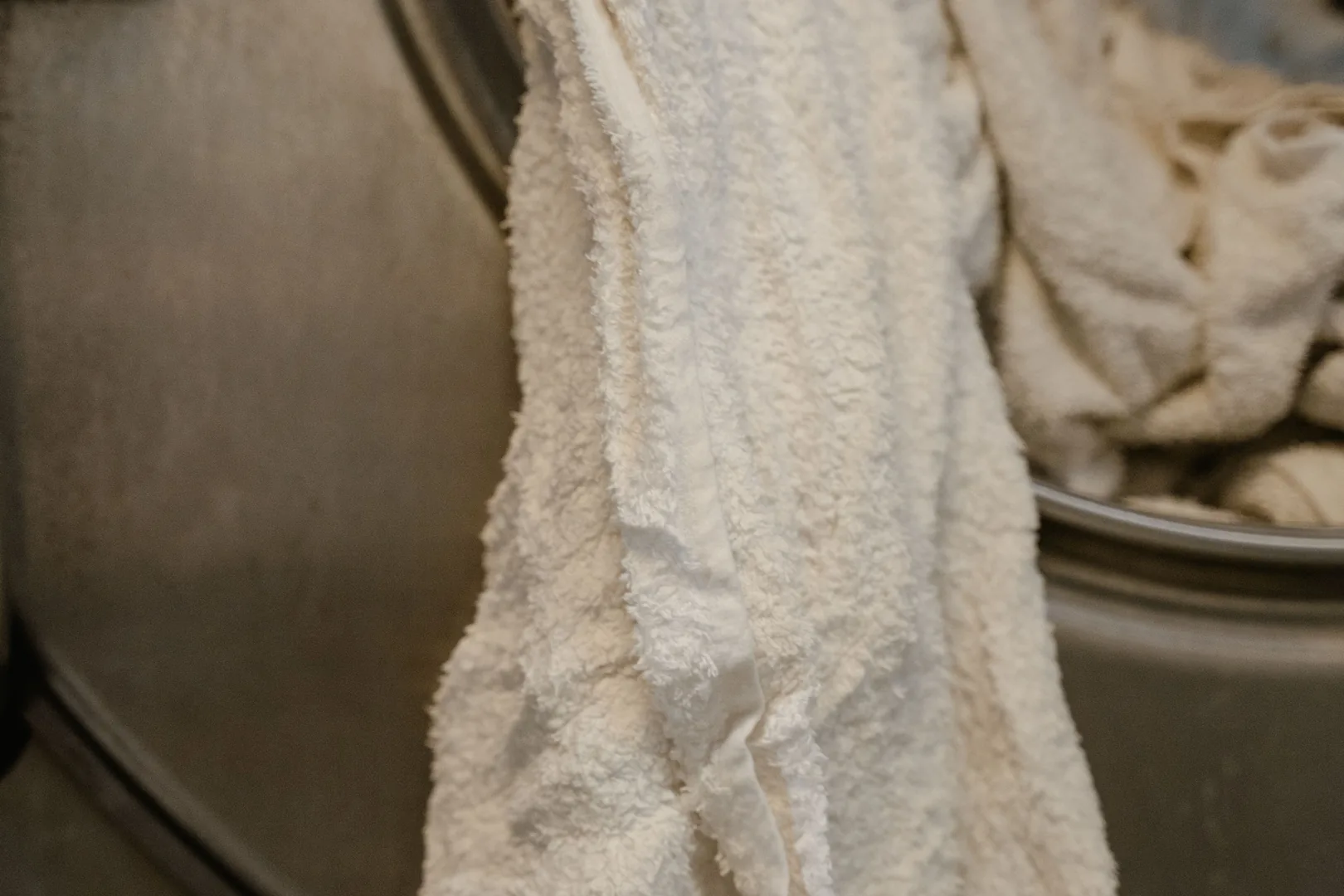
Freshly washed towels usually smell musty because odor-causing residue and moisture are still present somewhere in the routine. The towel may not have rinsed fully, may have sat damp in the washer, may not have dried all the way, or may be picking up odor again in a humid bathroom. A washer with buildup can also transfer a stale smell back to laundry.
The practical fix is to reset both the towels and the washing routine: wash a reasonably sized load with the right amount of detergent, use the warmest setting allowed by the towel’s care label, add an extra rinse if needed, and dry the towels completely right away. Then make sure used towels can dry open between showers.
What the musty or sour smell usually means
Bath towels hold moisture longer than most laundry. Their thick loops also collect body oils, skin cells, detergent residue, and minerals from hard water. When a towel stays damp, microbes can feed on that material and create a sour, stale, or mildew-like odor.
A towel can look clean while still holding enough buildup to smell bad as soon as it gets wet again. That is why a towel may seem fine straight from the dryer but smell sour after one shower.
The odor is not always mold. In many cases, it is the result of ordinary microbial growth and trapped residue in a damp textile. The solution is still the same: remove the buildup, reduce excess moisture, and prevent the towel from staying wet for long periods.
The most common musty towel smell causes
Too much detergent or fabric softener
More detergent does not necessarily make towels cleaner. If the wash load is crowded or the machine does not rinse thoroughly, excess detergent can remain in the loops. That film traps oils and odor and can make towels feel less absorbent.
Liquid fabric softener and dryer sheets can cause a similar issue by coating towel fibers. Towels may feel temporarily soft, but the coating can reduce absorbency and make it harder to wash away the material that feeds odor.
If towels smell sour after washing and also feel stiff, waxy, or less absorbent than before, buildup is a likely contributor.
An overfilled washer
Towels need space to circulate through wash water and rinse water. A tightly packed drum limits that movement, especially with heavy bath sheets or mixed loads of towels and clothing. Detergent and soil may not rinse away well, leaving behind the source of the odor.
Wash towels in smaller loads rather than compressing them into the machine. This is especially helpful in compact washers, where a few thick towels can fill the drum quickly.
Towels sitting wet after the cycle
Leaving a completed load in the washer for hours creates a damp, enclosed environment. The towels can develop a stale smell before they ever reach the dryer.
Move towels to the dryer as soon as the wash cycle ends. If a forgotten load already smells off, rewash it rather than drying in the odor.
Incomplete drying
A towel that feels nearly dry may still be damp in the thickest center folds, hems, or doubled-over areas. Folding and storing it at that point locks in moisture. The same problem happens when a towel is hung bunched on a hook after a shower.
Dry towels until they are fully dry, not merely warm from the dryer. If they are still cool or damp in thicker sections, run another drying cycle or hang them open until dry.
A humid bathroom and poor air circulation
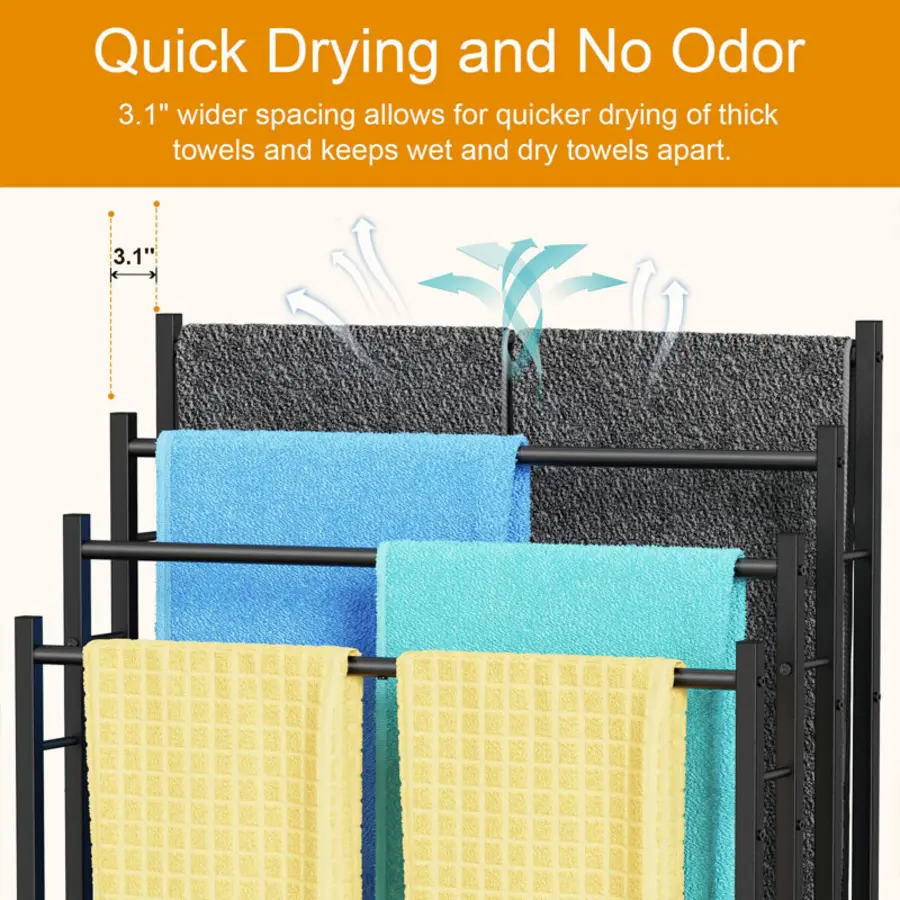
Even a clean towel can quickly turn musty when it is used in a bathroom that stays humid. A closed bathroom, a weak exhaust fan, or a towel folded over itself on a small bar can slow drying enough for odor to return.
Source: assets.wfcdn
After showering, spread the towel across a bar, rack, or multiple hooks so the fabric is not layered over itself. Run the exhaust fan during the shower and afterward if your bathroom has one. Opening a window, when practical, can also help moisture leave the room.
Washer residue or hard-water buildup
Washers collect detergent residue, lint, mineral deposits, and moisture in places that are not obvious, such as the gasket, detergent drawer, filter area, and drum. If the machine itself smells stale, towels may come out smelling stale too.
Hard water can also leave mineral residue in fabric. If several household loads feel rough, look dull, or smell less fresh despite correct detergent use, minerals may be part of the problem.
How to get mildew smell out of towels
Start with a simple reset rather than adding several products at once. Always follow the care label on the towels and the instructions for your washer.
- Wash the towels by themselves. Keep the load loose enough for the towels to move freely.
- Use less detergent than you have been using. Use the detergent label as a starting point, then reduce the amount if residue has been a problem. High-efficiency machines generally need low-sudsing detergent and smaller amounts.
- Choose the warmest water the care label permits. White cotton towels often tolerate warmer settings, while colored, decorative, or delicate towels may need cooler care.
- Skip fabric softener and dryer sheets for this wash. They can add another coating while you are trying to remove residue.
- Use an extra rinse if your washer offers one. This is particularly useful for thick towels, hard water, and loads that previously had too much detergent.
- Dry immediately and completely. Shake out each towel before drying so it does not remain tightly balled up. Use the dryer setting suitable for towels and add time if any part is still damp.
For stubborn odor, some households use plain white vinegar in a rinse cycle or baking soda in a wash cycle to help with lingering residue and odor. Do not mix vinegar and baking soda together in the same step; they react with each other and are less useful as a result. Check your washer manual before adding anything other than regular detergent, particularly if the appliance maker gives specific guidance for additives.
If one reset wash does not help, inspect the washer before repeatedly treating the towels. A musty machine can undo the work of a good wash cycle.
Clean the washer before blaming the towels
Check the drum, door seal, detergent drawer, and any accessible filter area for lint, residue, or standing moisture. Wipe the gasket and drawer according to the appliance instructions, and run the manufacturer’s recommended cleaning cycle or washer-cleaning routine.
After doing laundry, leave the washer door or lid open when it is safe and practical to let the interior dry. Avoid leaving wet washcloths, workout clothes, or towels inside between loads.
Also check the dryer. A lint screen that is not cleaned regularly can slow drying, while an overloaded dryer can leave thick towels damp in the middle. Clean the lint screen after each load and avoid packing the dryer tightly.
How to keep towels smelling fresh between washes
The bathroom routine matters as much as the laundry routine. A towel used once can remain fresh if it dries promptly; a towel used repeatedly while staying damp will develop odor faster.
Use this simple routine:
- Spread each used towel open instead of leaving it in a heap or folded over a narrow bar.
- Give towels room. Two thick towels layered on one hook dry much more slowly than towels hung separately.
- Use ventilation during and after showers to lower bathroom humidity.
- Wash bath towels regularly, and wash them sooner if they smell sour, feel stiff, or have stayed damp unusually long.
- Do not put towels away until they are completely dry.
- Use the correct detergent amount and avoid routine fabric-softener buildup.
- Clean the washer periodically, especially if the machine has a noticeable stale odor.
When a towel may be past its best
A towel does not need to be discarded because of one musty episode. Most can be refreshed by improving rinsing and drying. But replacement may be more practical when a towel stays smelly after repeated proper washing, remains stiff and poorly absorbent, has visible mildew staining, or has worn, flattened loops that no longer dry well.
Before replacing a group of towels, test the routine with one or two. If they come out fresh and stay fresh after use, the issue was likely detergent, drying, washer residue, or bathroom humidity rather than the towels themselves.
References
- After a clean shower, why does my towel catch odor? - TowelHub.com | America’s #1 Wholesale Bulk Towel Provider. (n.d.). https://towelhub.com/blog/after-a-clean-shower-why-does-my-towel-catch-odor
- How to Get the Musty Smell Out of Towels for Good | Sanitation Towel. (n.d.). https://sanitationtowel.com/how-to-get-musty-smell-out-of-towels
- Why Your Towels Still Smell After Washing (And How to Fix It Naturally. (n.d.). https://shopmavwicks.com/blogs/resources/towel-smells-after-washing
- Hang Your Bath Towel Odors Out to Dry. (n.d.). https://www.microban.com/blog/hang-your-bath-towel-odors-out-to-dry
- Why Do Towels Smell After Washing? | Upgradedhome.com. (n.d.). https://upgradedhome.com/why-do-towels-smell-after-washing
- Why Your Towels Smell Musty and How to Fix It - Home as We Make It. (n.d.). https://www.homeaswemakeit.com/why-your-towels-smell-musty-and-how-to-fix-it
- The Best Way to Clean Stinky Towels!. (n.d.). https://www.youtube.com/watch?v=K0Zgc_Ra2CA
- How to Get Rid of Towel Odor | Make Towels Smell Fresh. (n.d.). https://trulyfreehome.com/blog/how-to-get-the-funky-smell-out-of-towels