Why Do Towels Feel Stiff After Washing?

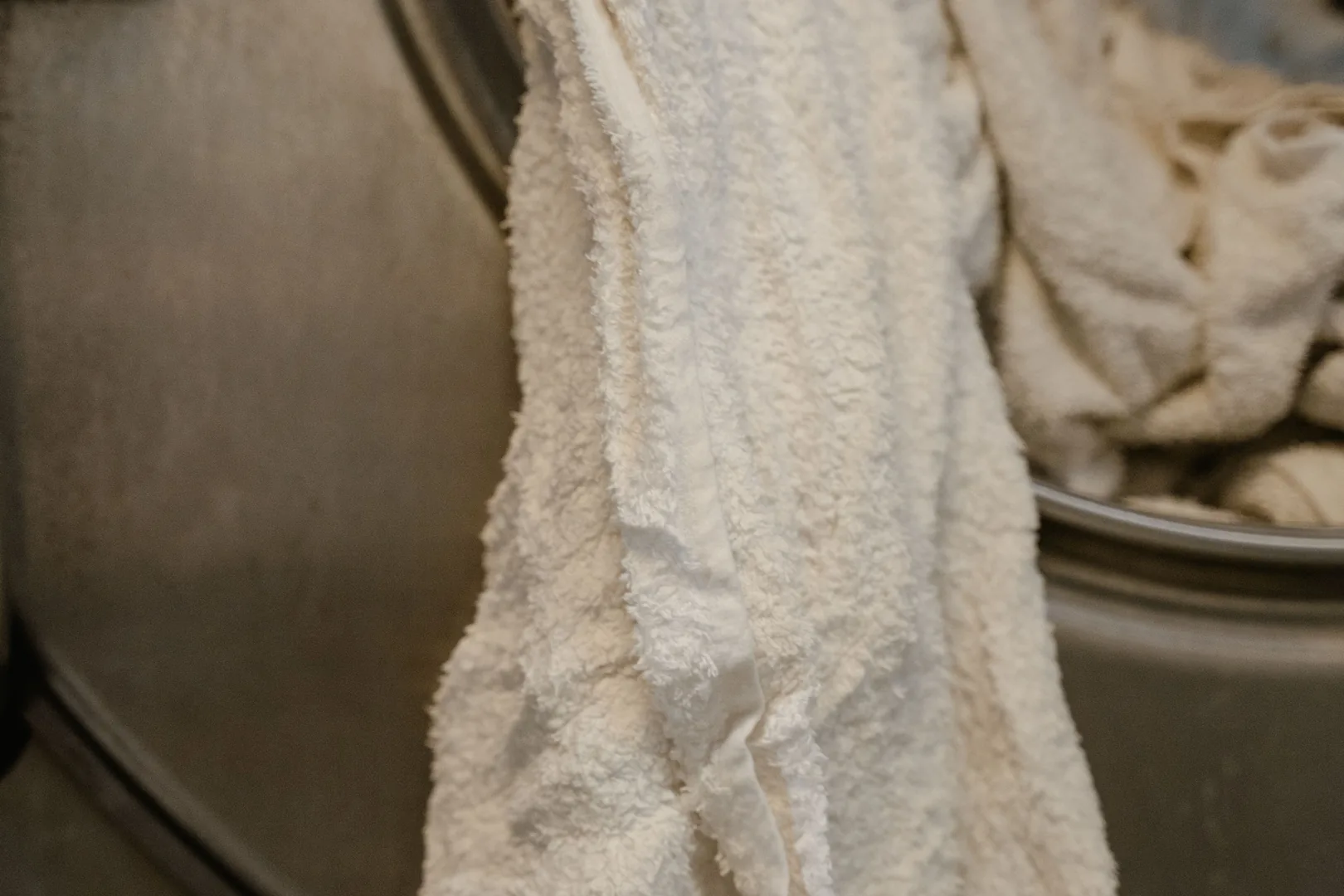
If you are asking, “why do towels feel stiff after washing?” the usual answer is buildup or harsh drying—not that the towels are permanently dirty. Detergent left in the loops, hard-water minerals, fabric softener residue, and trapped body oils can make cotton towels feel rough, heavy, or less absorbent. Drying them too long or too hot can add a crunchy feel by making the fibers less flexible.
The practical fix is to remove residue, then adjust your laundry routine so it does not return. Start by using less detergent, skipping liquid fabric softener, leaving more open space in the washer, and avoiding prolonged high-heat drying.
What stiff towels are telling you
Towels have thousands of absorbent loops that need to stay open and mobile. Anything that coats, mats, or binds those loops together changes the texture. A towel can look clean and smell fresh while still holding enough residue to feel scratchy.
Common signs of buildup include:
- Towels that feel stiff once dry but improve a little when damp
- Reduced absorbency or water seeming to sit on the surface at first
- A heavy, coated, or slightly waxy feel
- Towels that need more detergent than expected to smell clean
- White or colored laundry that also seems dull, especially in hard-water areas
Not every rough towel can be restored completely. Older towels with worn, flattened, heat-damaged, or broken fibers may improve after a reset wash but will not return to their original texture.
The main reasons towels become hard after washing
Too much detergent or incomplete rinsing
More detergent does not necessarily mean cleaner towels. Towels are bulky, absorbent, and prone to holding laundry product in their loops. If the washer is tightly packed, uses too little water for the load, or does not rinse thoroughly, leftover detergent can dry into a stiffening film.
This is especially likely when detergent is poured generously, when pods are used for very small towel loads, or when a concentrated detergent is used at the same amount as a standard formula. Strong fragrance and other added ingredients can also contribute to a coated feel over time.
Hard-water mineral buildup
Hard water contains minerals, commonly calcium and magnesium. These minerals can remain in fabric and can interfere with how detergent rinses away. The result is towels that feel rough, less flexible, and sometimes less absorbent.
Hard water is a likely contributor if towels gradually get stiff despite sensible detergent use, if other laundry looks dull, or if you notice scale around faucets, showerheads, or inside the washing machine. Mineral buildup and detergent buildup often occur together, so simply adding more detergent usually makes the problem worse.
Fabric softener residue
Liquid fabric softener and dryer sheets can make a towel feel smoother temporarily, but they work by depositing conditioning ingredients on fibers. That coating is not ideal for items meant to absorb water. With repeated use, towels may become less absorbent and eventually feel coated or stiff.
For bath towels, skip liquid fabric softener as a routine step. Dryer sheets are also best used sparingly, if at all, because they can leave a similar residue.
Overloaded wash loads
A packed washer does not leave enough room for towels to circulate, release soil, and rinse. Bath towels become very heavy when wet, so even a load that looks manageable when dry can be too full once water is added.
Wash towels separately from jeans, sweatshirts, and other dense items when possible. A smaller towel load gives the washer a better chance to rinse out detergent and lets towels dry more evenly afterward.
Source: assets.wfcdn
High heat and over-drying
Why are towels crunchy after drying even when they seemed fine out of the washer? Often, they were dried too long or exposed to high heat repeatedly. Heat can make cotton fibers feel harsher and can leave a towel overly dry and rigid.
Use a medium or low setting when time allows, and remove towels once they are dry rather than continuing the cycle unnecessarily. Shake each towel out before placing it in the dryer and again when removing it; this helps separate the loops and reduce a flattened feel.
Age, wear, and fiber quality
Towels naturally become less plush with use. Frequent laundering, abrasion from heavy items, bleach misuse, and high dryer heat gradually wear down the pile. A thin older towel may still be clean and usable, but it may no longer feel soft in the same way as a newer towel.
How to soften stiff towels with a reset wash
Before trying a reset wash, check the towel care label and your washer manual. Use the warmest water temperature permitted by the label, but avoid treating delicate, decorative, or non-cotton towels as if they were basic white cotton.
- Wash the towels by themselves. Keep the load loose enough for the towels to move freely.
- Run a wash cycle without detergent or fabric softener. This gives existing residue a chance to rinse out instead of adding another layer.
- Use an extra rinse if your washer offers one. This is particularly helpful for thick bath sheets and large loads.
- For suspected residue, use plain white vinegar in a separate rinse step if your washer instructions allow it. Add it only to the appropriate dispenser or rinse cycle, not directly mixed with detergent. Vinegar may help with some product and mineral residue, but it is not a substitute for using the correct detergent amount going forward.
- Wash again with a small amount of detergent. Use the package guidance as a maximum, not an automatic target. A lightly soiled towel load often needs less.
- Dry on moderate heat and remove promptly. Do not use fabric softener or dryer sheets during this reset.
Never mix vinegar with chlorine bleach or add them to the same wash. Keep bleach use limited to towels whose care labels permit it, since repeated or excessive bleaching can weaken fibers.
If the towels are still rough afterward
If a reset wash makes little difference, narrow down the cause rather than repeating stronger treatments.
- All household laundry feels stiff: Hard water, too much detergent, or poor rinsing may be affecting the whole wash routine.
- Only towels feel stiff: Fabric softener, oversized towel loads, or dryer settings are more likely factors.
- Towels are stiff only after the dryer: Shorten the drying time, lower the heat, and clean the lint filter before every load.
- Towels smell sour or musty as well as rough: They may be retaining moisture because the load is too large, the washer needs cleaning, or towels are sitting wet too long before drying.
- Only a few old towels remain scratchy: The pile may simply be worn down. Repurposing them for cleaning or pet care can be more practical than trying repeated treatments.
If your home has very hard water, a laundry product designed for hard-water conditions or a water-softening approach may be worth considering. Follow product directions carefully rather than compensating by adding extra regular detergent.
A simple routine to prevent towel detergent buildup
Keeping towels soft is usually less about specialty products and more about consistent rinsing and gentle drying.
- Wash bath towels every few uses, or sooner when heavily used.
- Wash towels in their own reasonably small load.
- Measure detergent instead of pouring by eye, and reduce the amount if towels feel coated.
- Choose an extra-rinse option for thick towels, large loads, or hard-water homes.
- Skip liquid fabric softener for towels.
- Dry on low to medium heat when practical, and remove towels when dry.
- Clean the lint filter every cycle so the dryer can move air properly.
- Leave the washer door or lid open between loads when appropriate for the machine, helping the interior dry out.
Softness and absorbency should improve together. A towel that feels unusually slick, heavily perfumed, or water-repellent is not necessarily better conditioned—it may be carrying residue. The goal is clean loops that can fluff up, absorb water, and rinse clear with each wash.
References
- Why Your Clothes Feel Stiff After Washing and How to Fix It — Charlie’s Soap. (n.d.). https://www.charliesoap.com/blog/general/why-your-clothes-feel-stiff-after-washing-and-how-to-fix-it
- How to Keep Your Towels Fluffy After Washing? - Singapore Dry Cleaning™. (n.d.). https://www.drycleaning.com.sg/blog/how-to-keep-your-towels-fluffy-after-washing.html
- How to Keep Towels Soft (Even After Dozens of Washes) | The Laundry Spot. (n.d.). https://laundryspot.com/blog/how-to-keep-towels-soft
- Why Some Bath Towels Lose Softness After Washing | SEISSO. (n.d.). https://www.seisso.com/en-au/blogs/seisso-insights/why-some-bath-towels-lose-softness-after-washing
- Why Are Towels Hard After Washing? - The Turkish Towel Company. (n.d.). https://turkishtowelcompany.com/blog/why-are-towels-hard-after-washing
- Why Are My Towels So Rough After Washing? Uncovering the Mystery Behind the Uncomfortable Texture - HomeGearGeek. (n.d.). https://homegeargeek.com/why-are-my-towels-so-rough-after-washing
- Laundry Detergent Hard Water Problems | Why Clothes Look Dull & How to Fix It. (n.d.). https://www.moziwash.com/blogs/mozi-wash/why-laundry-isnt-coming-out-clean-in-hard-water
- Hard Water Laundry Damage: Why Clothes Feel Stiff and Colors Fade. (n.d.). https://crystalquest.com/blogs/health-wellness-home/hard-water-laundry-damage