Why You Shouldn't Store Towels in the Bathroom
Fresh towels should feel clean, dry, and ready to use. Yet the bathroom itself can make that difficult. Regular steam, splashes, and limited ventilation may expose stored towels to moisture even when they have not been used.
Understanding why you shouldn’t store towels in the bathroom does not mean every towel must be moved to a distant linen cupboard. Instead, it highlights the importance of choosing protected storage, managing humidity, and keeping only a practical supply in the room. With suitable bathroom furniture and a few simple habits, towels can remain convenient without being left vulnerable to the bathroom environment.
Why Towels Require More Care Than You Might Expect
Towels are designed to absorb water, but that absorbency also means they can take in moisture from the surrounding air. In a humid bathroom, a towel may lose some of its dry, fresh feel before anyone uses it.
Repeated exposure to moisture can contribute to unpleasant odours and mildew, particularly when towels are packed together or stored before they have dried completely. Even clean towels need suitable conditions if they are to remain fresh between laundry days.
Thoughtful storage can also help towels last longer. Keeping them dry and protected reduces the likelihood that they will need to be washed again simply because they have developed a stale smell while sitting on an open shelf.
This is the main reason towels require more attention than many other bathroom essentials. Bottles, containers, and accessories are generally unaffected by humid air, while absorbent fabrics respond to their surroundings. A storage arrangement that looks attractive may therefore be less practical if it leaves every towel exposed.
What Makes the Bathroom a Difficult Place for Towel Storage
Bathrooms become humid whenever a bath or shower is used. Steam moves throughout the room and can settle on surfaces, including open shelves and the towels placed on them. If the bathroom has limited airflow, that moisture may remain in the space for longer.
Tightly folded or closely stacked towels can make the problem worse. Moist air can reach the fabric, while the dense arrangement restricts circulation between individual towels. Any moisture that enters the stack may then take longer to disperse.
Several common bathroom features can affect towel storage:
- Frequent baths and showers create steam.
- Closed doors and windows can limit airflow.
- Compact layouts may place storage close to wet areas.
- Deep stacks of folded towels can hold moisture.
- Damp hand or bath towels may be returned to storage too soon.
Ventilation helps, but it does not make open storage completely protective. A well-ventilated room can still experience temporary periods of high humidity. That is why both the location and the design of towel storage matter.
The Drawbacks of Leaving Towels in Open Storage
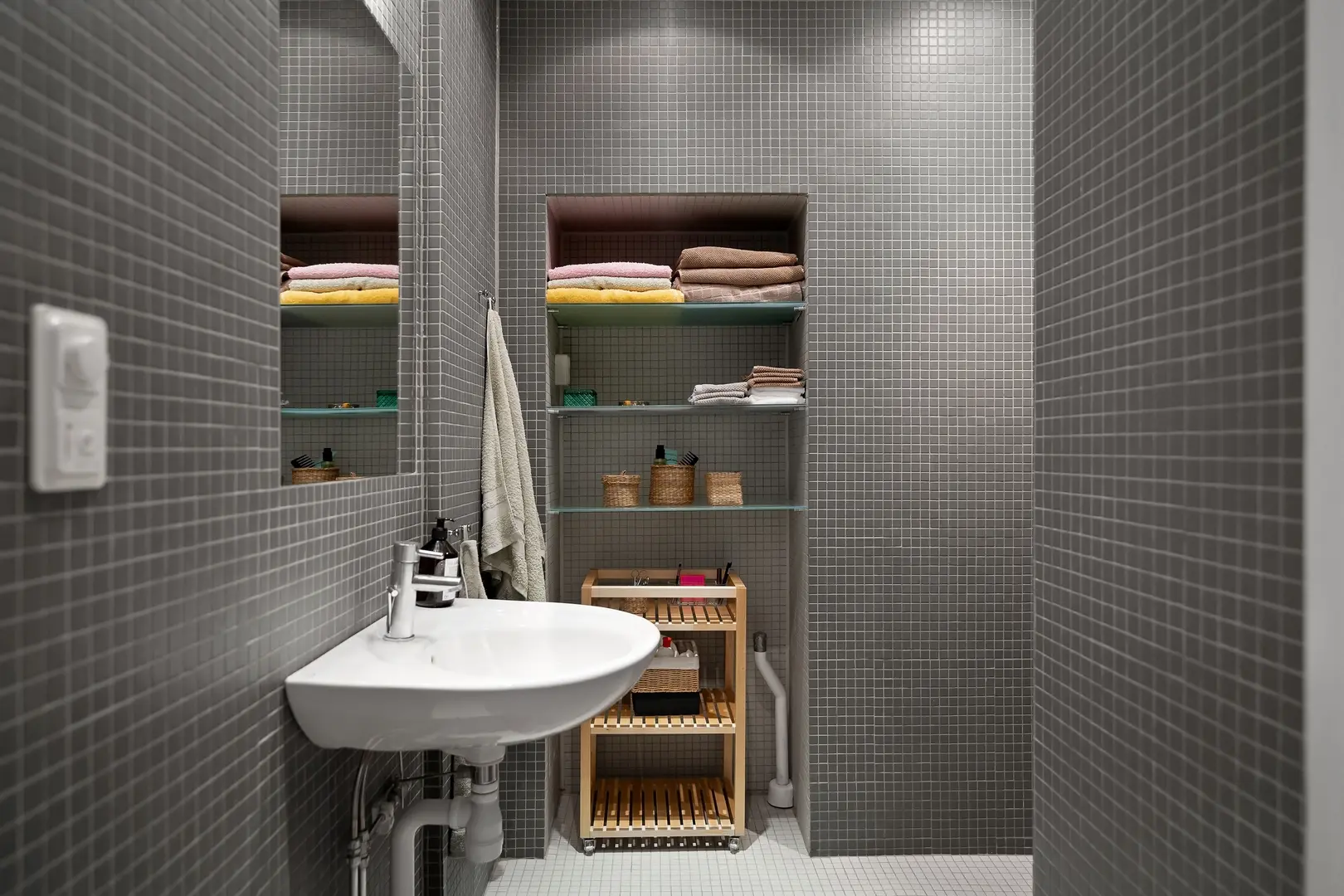
Open shelving makes towels easy to see and reach. Neatly rolled or folded towels can also contribute to a spa-inspired bathroom design. However, this display approach leaves the fabric exposed to the room.
Steam can move directly through an open stack, while splashes may reach shelves positioned near a basin, bath, or shower. Dust and other everyday particles can settle on towels over time, especially if they are stored for weeks before use.
Open baskets offer similar limitations. Although they contain the towels and keep the room looking organized, they do not provide a barrier against humidity, splashes, or particles. Decorative ladders are useful for hanging towels in active use, but they are less suitable for holding a supply of clean towels.
If you like the appearance of open storage, use it selectively. A single towel intended for immediate use is more practical than displaying the household’s entire clean supply. Keep the remaining towels behind doors or drawers, where they have greater protection from the bathroom environment.
How Enclosed Bathroom Furniture Protects Towels
Enclosed bathroom furniture creates a useful barrier between clean towels and the surrounding room. Cabinet doors and drawers reduce direct exposure to steam, splashes, dust, and particles. Although an enclosed unit cannot remove humidity from the bathroom, it offers more protection than an open shelf.
Cabinets also support a tidier layout. Towels can be separated from toiletries, cleaning products, and everyday grooming items rather than being left on multiple surfaces. This makes the room easier to organize while reducing visual clutter.
A well-planned unit might include:
- One shelf or drawer for clean hand towels
- A larger section for bath towels
- A separate area for toiletries
- Easily accessible space for frequently used essentials
Internal organization is important. Avoid filling every available gap with fabric, as towels still benefit from some breathing room. A cabinet should be large enough to hold folded towels without forcing them into compressed stacks.
Enclosed storage works best when combined with good bathroom ventilation and careful drying. It protects clean, dry towels; it should not be used to hide damp ones.
Why Tall Storage Units Work Well for Towels
A tall bathroom cabinet uses vertical wall space rather than occupying a large section of the floor. This can be especially useful in a compact bathroom where low-level storage is limited by the basin, toilet, bath, or shower enclosure.
Multiple shelves make it easier to assign a place to different towel types. Bath towels can occupy a larger shelf, while smaller hand towels and face cloths can be stored separately. In a family bathroom, shelves may also be allocated to different household members, simplifying routines and preventing stacks from becoming mixed.
Tall units provide another advantage: they can keep clean towels distinct from items used around the basin or toilet. This separation supports better organization and helps protect the household towel supply.
When deciding where to position a tall unit, consider both access and moisture. It should be easy to reach without being placed directly beside a shower opening or in an area frequently hit by splashes. Check that the doors can open comfortably and that the unit does not obstruct movement through the room.
Using a Vanity Unit to Keep Towels Within Reach
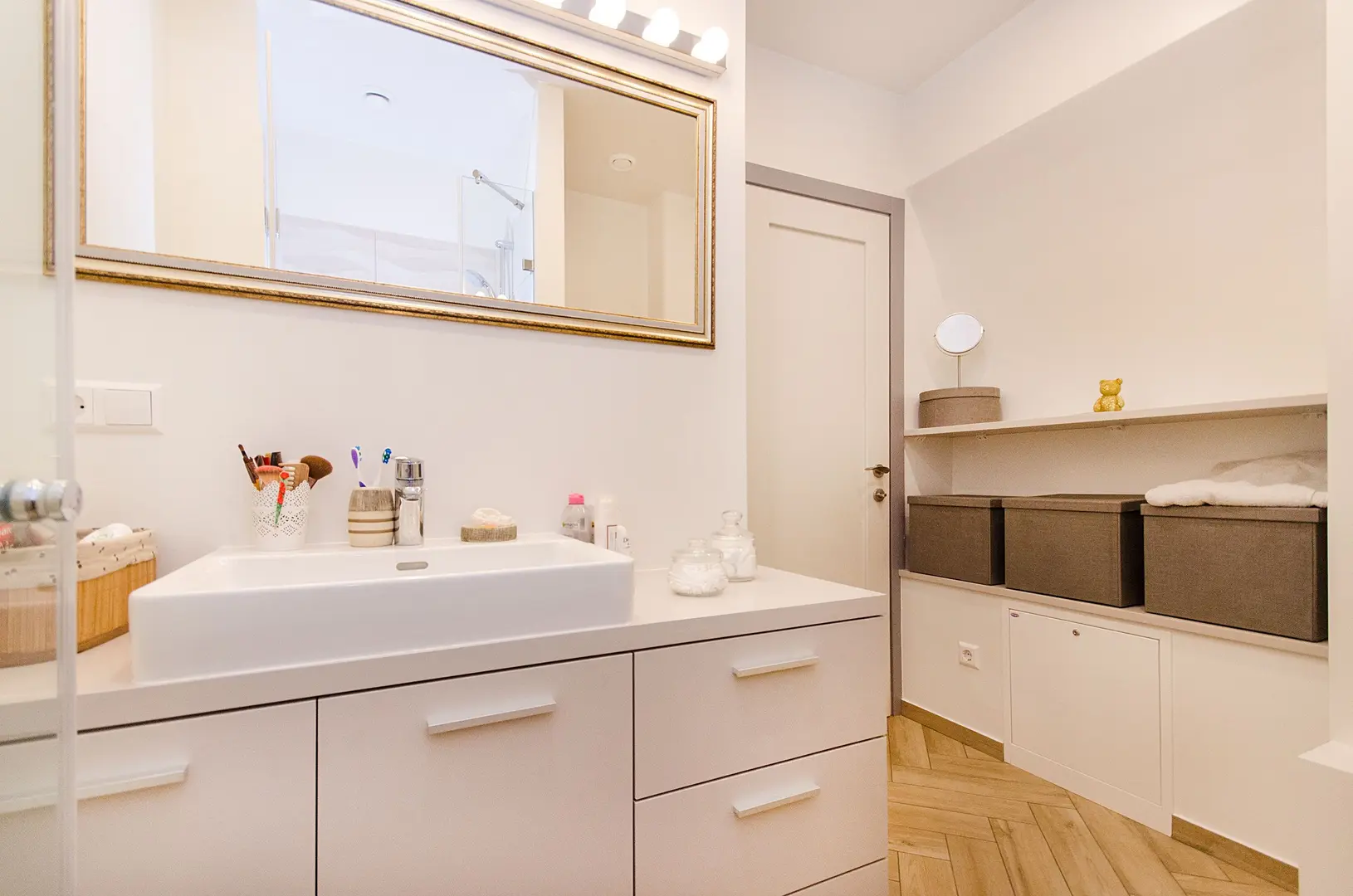
A vanity unit combines a basin with storage below, making it a practical choice when towels need to remain close at hand. Drawers or cupboards can hold a small supply of hand towels, face cloths, or bath towels without leaving them exposed on the countertop.
Wall-hung vanity units can make a bathroom feel more open because the floor remains visible beneath the furniture. They are particularly useful where visual space matters, though their towel capacity depends on the dimensions and internal configuration of the unit.
Freestanding vanities usually provide a more substantial storage area. They can suit family bathrooms or spaces where one unit needs to accommodate towels alongside toiletries and other essentials.
Before using a vanity for towel storage, examine the available internal space. Basin plumbing can reduce capacity or divide the cupboard into awkward sections. Drawers and shelves may make towels easier to arrange than one large, undivided compartment.
A vanity is best used for the towels needed regularly. If adding spare towels makes the unit overcrowded, move the excess to a linen cupboard or another dry area elsewhere in the home.
Why Towels Should Be Stored Away From the Toilet
Towel placement affects more than convenience. Clean towels should not be stored openly beside or above the toilet, where they may be exposed to particles within the surrounding area.
Distance offers some protection, while an enclosed cabinet provides an additional barrier. Where the bathroom layout allows, choose a storage position closer to the room’s dry zone and farther from the toilet. Avoid placing an open basket of clean towels on the floor beside it, even if that happens to be an unused corner.
Small bathrooms may provide few placement options. In that case, prioritize enclosure rather than open display. A closed vanity drawer or wall-mounted cabinet is preferable to an exposed shelf in the same area.
Thoughtful placement also makes it easier to establish clear storage roles. Clean towels belong in a protected cabinet, towels in use belong on hooks or rails where they can dry, and towels awaiting laundry should have a separate location. Keeping these groups apart supports a cleaner, more manageable bathroom routine.
Only Put Towels Away Once They Are Completely Dry
Enclosed furniture can protect towels from the room, but it can also hold moisture if a damp towel is placed inside. Before folding and storing any towel, make sure it is completely dry.
Do not return a recently used towel to a drawer simply to make the bathroom look tidy. Likewise, avoid leaving damp towels in a heap, as the layers restrict airflow and can encourage stale odours or mildew.
A simple routine helps:
- Hang used towels with enough space to dry.
- Allow each towel to dry fully before folding it.
- Check thicker areas and folds for lingering dampness.
- Place only clean, dry towels in enclosed storage.
- Move towels that remain damp to a better-ventilated drying area.
Separate hooks or rails can reduce the temptation to pile several towels together. If the bathroom remains humid for long periods, towels may dry more effectively elsewhere.
Drying is just as important after laundering. A towel that feels slightly damp should stay out of the cupboard until the remaining moisture has gone.
Why Bathroom Storage Should Not Be Overcrowded
An overfilled cabinet may appear efficient, but tightly packed towels have limited air circulation around them. Removing one can also disturb the entire stack, making the storage area harder to maintain.
Keep a practical number of towels in the bathroom rather than using every cupboard as long-term linen storage. The appropriate quantity depends on how many people use the room and how often towels are replaced, but the aim is to maintain a convenient supply without compressing it.
Store additional sets in a dry linen cupboard, wardrobe, or other suitable area outside the bathroom. Towels can then be moved into bathroom storage as needed.
Leaving some room within drawers and cupboards offers several benefits:
- Towels are easier to remove without unfolding others.
- Different towel sizes remain organized.
- Air can move more freely around the stored fabric.
- Older towels are less likely to remain forgotten at the bottom.
- It is easier to see when the supply needs replenishing.
More storage is not always the answer. In some cases, reducing the number of items kept in the bathroom creates a more functional system.
How to Choose Suitable Furniture for Bathroom Towels
Begin by considering how the household uses towels. A cloakroom may need space for only a few hand towels, while a busy family bathroom may require separate storage for bath towels, hand towels, and face cloths.
Next, measure the available area and think about how people move through the room. Tall units suit narrow spaces, vanity drawers provide convenient access at the basin, and wall-mounted cabinets preserve floor space. Freestanding furniture can offer greater capacity where the room is large enough.
Useful features to look for include:
| Feature | Practical benefit |
|---|---|
| Doors or drawers | Reduce direct exposure to steam, dust, and splashes |
| Adequate internal space | Prevent towels from being tightly compressed |
| Separate compartments | Keep towels apart from other bathroom items |
| Easy-to-reach storage | Makes regular towel rotation simpler |
| Suitable dimensions | Ensures the unit fits without obstructing the room |
Style matters too. Choose a finish and form that coordinate with the bathroom décor, but do not prioritize appearance over function. A beautiful open shelf may display towels attractively, while a well-proportioned enclosed cabinet is more effective at protecting them.
The best option should balance capacity, access, protection, and the available floor or wall space.
Simple Habits That Help Bathroom Towels Stay Fresh
Suitable furniture is only one part of effective towel care. Everyday habits determine how much moisture reaches the towels and how long individual items remain in storage.
To help stored towels stay fresh:
- Keep clean towels in an enclosed cabinet or drawer.
- Dry every towel completely before putting it away.
- Rotate the supply so the same towels do not remain unused.
- Avoid packing shelves and drawers too tightly.
- Store surplus sets outside the bathroom.
- Keep clean towels away from the toilet and splash-prone areas.
- Use available ventilation during and after bathing or showering.
- Hang towels in use separately rather than piling them together.
Ultimately, why you shouldn’t store towels in the bathroom comes down to the room’s humid, frequently used environment. If another dry storage area is available, it is sensible to keep most spare towels there. When towels must remain in the bathroom, enclosed furniture, careful placement, full drying, and regular rotation can provide a practical compromise.
The goal is not to make towels inconvenient to reach. It is to protect clean fabric until it is needed, keeping the bathroom organized while helping every towel remain dry and fresh.